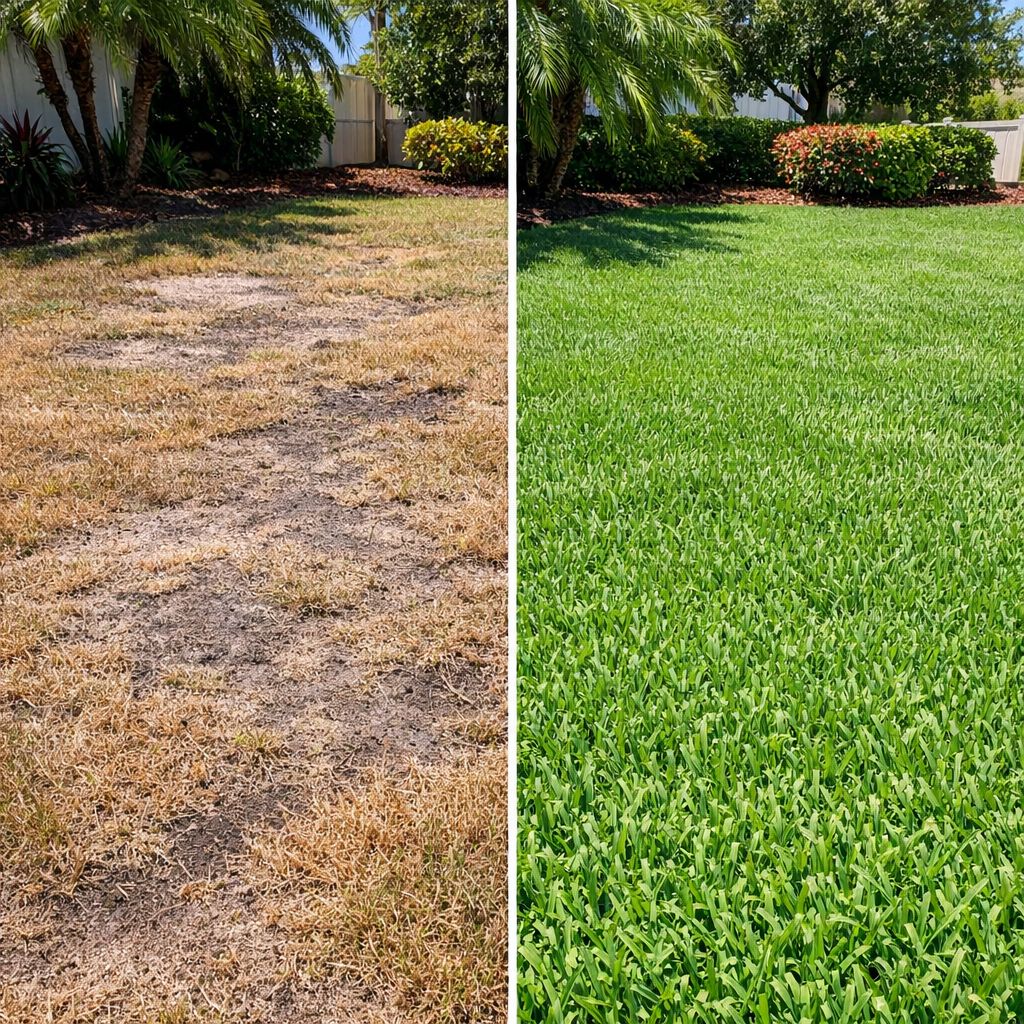
When new sod starts turning brown, homeowners often assume the sod was bad. Sometimes that happens, but most failures come from the conditions around the sod: watering, soil contact, grading, irrigation, shade, pests, or mowing.
The fix depends on the cause. Guessing wastes time.
Quick answer
In Kissimmee, St. Cloud, and Poinciana, new sod usually dies from drying in week one, dry sprinkler corners, sod laid over debris, soggy low spots, wrong grass for shade, or scalping the first mow. Fix water and contact first: even moisture, head-to-head coverage, firm soil knit, then decide on patching. Call (407) 674-2841.
1. The Sod Dried Out
New sod has shallow roots. If the root layer dries during the first week, edges curl, seams brown out, and the lawn can decline quickly.
Common signs:
- Crispy edges
- Brown seams
- Footprints that look dry and brittle
- Corners failing before the center
Use a new sod watering schedule and check weak spots by hand.
2. Sprinkler Coverage Was Uneven
A controller can run every day and still miss parts of the lawn. New sod exposes bad coverage because dry zones show up fast.
Look for:
- Heads blocked by sod or plants
- Rotors that do not turn
- Spray hitting concrete
- Weak pressure
- Dry strips between heads
If the pattern is bad, review irrigation repair before replacing more grass.
3. Soil Prep Was Too Weak
Sod needs contact with the soil below it. If old grass, roots, debris, rocks, or uneven soil remain underneath, the sod may not root evenly.
Good prep usually includes:
- Removing old turf and debris
- Loosening or grading the top layer
- Filling low spots
- Leveling high spots
- Rolling or pressing sod into contact
4. Drainage Kept the Lawn Too Wet
Too much water can hurt as much as too little. Puddles can cause root stress, fungus pressure, and washouts.
Standing water after rain may point to grading or drainage issues. Read about drainage solutions if the lawn stays soggy.
5. The Grass Type Was Wrong
Some grasses hate shade. Some need more irrigation. Some handle traffic better than others.
If the lawn has pets, heavy use, poor irrigation, or shade, use the grass selector before choosing replacement sod.
6. The First Mow Was Too Aggressive
New sod should not be scalped. Mowing too low stresses the grass before roots are established. Wait until the sod has rooted enough, then mow high with sharp blades.
7. Shade Was Misread
St. Augustine tolerates part shade, but no sod holds in deep oak shade with root competition. If the dead zone maps exactly to the tree drip line while sunny areas root, that is light and roots, not water. Thin the canopy for filtered light, mulch the darkest ring, and save sod for areas with at least 4–6 hours of sun. See shade-tolerant grass before reordering.
8. Fungus After Overwatering
Nightly soaking plus warm rain grows gray leaf spot and brown patch fast: yellow halos, melting patches, slimy mat, musty smell. The fix is less water at the right hour — deep soak before sunrise, then let the top inch dry — plus sharp mowing and waste pickup. Fungicide only helps after the water schedule is corrected.
The Tug Test and 14-Day Watch
Around day 10–14, lift a corner gently in three spots: sunny center, edge, and the worst brown area. Resistance means roots are knitting — keep the schedule. Lifts cleanly with dry soil means add a dawn cycle and check heads. Lifts with soggy mat and sour smell means back water off and fix the low spot. Take phone photos on days 1, 7, and 14 from the same porch angle; patterns across photos diagnose faster than any single visit.
Week-one rule in Osceola sand: keep the mat and top inch of soil evenly damp, never crunchy and never squelchy. Week two: stretch intervals so roots chase moisture down. If footprints stay visible at noon, that zone needs coverage work, not more minutes on the whole system.
Before You Order More Sod
Walk this list once: every zone test-run with flags on dry triangles, heads raised to grade after sod, seams staggered and rolled tight, low spots filled so rain sheets off, and the variety matched to sun in that exact zone. Price the patch only after that pass — most “bad pallet” calls end at a buried head or a dry corner. Try the watering schedule and review sod installation in Poinciana for prep sequencing.
When to call
Call (407) 674-2841 when brown spreads after a week of even water, one zone stays soggy, rings with yellow halos appear, or corners lift clean with no roots at day 14. Say your city, install date, grass type, and whether water is city or well. Or start at get a sod quote.
Useful local pages
- Sod installation in Kissimmee
- Irrigation repair in Kissimmee
- New sod watering schedule first 30 days
- How many pallets of sod do I need
Bottom Line
New sod usually dies because the site conditions were not ready. Diagnose water, coverage, soil contact, drainage, and grass type before ordering replacement sod.