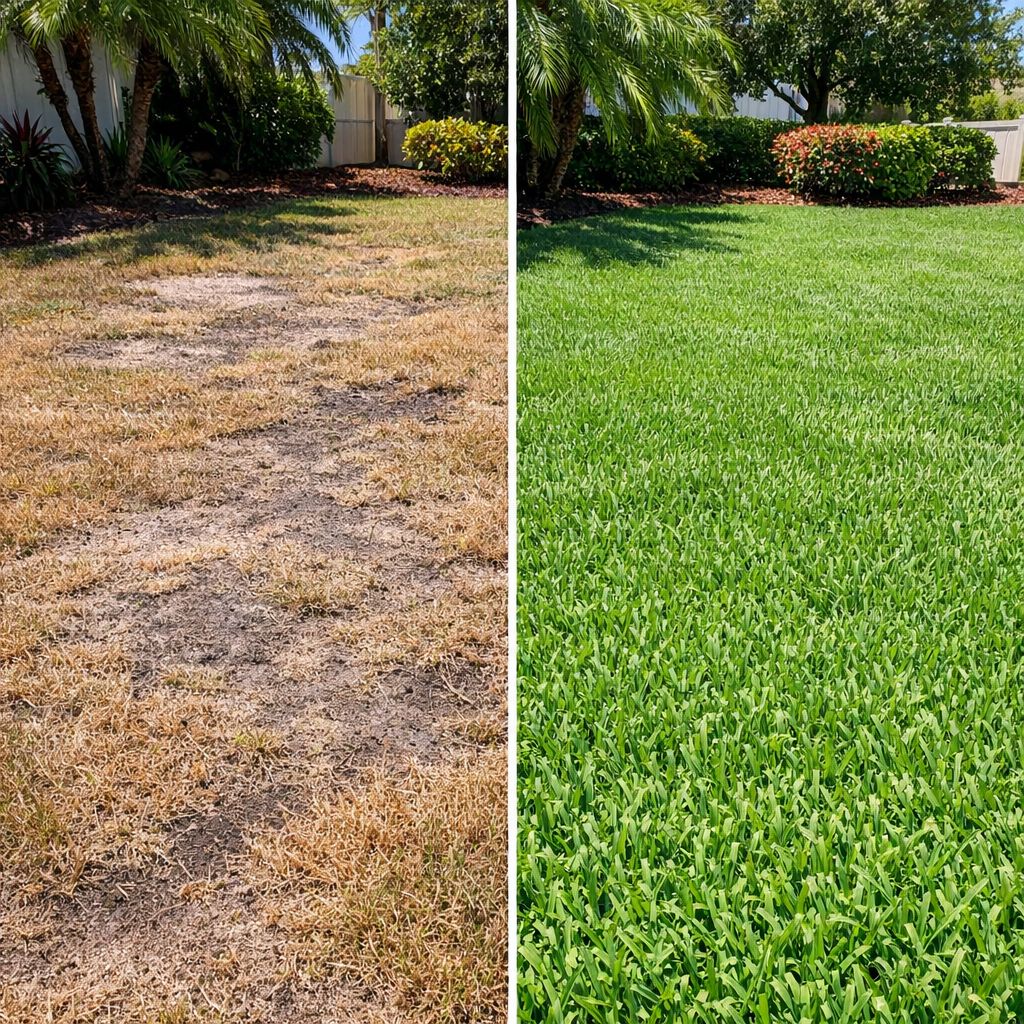
What this tool is looking for
Most lawn problems show a pattern. Brown seams on new sod usually point to water or soil contact. Dry arcs near sprinkler heads point to coverage. Soggy low spots point to grading, drainage, or overwatering. Thin grass under trees points to shade pressure or the wrong grass choice.
What to check before replacing sod
Run each sprinkler zone for a few minutes, touch the soil in problem areas, look for runoff, and compare sunny edges against shaded sections. If the issue follows one sprinkler zone or one low spot, replacing the sod without fixing that cause can waste money.
Assumptions, units and limits (contractor reviewed)
Six field inputs: symptom, lawn age, soil feel, irrigation status, pattern, and weather. New sod adds urgency because roots stall fast; weak or unknown irrigation adds urgency because coverage is the usual cause. A one-zone pattern points to irrigation, a low-spot pattern points to drainage, and a shade pattern points to grass mismatch. This is pattern triage, not a lab test. Every result links to the matching guide plus a contact handoff carrying the full answer set.
Useful next pages
- Build a new sod watering schedule
- Estimate sprinkler zones and coverage risks
- Check drainage risk before buying sod
Common questions
Why is my Florida lawn turning brown in patches?
Common causes include sprinkler coverage gaps, dry sod seams, heat stress near concrete, pests, fungus, compacted soil, or drainage problems. The pattern and moisture level usually narrow the cause.
Should I replace sod before fixing sprinklers?
It is usually better to verify sprinkler coverage before replacing sod because new sod can fail quickly if one zone is weak, blocked, or poorly timed.