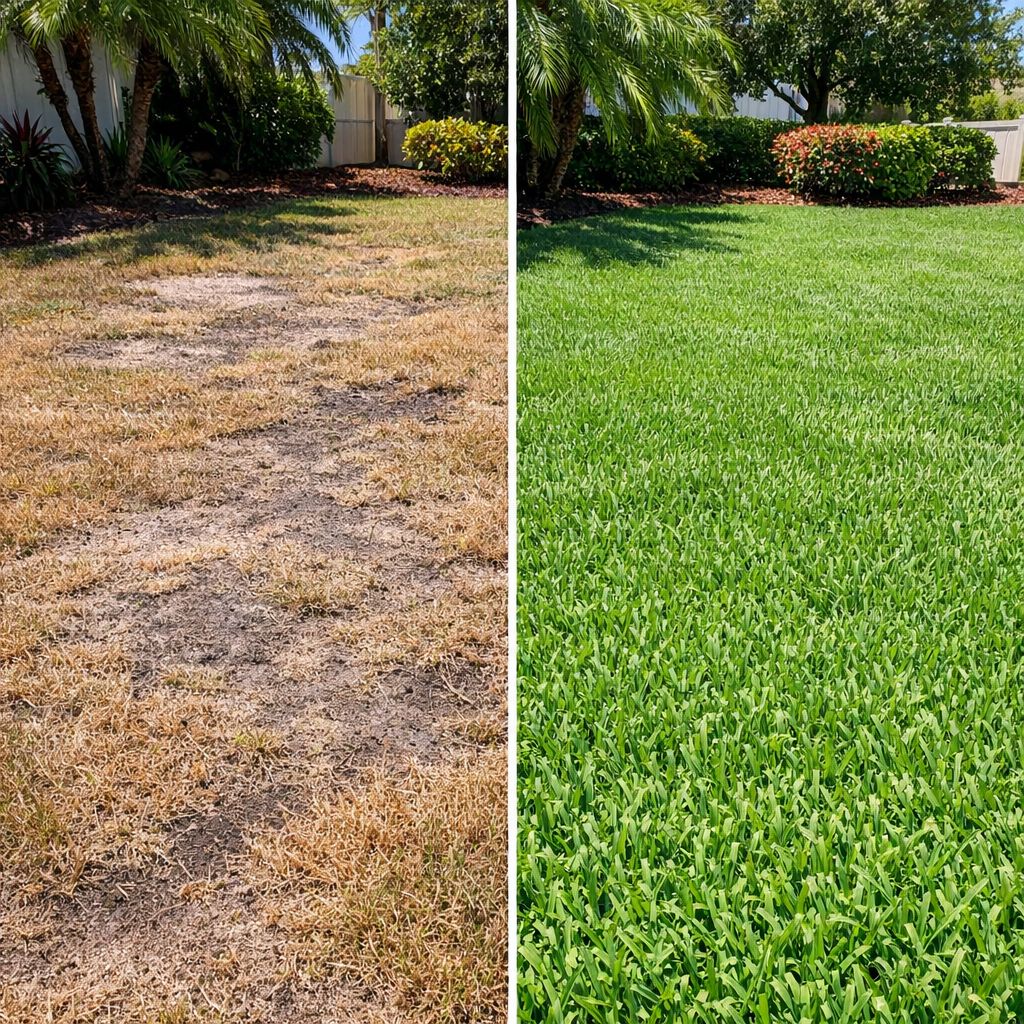
Grass near concrete often struggles first. Driveways, sidewalks, curbs, and patios hold heat, reflect sunlight, interrupt sprinkler coverage, and create hard edges where sod dries faster.
If the rest of the lawn looks healthy but the concrete edge keeps browning, treat it as a pattern, not a mystery.
Start with the lawn problem diagnosis tool if you want to narrow the cause.
Quick answer
Around Kissimmee, St. Cloud, and Poinciana, concrete-edge browning is heat, missed throw, shallow base, runoff pooling, or tire wear — in that order. Confirm which with a 2-minute zone run, fix overlap and soil first, then patch once. Call (407) 674-2841.
Cause 1: Heat From Concrete
Concrete gets hot and stays hot. Sod along the edge can dry faster than the middle of the lawn, especially in full sun. New sod is most vulnerable because roots are shallow and seams near the edge have less protection.
Signs:
- Brown edge follows driveway or sidewalk line
- Soil feels dry and warm
- Damage worsens during hot dry weeks
- Center of the lawn looks better
Fix: add short edge checks during establishment and avoid mowing too low along hot borders.
Cause 2: Sprinkler Coverage Gap
Edges are easy to miss. A sprinkler may look like it is running, but the spray pattern may overshoot the edge, hit concrete, or leave a dry strip.
Run the zone and watch where water lands. If the edge is dry while concrete is wet, the nozzle or head angle may need adjustment.
Use the sprinkler zone planner if the whole zone seems overloaded or poorly spaced.
Cause 3: Shallow Soil Beside Hardscape
The soil beside driveways and sidewalks can be compacted, shallow, or full of construction debris. Sod roots need contact with a prepared base. If the edge has poor soil, it dries fast and roots struggle.
This is common in new-build yards where final grade was rushed.
Fix: remove debris, improve soil contact, and correct grade before patching new sod.
Cause 4: Runoff and Overwatering
Not every concrete-edge problem is dryness. Sometimes water hits the driveway, runs back into one section, and keeps it too wet. That can cause yellowing, soft seams, or fungus pressure.
If the area feels squishy after watering, use the drainage risk checker.
Cause 5: Traffic and Turning Tires
Driveway edges get stepped on, parked on, and clipped by tires. Repeated wear can break sod before roots establish.
If the brown area lines up with foot traffic or tire marks, water alone will not solve it. You may need edging, a walkway, or a different layout.
Should You Patch It With New Sod?
Patch only after fixing the cause. If the edge is dry because sprinklers miss it, adjust water first. If the base is shallow, prep soil first. If the edge is wet from runoff, fix drainage first.
Otherwise the replacement piece will fail in the same strip.
Final Recommendation
Grass dying near concrete is usually heat, coverage, soil, runoff, or traffic. Find the pattern before buying sod. The fix may be simple, but only if the cause is handled first.
The 2-Minute Edge Diagnosis
Run the edge zone and stand on the concrete. Dry shoes plus brown grass means the throw falls short — adjust arc and radius before touching sod. Wet shoes plus brown grass means overshoot onto hardscape with a dry strip behind it — reset angle inward and check pressure. Squishy turf means runoff from the slab ponds in the grade lip — re-cut the edge so water sheets off, and ease that zone’s minutes. Tire scuff plus crushed crowns means traffic, and no schedule fixes traffic: add edging, a step pad, or a narrow bed.
New-build edges fail most because the base beside the pour is fill plus concrete washout. Scrape a test square: gray rubble and powdery dust confirm it. Dig out 2–3 inches, backfill with clean sandy loam, firm it, then lay the patch proud of the slab by half an inch so the first mow does not scalp it.
When to call
Call (407) 674-2841 when the same edge browns twice, the strip stays squishy, sod rocks on rubble base, or tire wear keeps crushing crowns. Say your city, which edge fails, and whether the zone wets shoes or grass. Or start at get a sod quote.
Useful local pages
- Sod installation in Kissimmee
- Sod replacement in Kissimmee
- Irrigation repair in Kissimmee
- Why new sod dies after installation
Next step: use the lawn diagnosis tool, then request sod installation if the edge needs replacement.