faqs:
- question: “How do I tell what caused my brown patches?” answer: “Lift a corner: dry soil means sprinkler coverage gaps, soggy soil means drainage or fungus. Green tissue under a scratch test means the grass can recover.”
- question: “Should I water brown patches more?” answer: “Check soil first — dry spots need better coverage, wet matted areas need drying and fungus watch, not more water. Call (407) 674-2841 if unsure.”
- question: “When should I replace sod instead of repairing it?” answer: “Replace when the scratch test shows no green tissue or turf lifts off dead roots. Small dead spots re-sod fastest, usually in 3–7 days.”
- question: “Why do patches return in the same spot?” answer: “Almost always one bad sprinkler zone or one low spot — not bad grass. Fix the water first, then patch the turf so it stays fixed.”
Short answer: lift a corner first — dry soil means sprinkler coverage gaps, soggy soil means drainage or fungus. Green tissue under a scratch test means the grass can recover; turf that lifts off dead roots gets cut out and re-sodded. Most patch repairs finish in 3–7 days. Call (407) 674-2841.
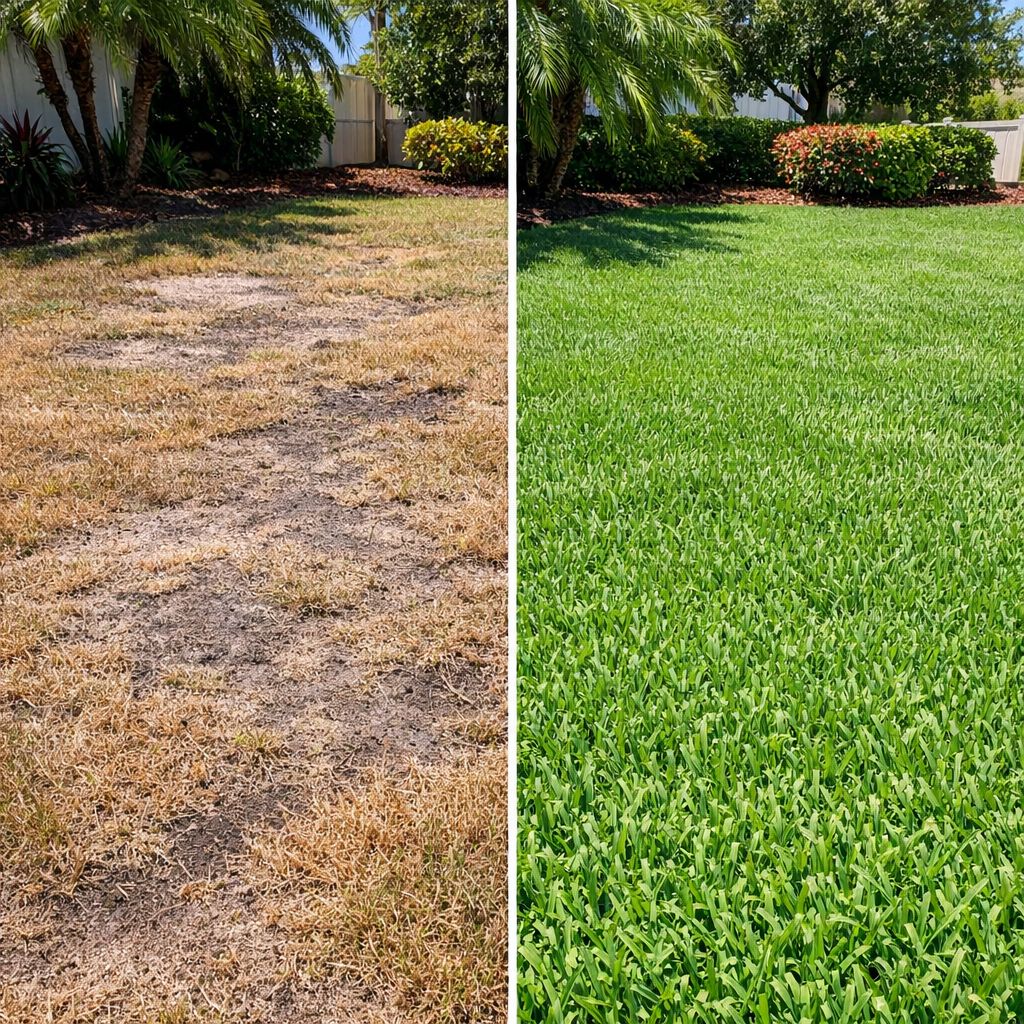
Brown patches can happen fast, especially in Central Florida. In Osceola County, heat and heavy rain during May–October can stress new turf, expose roots, and create ideal conditions for fungus. The good news: most brown patches are fixable once you identify the cause.
This guide walks you through the most common reasons sod turns brown and what to do next. You’ll also learn how to adjust irrigation for sandy soil and how to help your lawn recover without wasting time or money.
Quick answer
In Kissimmee, St. Cloud, and Poinciana, lift a corner first: dry soil means sprinkler coverage gaps, soggy soil means drainage or fungus. Green tissue under a scratch test recovers once water is fixed; turf that lifts off dead roots gets cut out and re-sodded. Most patch repairs finish in 3–7 days. Call (407) 674-2841.
First: Confirm It’s Brown, Not Dead
Not every brown spot means your sod is beyond saving. Sometimes the grass is dormant, stressed, or simply not getting enough water in the right places.
Do a Simple Scratch Test
Use a coin or your fingernail to scratch the top layer. If you see green tissue under the brown blades, the roots may still be alive. If the area feels dry and the turf lifts easily, the sod may be dying.
Check Root Depth and Moisture
Sandy/sandy loam soil in Central Florida drains quickly. Pull back a small corner of sod and look at the root zone. Healthy sod usually has roots holding the soil, not just sitting on top.
If the soil feels wet but the grass is still brown, you may have drainage or fungus issues. If the soil feels dry, irrigation coverage or scheduling is likely the culprit.
Common Causes of Brown Patches in Osceola County Sod
Brown patches usually come from one of a few problems: watering issues, sun and heat stress, fungus, poor soil contact, or pests. In rainy season, fungus and runoff can show up. In drier weeks, dry spots can appear just as quickly.
1) Irrigation Coverage Problems (Dry Spots)
In sandy soil, water moves faster and can miss parts of the yard. A broken sprinkler head, clogged nozzle, or misaligned spray pattern can create brown rings or strips.
Look for patterns. Brown patches that match sprinkler arcs or show up near sidewalks and driveways often point to coverage gaps. If the patch is dry at the same time the rest of the lawn looks wet, you’ve found your clue.
Fix: Run a “catch test” by placing several cans or cups around the area and running your sprinklers for the same cycle length. Compare how much water each area gets. Adjust heads, rotate nozzles, and repair leaks.
2) Overwatering and Poor Drainage (Fungal Stress)
Overwatering can be just as damaging as underwatering. In Osceola County, summer storms dump water quickly, and puddling can keep grass wet too long. That moisture can lead to fungal activity and thinning.
Signs include patchy browning that spreads, a matted feel, or areas that stay damp longer than the rest of the lawn. If you notice that the brown patches appear after rainy evenings, fungus becomes more likely.
Fix: Avoid long, infrequent watering. Use shorter cycles that soak deeper without keeping the surface soggy. If water pools, you may need to improve grading or aerate once the lawn is established.
3) Heat and Wind Stress
Even with irrigation, newly laid sod needs time to root. Hot afternoons and strong winds can dry the top layer. In USDA 9b–10a conditions, turf can brown quickly if it isn’t getting consistent moisture during establishment.
If the brown area appears on the most exposed side of your property—near west-facing walls or open lots—heat stress is a strong possibility.
Fix: During establishment, water more frequently in smaller amounts. After the sod is rooted, you can transition to deeper watering less often. Use a sprinkler schedule that matches Central Florida evaporation rates.
4) Sod Not Fully Contacting the Soil
If the ground was uneven or had debris, the sod may not make full contact. Air gaps prevent roots from grabbing water and nutrients. That can cause localized browning even when irrigation is working.
Common culprits include low spots, high spots, or leaving the area too dry before installation. Sometimes the sod edges dry first, then the patch expands.
Fix: For small areas, lift the affected section and remove debris. Loosen the soil, re-level if needed, and re-lay the sod with firm contact. Water gently right after reinstallation so the roots settle in.
5) Foot Traffic and Compaction
Sandy soil can compact under heavy traffic, especially if the lawn is being walked on daily. Compaction reduces root growth and makes it harder for water to reach the turf.
If the brown patches are near gates, driveways, or paths where people step repeatedly, compaction is likely.
Fix: Keep traffic off the area while the sod roots. If compaction is severe, aeration may help once the turf is established.
6) Nutrient Imbalance and Lack of Feeding
New sod needs nutrients, but too much too fast can also burn roots. If the lawn looks pale, thin, or slow to thicken, it may need a balanced start.
In Central Florida, sandy soils often drain nutrients quickly. That means fertilizing too lightly can lead to weak growth, while over-fertilizing can scorch.
Fix: Use a fertilizer plan made for turf in Florida. For many sod situations, a starter fertilizer helps early root development. If you’re unsure, test your soil or ask your local sod team for a recommendation.
How to Fix Brown Patches Step by Step
Once you know the likely cause, you can act quickly. Here’s a practical approach for Osceola County lawns.
Step 1: Identify the Pattern
Walk your yard and note where the brown patches are located. Are they in a straight line, near sprinkler heads, or clustered in shaded spots? Patterns help you choose the right fix faster.
- Near sprinkler arcs: coverage or head issues
- After heavy rain: fungus or drainage
- Near hot walls or exposed edges: heat stress
- Edges lifting or patchy gaps: poor soil contact
Step 2: Adjust Irrigation for Sandy Soil
For sandy/sandy loam in Central Florida, aim for consistent moisture at the root level. Instead of one long session, use shorter cycles that soak and then allow the surface to dry slightly.
Quick rule: Water early in the morning so the lawn can absorb moisture before the hottest hours. Avoid watering late at night, which can keep blades wet longer.
Step 3: Address Fungus Risk During Rainy Season
If brown patches spread and you suspect fungus, improve airflow and reduce surface wetness. Keep mowing at the correct height and remove clippings when needed.
If you see active fungal signs, you may need a targeted treatment. Local lawn products and timing matter, so it’s best to confirm before applying anything strong.
Step 4: Repair Small Areas by Re-Laying Sod
If the scratch test shows dead turf, don’t waste time trying to “nurse” it back. Remove the dead section, prep the soil, and reinstall sod with good contact.
- Remove brown turf and loosen the top layer of soil.
- Add a thin layer of topsoil or compost only if needed for leveling.
- Re-lay sod tightly and press edges down.
- Water lightly at first, then follow your establishment schedule.
Step 5: Help Roots Recover
Even after you fix watering, the roots need time. Keep the lawn slightly moist while avoiding puddles. Once you see new growth, you can gradually shift to deeper, less frequent watering.
Prevent Brown Patches Before They Start
A few habits reduce the odds of repeat problems in Osceola County.
Water With a Schedule, Not a Guess
Use your irrigation system’s runtime and coverage as a baseline. Then adjust based on rainfall and temperature swings during summer.
Keep Sprinklers Maintained
Check heads for clogs, leaks, and misalignment. In sandy soil, even small coverage gaps can show up as brown circles within days.
Mow Correctly
Cutting too low stresses turf in Florida heat. Follow the recommended mowing height for your grass type and avoid mowing when the lawn is wet.
Watch for Early Signs
The fastest way to fix brown patches is to catch them early. Look for color changes, thinning, or localized dry areas before the patch spreads.
FAQ
1) Why do brown patches show up only in certain parts of my yard?
Most often, it’s irrigation coverage, soil contact issues, or drainage differences. In Osceola County, sandy soil can create dry zones quickly if sprinkler patterns don’t overlap evenly.
2) Should I water brown patches more or less?
Start by checking whether the soil in the patch is actually dry or staying wet. Dry spots usually need better coverage, while wet, matted areas may be overwatering or fungus risk.
3) When is it better to replace sod instead of trying to save it?
Replace the area if the scratch test shows no green tissue or if the sod lifts easily from dead roots. For small dead spots, re-laying sod is usually the quickest way to restore a uniform lawn.
Fix it or replace it — we do both
What our crew sees in Osceola County: repeat brown patches in the same spot are almost always one bad sprinkler zone or one low spot, not bad grass. We diagnose the pattern, fix the water, and patch or replace the turf so it stays fixed. Call (407) 674-2841.
When to call
Call (407) 674-2841 when patches spread after rain, the same spot dies twice, turf lifts off dead roots, or you see matted rings that suggest fungus. Say your city and whether the soil under the patch is dry or soggy. Or start at get a sod quote.