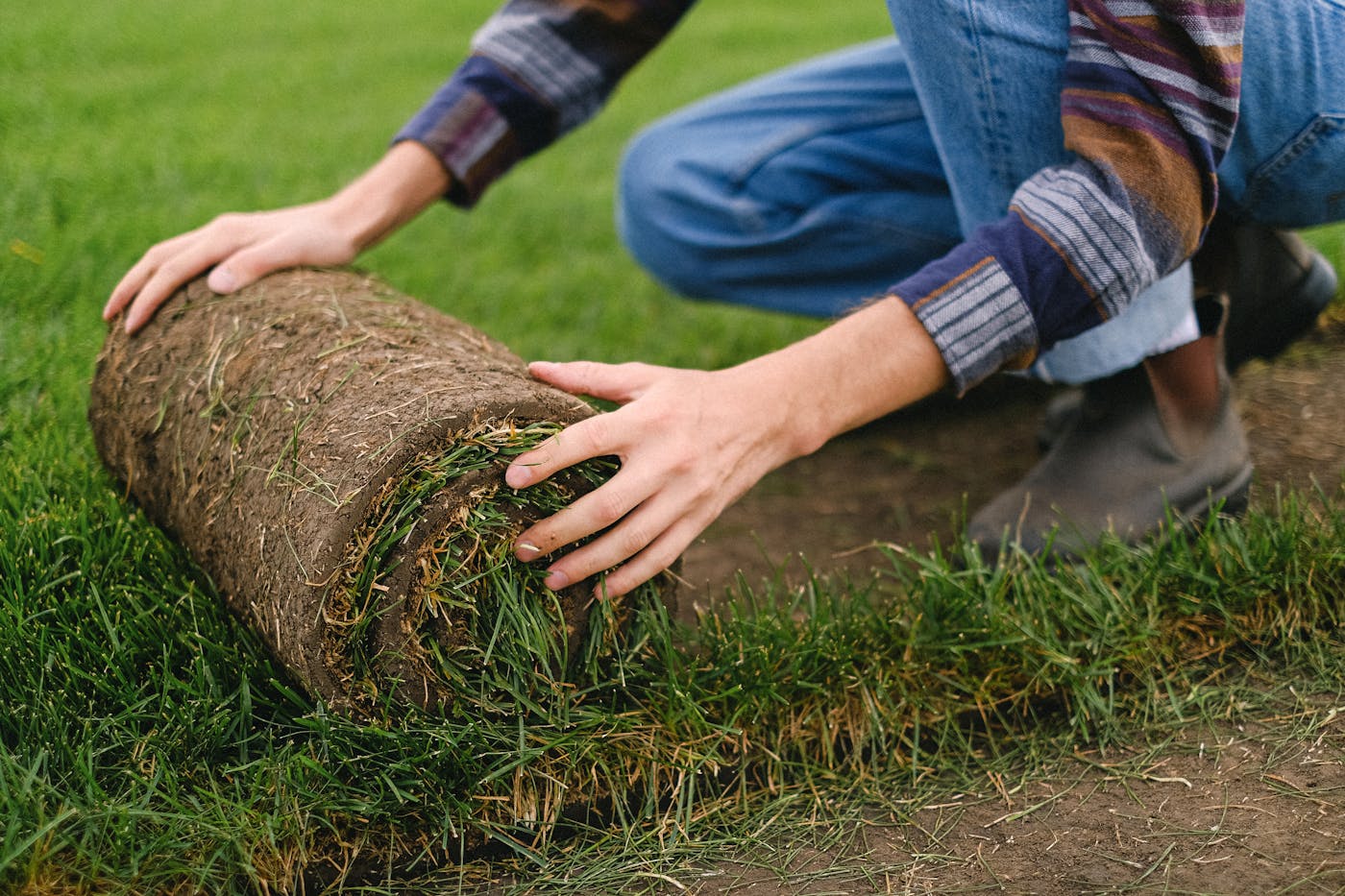
Short answer: brown seams are almost always dry edges — hand-water the seams, run the zone to check coverage, and keep traffic off for two weeks. If edges are dead and curled after that, they get patched, not nursed. Call (407) 674-2841.
Quick answer
In Kissimmee, St. Cloud, and Poinciana, brown seams are almost always dry edges: hand-water seams, run the zone for coverage, keep traffic off two weeks. Soft yellow means too much water, not too little. Call (407) 674-2841.
Brown seams are one of the most common new sod complaints. The lawn may look green across the middle of each piece while the lines between rolls turn tan, crispy, or curled.
That pattern usually means the edges are under stress. The cause may be watering, soil contact, heat, delayed installation, or sprinkler coverage.
Use the watering schedule tool if the sod is less than 30 days old.
Why Seams Brown First
Edges dry faster than the center of a sod piece. They have more exposed surface area and less surrounding turf to protect moisture. If the sod was not tucked tightly, air can move through gaps and dry the root layer.
Seams also reveal poor contact. Roots cannot establish if an edge is lifted, bridged over a low spot, or sitting on loose debris.
Cause 1: Not Enough Early Water
New sod needs frequent moisture early. If watering cycles are too short, the center may survive while seams dry out first.
Signs:
- Edges feel crispy
- Soil under seams is dry
- Corners curl up
- Damage is worse near concrete or sunny borders
Fix: water enough to moisten the sod and soil layer, then gradually transition to deeper watering as roots establish.
Cause 2: Bad Sprinkler Coverage
If brown seams line up in one area, run the sprinkler zone. A dry strip may be missing water even when the rest of the lawn looks fine.
Look for blocked heads, low pressure, overspray, and nozzles that miss corners. If one zone is weak, review irrigation repair.
Cause 3: Gaps Between Pieces
Sod should be laid tight, with staggered seams. Wide gaps dry out and can fill with weeds. If gaps are minor and early, they may tighten as sod roots and spreads. If gaps are wide, replacement or patching may be needed.
Do not fill large gaps with loose sand and hope it becomes turf. The base needs to support root growth.
Cause 4: Delayed Installation
Sod should be installed soon after delivery. Rolls left sitting in heat can lose moisture and root viability. Edges may show stress first because they dry faster.
If sod arrived stressed, watering helps only to a point. Dead edges may not recover.
Cause 5: Too Much Water in Low Spots
Brown seams are often dry, but not always. If seams are brown and soft, yellow, or smelly in low areas, water may be sitting too long.
Use the drainage risk checker if the problem area stays wet after rain or watering.
What to Do Today
- Lift a small corner and feel the soil.
- Run the sprinkler zone and watch coverage.
- Hand-water dry seams if needed.
- Shorten cycles if the area is puddling.
- Keep traffic off weak seams.
- Take photos if the install is new and under review.
Final Recommendation
Brown sod seams mean the edges are stressed. Most causes are water, contact, heat, timing, or drainage. Fix the pattern quickly while the sod still has a chance to root.
Next step: use the watering schedule tool and the lawn problem diagnosis tool to narrow the cause.
Seams still brown after a week? We fix installs
What our crew sees: seam failure within the first two weeks is a water-or-contact problem we can still save; after a month of bare gaps, patching is faster and cheaper than reseeding hope. We diagnose coverage, re-lay dead sections tight, and set the schedule — most patch jobs in 3–7 days. Call (407) 674-2841.
When to call
Call (407) 674-2841 when seams crisp in week one despite water, brown lines follow one zone, gaps gape wide, or low spots turn soft yellow. Say sod age in days plus city. Or start at get a sod quote.