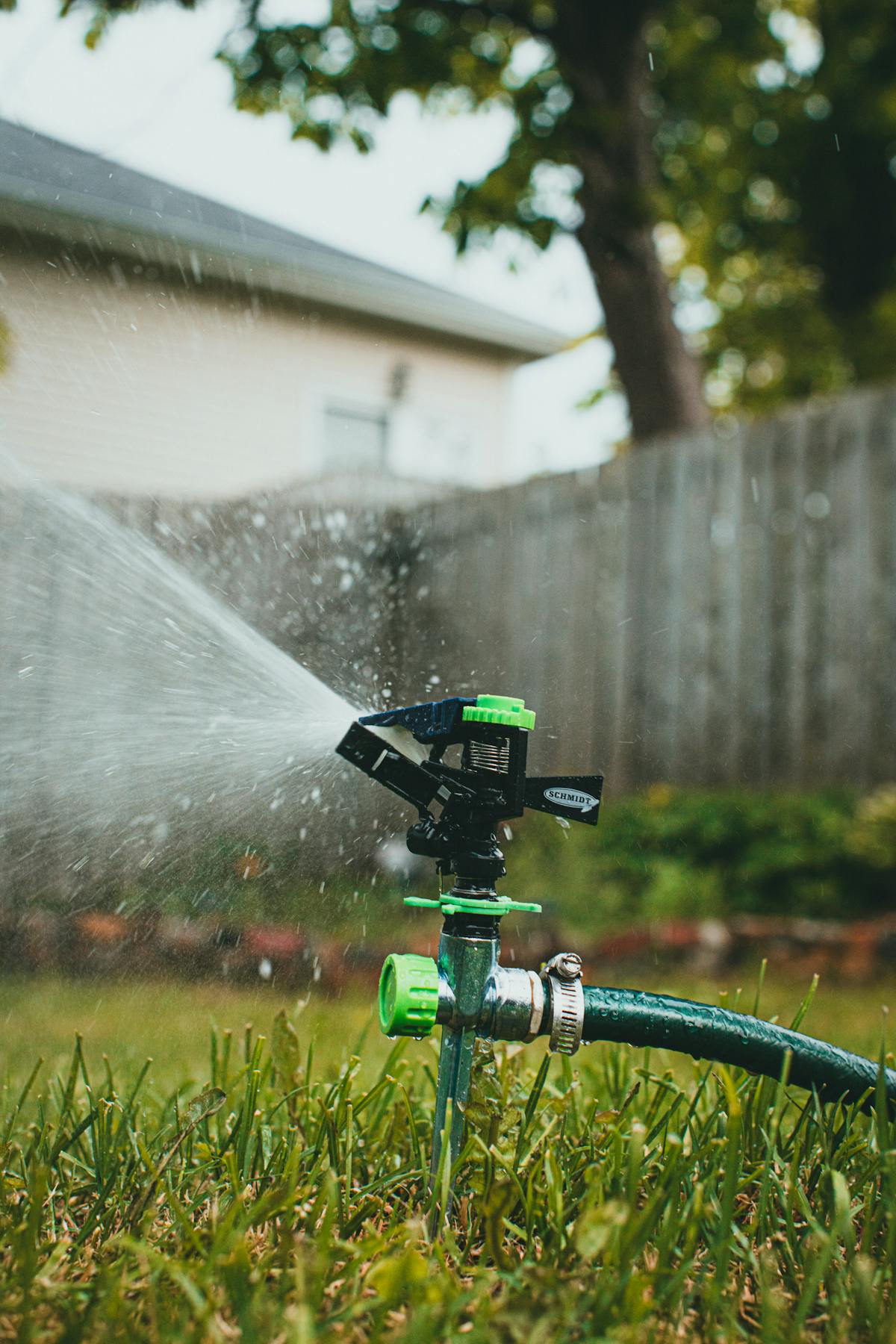
If one part of the lawn keeps drying out while the rest looks fine, do not start by blaming the sod. A dry pattern that follows one sprinkler zone usually points to irrigation coverage, pressure, head spacing, or runtime.
Replacing sod without fixing the water pattern can create the same brown patch again.
Start with the lawn problem diagnosis tool if you are not sure whether the pattern is water, drainage, shade, or pests.
Quick answer
In Kissimmee, St. Cloud, and Poinciana, a dry spot following one zone is a water-delivery problem first: run that zone alone, confirm head-to-head coverage, check nozzles and pressure, fix before buying sod. Call (407) 674-2841.
Step 1: Run Only the Problem Zone
Turn on the problem zone by itself. Watch it for several minutes, not just the first spray. Some problems only show after pressure drops or heads fail to pop up fully.
Look for:
- Heads that do not rise all the way
- Spray blocked by grass, edging, or shrubs
- Water hitting sidewalks instead of turf
- One head spraying much weaker than the others
- A section receiving mist instead of real coverage
If the brown area lines up with weak spray, you have found the first issue.
Step 2: Check Head-to-Head Coverage
Sprinklers are not supposed to barely touch the next head. A good layout usually needs head-to-head coverage, meaning one head sprays close to the next head.
Dry arcs happen when spacing is too wide, nozzles are wrong, or pressure is low. New sod will expose those errors fast because shallow roots cannot chase water yet.
Use the sprinkler zone planner to estimate whether the zone is overloaded for the area.
Step 3: Look for Mixed Head Types
Spray heads and rotors apply water at different rates. If they are mixed badly on the same zone, one section may get too much water while another stays dry.
This does not always look broken at first glance. The controller runs, heads spray, and the zone appears active. The lawn tells the truth later.
Step 4: Check Pressure and Valves
Low pressure can come from a valve issue, leak, partially closed supply, clogged filter, or too many heads on one zone. If every head in the zone looks weak, pressure or flow is more likely than a single bad nozzle.
Signs of a zone-level issue include:
- Multiple heads barely popping up
- Mist instead of droplets
- Heads dropping after a minute
- A wet area near the valve box
- One zone running weaker than every other zone
That is a good time to look at irrigation repair.
Step 5: Adjust Runtime Carefully
Adding runtime can help only if coverage is even. If the dry spot is caused by poor spray, adding minutes may overwater the rest of the zone while the weak area still struggles.
For new sod, use shorter repeated cycles when soil is sandy or runoff starts early. For established lawns, deeper watering is usually better than constant shallow watering, but the zone still needs even coverage.
When Sod Replacement Makes Sense
Sod replacement makes sense after the water issue is corrected or when dead areas are too far gone to recover. The order matters:
- Verify the zone.
- Fix heads, nozzles, pressure, or valves.
- Reset watering.
- Replace sod if needed.
If you reverse the order, the new grass inherits the old problem.
Kissimmee Pattern: Sun Plus Sand Exposes Gaps Fast
On Osceola sand, a spacing gap shows in days, not weeks — no lateral wicking bails out a stretched head. Concrete edges along driveways and sidewalks bake the adjacent strip, so a head throwing 12 feet where 15 is needed browns exactly one mower pass wide. Mixed sprays and rotors on the same zone guarantee the mismatch: sprays drown while rotors thirst, or the reverse when runtime chases the dry half.
Walk the test with flags at each head, then stand at the brown spot and look back — the blocking shrub, sunk head, or overshooting sidewalk spray is usually visible from turf level. Swap to matched-precipitation nozzles, raise sunk heads to grade, and split narrow strips onto their own short runtime before touching the controller math.
Final Recommendation
A dry spot in one sprinkler zone is usually a water delivery problem first and a sod problem second. Run the zone, watch the pattern, and correct coverage before spending money on new turf.
When to call
Call (407) 674-2841 when every head in a zone mists, heads never fully pop, water pools at the valve box, or the dry shape survives new nozzles. Say your city, which zone, and city-versus-well water. Or start at get a sod quote.
Useful local pages
- Irrigation repair in Kissimmee
- Sod installation in Kissimmee
- Sprinkler zone layout before sod
- New sod watering schedule first 30 days
- Irrigation repair
Next step: use the sprinkler zone planner or request irrigation repair if the zone looks weak.