Yellow patches that spread through St. Augustine in June heat are chinch bugs until proven otherwise — not drought, not fungus, not a dull mower blade. Southern chinch bugs suck the sap from St. Augustine stolons and inject a toxin that blocks water uptake, so damaged turf dies in expanding straw-colored circles even while you water. In Osceola County the damage window runs May through September, peaking in hot dry stretches when lawns are already stressed. Ask for the diagnosis, treatment of the survivors, and re-sodding of the dead zones on one job and one quote. Call (407) 674-2841.
Dead or dormant: the 60-second ID test
Do this before you buy anything. Part the grass at the edge of a yellow patch — the border between green and straw — and look close at the thatch in full sun.
- Tiny black bodies with white wings: adult chinch bugs are about 1/5 inch, black with a white X across folded wings. Nymphs are smaller, red-orange with a white band. If you see clusters of them scattering from the thatch, it is chinch damage, not drought.
- Coffee-can float test: cut both ends off a coffee can, push it 2 inches into the patch edge, fill with water, and wait 10 minutes. Chinch bugs float to the surface in infested turf. No floaters after two tests in different spots points toward fungus or irrigation failure instead — start with the lawn problem diagnosis tool.
- Pattern check: chinch damage starts in full-sun stress spots — along driveways, sidewalks, and south-facing slopes — then spreads outward in irregular patches with a yellowing halo. Uniform browning across the whole lawn is usually water or mower trouble; take-all root rot shows in cooler wet months, not July heat.
- Tug test: chinch-killed stolons pull loose easily with dead brown runners; drought-dormant grass still has firm white crowns at the base. If the runners crumble, that section needs replacement, not revival.
Photograph the patch edges, the float-test results, and the sunny exposure — the photos become the treatment packet.
Treatment windows: what works and when
Timing beats chemistry. One correctly timed treatment plus a follow-up saves lawns that three mistimed sprays lose.
- Spot treatment (active edge, under 200 sq ft): a labeled bifenthrin orace granule/liquid applied to the damage border plus a 5-foot buffer into green turf, watered in per label. Re-check with the float test in 7–10 days. This handles early catches where most of the lawn still has live stolons.
- Full-lawn treatment (spreading patches, multiple zones): broadcast application across the whole lawn — spot-spraying a spreading infestation chases it from zone to zone all summer. Two applications 2–3 weeks apart break the nymph cycle. Keep pets and kids off per label until dry, usually a few hours.
- What does not work: fungicides on chinch damage, extra fertilizer on dying turf (it feeds the survivors’ stress, not recovery), and reseeding St. Augustine — it does not grow true from seed. Grub killers target a different insect in a different season.
- Resistance note: rotate modes of action across seasons per label rather than repeating the same product all summer. Tell the tech what was already applied and when — the second application choice depends on the first.
Treat in the morning when bugs are active in the thatch and the product dries before afternoon storms wash it. Skipping the water-in step is the most common DIY failure on granular products.
The re-sod threshold: treat or tear out
Dead is dead — no spray revives straw with crumbling stolons. The decision rule:
- Under 30% dead with live borders: treat the infestation, let St. Augustine runners recolonize through the growing season, topdress thin spots with sand per lawn leveling guidance. Recovery takes 6–10 weeks in summer heat with proper water.
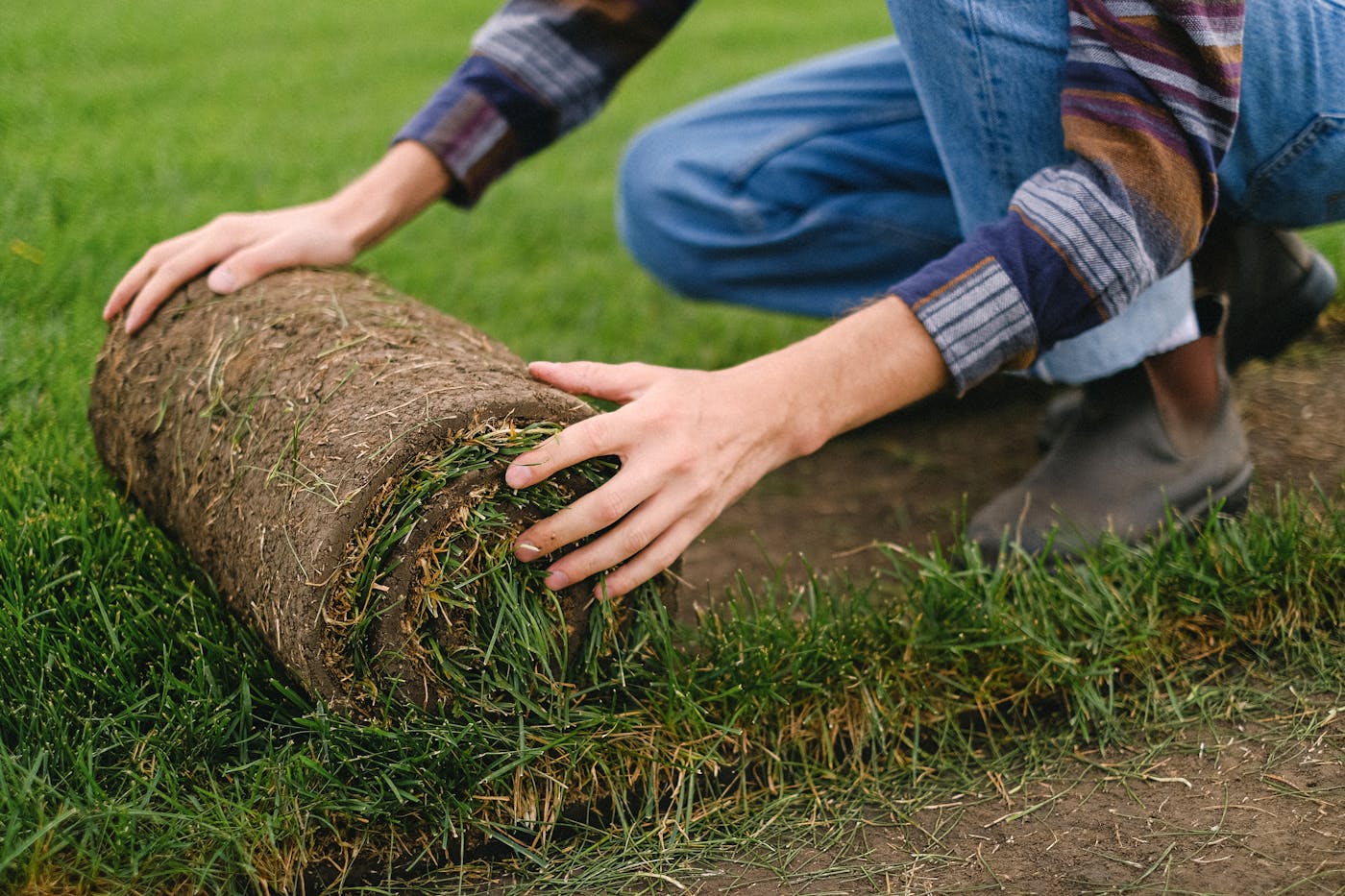
- Over 30% dead, or patches that return in the same zones yearly: cut out and replace. Dead turf is removed and hauled per sod removal, the base is leveled, and fresh St. Augustine or Zoysia goes down the same week.
- Chronic reinfestation zones (hot driveway borders, south slopes): consider Zoysia on replacement — it tolerates chinch pressure better than Floratam St. Augustine and levels cleanly. Cultivar choice runs through the grass selector.
Never lay new sod over an active infestation. The treatment must read clean on the float test first, or the bugs eat the new investment within weeks.
Prevention plan: making the lawn uninviting
Chinch bugs target stressed St. Augustine. A lawn cut, watered, and fed correctly resists pressure that kills neglected turf next door.
- Mow high (3.5–4 inches) with sharp blades: tall dense turf shades the thatch where chinch bugs breed. Scalping opens hot bare lanes they colonize first. Bag clippings during active damage to remove harboring thatch.
- Water deep and infrequent: 3/4–1 inch twice weekly in dry heat, early morning, so the surface dries by night. Daily sprinkles keep the thatch moist and attractive. Broken heads that mimic damage get checked against irrigation repair standards.
- Fertilize on the Florida schedule, not heavier: excess nitrogen pushes soft succulent growth chinch bugs prefer. Slow-release products on the extension calendar, never a rescue dump on damaged turf.
- Dethatch and edge yearly: thatch over half an inch deep is a chinch nursery. Hot border zones along concrete get first attention every spring before the May window opens.
- Scout the stress spots monthly May–September: driveway edges, sidewalk strips, full-sun slopes. One float test a month in the worst spot catches the season early, when a single spot treatment still works.
HOA lawns get the same plan with documentation: dated photos of each scouting round satisfy most compliance letters while treatment works.
Cost bands
- Inspection and ID visit: often bundled with treatment quote; standalone diagnosis typically $75–$150, credited toward treatment.
- Spot treatment: typically $150–$350 per visit including follow-up check.
- Full-lawn treatment with follow-up: typically $300–$700 depending on lawn size and product, two visits.
- Strip and re-sod after kill: $1.50–$3.00 per sq ft installed — about $1,500–$3,000 per 1,000 sq ft — including tear-out, leveling, and the 30-day watering schedule.
When to call
Call (407) 674-2841 when yellow patches spread in summer sun, the float test shows bugs, or dead zones exceed a mower width. Say your city, the patch size, your grass type, and what was already sprayed. Or send a question.
Useful local pages
- Sod removal and reset
- Lawn leveling and topdressing
- Sod installation
- Chinch damage sod in Kissimmee
- Chinch damage sod in St. Cloud
FAQ: chinch bugs in Osceola County
Are chinch bugs active year-round?
Adults overwinter in turf and leaf litter, but damaging populations explode May through September in hot dry weather. Winter browning is almost never chinch activity — suspect fungus or dormancy instead.
Will the dead patches grow back after spraying?
Only where stolons are still alive. Sprayed turf with firm white crowns recolonizes in 6–10 summer weeks. Straw with crumbling brown runners is dead and needs replacement — budget the re-sod rather than re-spraying corpses.
Is treatment safe for pets and kids?
Labeled residential products are registered for home lawns with re-entry once dry, typically a few hours. Keep pets off during application and watering-in, store granules sealed from moisture, and keep the product label for the follow-up visit.
Why do the same spots die every summer?
Chronic stress zones — full-sun concrete borders, thin builder soil, low-water corners — invite repeat attack. Break the cycle with heat-tolerant cultivar on replacement, corrected irrigation coverage, and spring preventive scouting instead of August rescue sprays.
Should I switch grass types after a kill?
If Floratam St. Augustine dies in the same zones twice, yes — Zoysia resists chinch pressure better and handles leveling cleanly, while Bahia tolerates low-input borders. Run the choice through the grass selector before ordering sod.