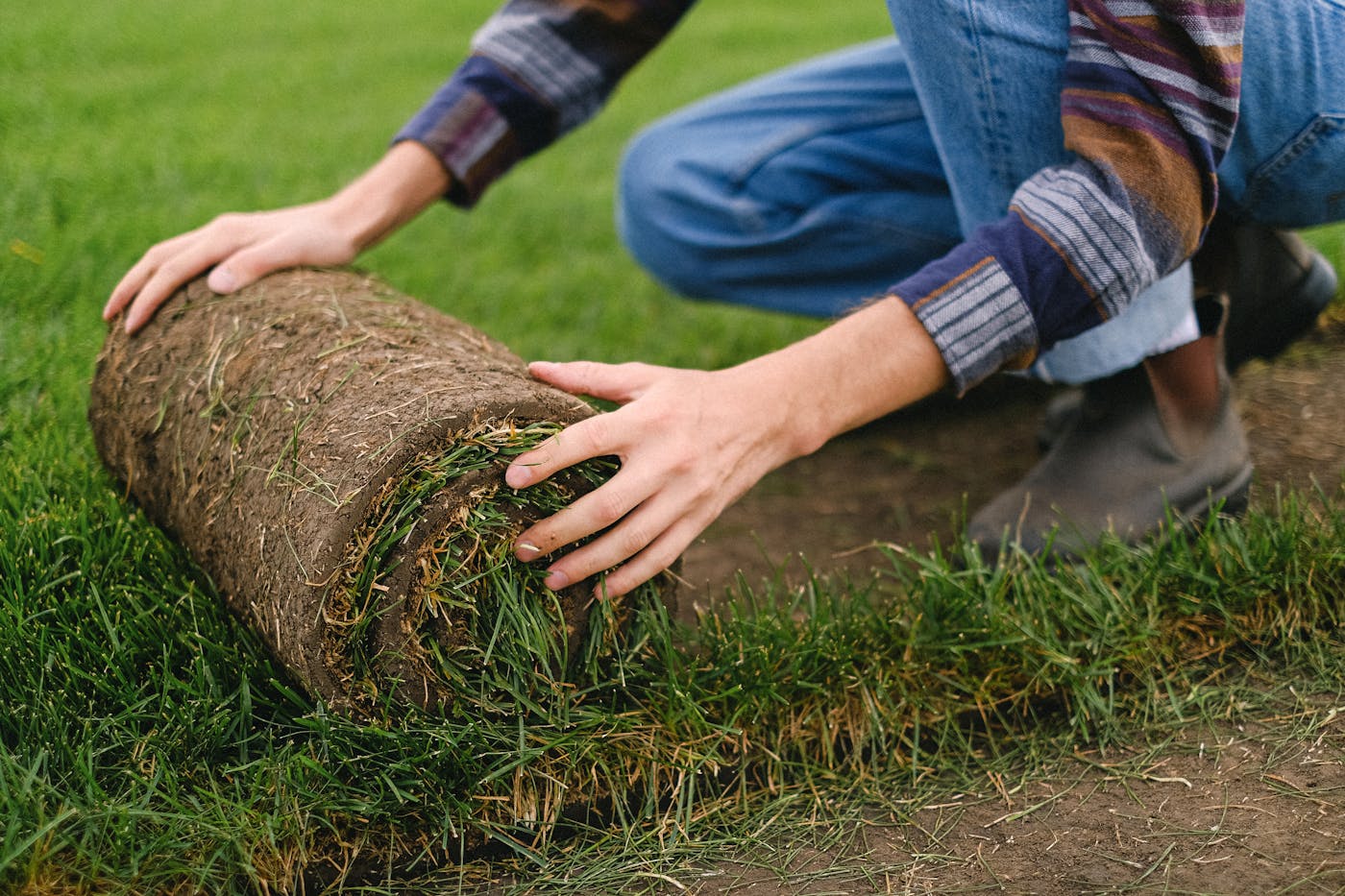
Sod installation St. Cloud covers East Osceola: 34769, 34771, 34772, Narcoossee growth, and lots that drain toward East Lake Tohopekaliga. Osceola Sod Solutions tears out the dead pads, grades, and rolls street-match sod. Most jobs are $1.50–$3.00 per sq ft turn-key and finish in 3–7 days. Call (407) 674-2841.
St. Cloud is known as the Gateway to East Lake Tohopekaliga, and that lake edge shapes every sod installation in St. Cloud, FL. Sandy and sandy-loam soil in USDA 9b–10a roots fast once the grade is right, and punishes soft grade just as fast.
Lake edge vs new-build pads
Lakefront sod fails when you roll it into a wet pocket. New-build pads fail when you skip grade on compacted fill. We check which one you have before the truck leaves.
- Photographed residential streets: Seville St. Augustine street match
- Bigger unirrigated Narcoossee stretches: Bahia
- Shade strips: Palmetto or Provista
- Same crew that handles sod installation in Kissimmee — East Osceola route, not downtown Orlando or Lake Nona Medical City
Lake-edge lots need erosion-resistant thinking and a drainage check first. New-build lots need construction-compacted soil opened up and soft spots firmed before turf goes down. New-build lawns fail early from construction-compacted soil and ungraded soft spots, so grade is not optional on either side of town.
Neighborhoods and corridors
Downtown St. Cloud / 34769, East Lake Toho edge / 34771, Narcoossee corridor / 34772, plus the growth pads off Narcoossee Road. Lake-edge moisture and sandy fill lots are both normal on this route.
Rapid suburban expansion along Narcoossee Road is creating thousands of new lawns annually — compacted fill, punch-list fronts, and blank builder dirt waiting for street-match sod. Around downtown and the St. Cloud Heritage Festival core, it is tear-outs and dead fronts that need to match the photographed street. On the 34771 lake edge, it is lots that drain toward East Lake Tohopekaliga where wet pockets kill new sod if you skip the drainage check.
The three zips quote differently. 34769 downtown grid lots are small, fenced, and shaded by mature oaks — access is the cost driver, and Palmetto under the canopy beats St. Augustine fighting for sun. 34771 lake-edge lots need the drainage check before anything else: sod rolled into a wet pocket by East Lake Toho drowns in the first August storm, so we probe and pitch first. 34772 Narcoossee new-builds sit on compacted fill — grade is the whole job, then street-match Seville or Bahia before the closing walk. Tell us the zip on the call and the truck is loaded for that ground, not a generic St. Cloud ticket.
Got the letter already? Fix an HOA lawn violation in St. Cloud. Drainage first on wet lake lots: drainage in St. Cloud. West on US-192: sod installation in Celebration. Every install leaves before-and-after photos so the re-inspect clears on the first walk.
What $1.50–$3.00 includes
Haul-off, grade, fresh street-match sod, staggered install, watering plan for the first two weeks. Not a dumped pallet. Lakefront lots with drainage work sit at the top of the band. Dry zones first: irrigation repair in St. Cloud. Patchy lawn already there: sod replacement in St. Cloud.
Turn-key means haul-off of the old lawn, rough grade, fresh-cut sod laid same-week with tight seams, rolling after lay-down, and a two-week watering plan handoff. It is not a pallet count. Quotes under $1.50/sq ft skip haul-off or grading. Quotes that do not name haul-off, grade and sod variety in writing are not comparable. Irrigation adjustments and turf borders are scope-driven add-ons.
How a St. Cloud install runs
Sod installation in St. Cloud, FL runs in order. Skipping a step is how lake-edge washout and new-pad browning happen.
- Site walk. We measure grass area only, not lot size, and call out lake-edge wet vs new-build fill, access for delivery, and HOA timing or cleanup rules. Some associations require a contractor note on letterhead.
- Grade and base prep. We grade the area, remove debris, firm the sandy subgrade, and fix soft spots before laying turf. On Narcoossee fill pads this means stabilizing disturbed subgrade. On 34771 lake lots this means finding where water sits.
- Soil amendment. Disturbed lots and stripped tear-outs get amendment worked into the base so new roots leave sod and enter soil instead of sitting on compacted fill.
- Lay sod. Fresh-cut pallets go from trailer to soil same-day, staggered with tight seams and pressed firmly — if you can lift an edge easily it did not bond.
- Roll. Rolling after lay-down knocks out air pockets and bonds sod to firmed sand, which stops seams separating and edges curling in the first two weeks.
- Initial soak. Water starts the same evening so rooting starts on day one. Sod that waits stacked cooks before it roots.
- Watering plan handoff. You leave with a site-specific watering plan for the first 30 days, built around your shade, sand, and zone layout — not a generic card.
Installs are scheduled same-week and complete 3–7 days from the site walk, weather and access permitting. Rainy season May–October, HOA or permit gating, and commercial phased work can hold the date.
What moves your price inside $1.50–$3.00
No new numbers — your quote moves inside the $1.50–$3.00 band on these four drivers:
- Square footage and site complexity. Square footage and site complexity are the primary pricing drivers. Small cut-up fronts with beds, driveways, and pool deck cut-outs cost more per foot than open rectangles. Most St. Cloud lot-size guesses shrink 10–20% once only grass area counts.
- Grading needs and base prep. Grading needs and base prep move price. Disturbed-subgrade lots cost more to stabilize. Tear-outs that need haul-off, re-pitch away from the slab, and soft-spot firming sit higher than clean re-grades. Quotes under $1.50/sq ft skip haul-off or grading.
- Grass type. St. Augustine, Bahia, and Zoysia affect material cost. Variety has to be named on the quote — not premium sod — and has to match the St. Cloud sun, shade, and street or the install succeeds and the lawn still fails.
- Access, irrigation, and borders. Delivery access, irrigation adjustments, and turf borders add scope-driven cost. Sprinkler dry spots and blocked heads after install starve zones, so zone layout must be rechecked after sod goes down. Dry zones first mean irrigation repair in St. Cloud.
Lakefront lots that need drainage sit at the top of the band.
Picking grass for a St. Cloud yard
Pick for sun, shade, lot size, and street-match — HOA rules constrain turf choice, timing, and cleanup, so the variety has to clear the re-inspect as well as root.
Seville St. Augustine for photographed streets. St. Augustine Floratam and similar types are popular in Osceola County, spread well, make a dense mat, and are heat tolerant in USDA 9b–10a. Best for sunny to lightly shaded yards and family lawns. That is why Seville is the street match on most St. Cloud residential blocks. It struggles in deep shade, and can need pest and disease attention where irrigation keeps conditions wet. Details: St. Augustine in St. Cloud.
Bahia for bigger unirrigated Narcoossee stretches. Bahia is budget-friendly, heat-tough, handles sandy soils, needs less fertilizer, and survives less intensive maintenance. Best for open yards, larger properties, and rental properties. Trade-off is coarser texture, and it can go dormant during cooler stretches. Do not mix Bahia and St. Augustine on one curb — the texture and color break never blends.
Palmetto or Provista for shade strips. Where oaks shade the strip and St. Augustine would struggle in deep shade, we use Palmetto or Provista to hold the edge without breaking street look from the curb.
Zoysia and hybrid Bermuda in the right spots. Zoysia is tough, dense, and drought tolerant once rooted, but slower to establish and needs consistent establishment watering. Hybrid Bermuda gives fast establishment and recovery for full-sun lawns. Both have to be named by cultivar on the quote and matched to sun and irrigation reality.
Service details and method: sod installation.
Watering and rooting in St. Cloud sand
New sod needs a site-specific watering plan for the first 30 days. Roots begin in 1–2 weeks, strong rooting takes 3–6 weeks. Sandy soil needs rooting-first watering: keep soil moist enough for roots, and do not let sod dry out between cycles — most failures happen when sod dries out.
Rainy season May–October helps but does not replace proper rooting moisture. Heavy rain speeds establishment but risks washout on loose grade, and heavy rain can leave dry pockets under sod. Check soil moisture under the sod after storms and watch for pooling in low areas. Sod browning after install is most often watering failure from drying out, or over-saturation on poorly drained soil. Sod seams separate and edges curl when the base is soft or watering is uneven in the first two weeks.
Osceola County water restrictions constrain irrigation schedules for new sod establishment, so the plan has to fit allowed windows and still keep roots moist — more frequent watering at first, then less as roots deepen. Zone layout must be rechecked after sod goes down, because sprinkler dry spots and blocked heads starve zones right when roots need steady moisture. If heads are buried, tilted, or misting the driveway, fix water before the crew rolls: irrigation install in St. Cloud.
Replacing a dead lawn vs installing on a new pad
If you searched sod replacement near me in St. Cloud, here is the split:
Replacement means a dead lawn is already there. Tear-out, haul-off, re-grade, then street-match sod so HOA photos clear. Partial sod replacement is standard practice — cut out failing sections, match grass type, and manage transitions — and it fits small dead fronts where the rest of the lawn still holds. Full replacement wins when thatch, weeds, or grade failure run wall to wall. That route lives here: sod replacement in St. Cloud.
Installation means a new pad or blank dirt. Builder dirt, compacted Narcoossee fill, or a bare closing-ready yard with no tear-out. The work is grade, firm, amend, lay, roll, soak, and hand off the 30-day plan. This page is that install route — sod installation in St. Cloud, FL at $1.50–$3.00 turn-key.
When in doubt, say dead lawn vs blank dirt plus your ZIP on the call and the truck gets loaded right.
Quick answer
New sod installed in St. Cloud (34769) lives or dies on install day: graded ground, morning-cut pallets, same-day lay, watered the same evening at $1.50–$3.00/sq ft turn-key. Sod that waits stacked cooks before it roots. Call (407) 674-2841.
Where full installation wins in St. Cloud
Full installation wins on tear-outs, re-grades, crew-coordinated lays, and heat-season jobs — the St. Cloud orders (34769) where old grass leaves, pitch gets fixed, fresh-cut sod goes from trailer to soil in hours, and watering starts the same evening. A ready crew on proven ground buys rooting that starts on day one.
It loses where the site is not ready: dead irrigation, a grade that ponds, or a crew date that slides while pallets sit. Installed sod on an unproven yard becomes a service call at full price. Grade first, prove water, lock the day — then cut the sod. The install has to match the ground, not the wish.
Reading an installation quote in St. Cloud
A real St. Cloud install quote lists measured square footage, tear-out and haul-off, grade and pitch plan, variety named, cut date and farm, lay date same-day as the drop, rolling, and the watering schedule — at $1.50–$3.00 per sq ft turn-key. Fresh-cut date in writing, not vibes.
Red flags: no grade line, variety unnamed, no cut date, sod arriving dry or hot-stacked, and anyone promising rooting without watering. Fresh sod laid same-day roots in 10–14 days; the tug test should resist a firm pull. Call (407) 674-2841.
Get the install split in writing: tear-out, grade, sod, rolling, and water each line-itemized at $1.50–$3.00 per sq ft turn-key. One combined handshake blurs all five. Call (407) 674-2841 and every line goes on the same St. Cloud quote packet, separately itemized.
Heat, timing, and St. Cloud soil
St. Cloud warmth (34769) is both ally and enemy: it roots fresh sod fast and punishes ungraded ground faster. Morning-cut pallets laid before afternoon heat root days ahead of sod that sat strapped through a hot weekend. Sandy native soil beneath is an ally once the pitch is right — it drains, it roots deep, it holds a line.
Verify grade and water before the crew rolls: install onto proven ground roots; install onto birdbaths and dead zones reschedules the crew. Set the day, ready the ground, then cut the sod.
Grade in writing beats every promise: pitch away from the slab, no birdbaths, edges cut to hardscape height. Sod hides color for a week; it never hides water standing by the patio.
Measure grass, not lot: beds, driveway, house footprint, and pool deck come out before the footage. Most St. Cloud lot-size guesses shrink 10–20% once only grass area counts — measure twice, order once.
Tear-out matters more than variety: old thatch left under new sod wicks water sideways and starves roots. Strip it, haul it, start on soil — the St. Cloud installs (34769) that root fastest all start bare.
Variety named on the quote: St. Augustine, Zoysia, Bahia, or Bermuda by cultivar — not ‘premium sod.’ The variety has to match the St. Cloud sun, shade, and street (34769), or the install succeeds and the lawn still fails.
Measure and price before you order
Count pallets with the pallet calculator, then run the install cost estimator for a grass x size x city planning range.
When to call
Closing Friday, HOA re-inspect, or a lake-edge wet pocket — call (407) 674-2841 from this page. Osceola Sod Solutions answers from the East Osceola route.
Say this on the call so the quote is right the first time:
- ZIP — 34769 / 34771 / 34772
- Lake-edge wet or new-build fill — drainage check vs grade-and-firm
- Deadline — closing date or HOA re-inspect date
- Footage if known — grass area only, after beds and driveway come out
Related: St. Augustine in St. Cloud, irrigation install in St. Cloud, get a sod quote.
Recent small-job work in St. Cloud
Job-photo log, September 2026: the job-photo intake (data/job-photo-intake.json) currently holds zero approved, customer-consented entries with publishable before-and-after photos, so there are no job photos to show here yet — and none will be staged. Every St. Cloud install still leaves before-and-after photos for the HOA re-inspect walk, and consented small-job entries will appear in this section with their dates once they clear review. Past customers willing to share repair photos can call (407) 674-2841.