Most of Osceola County sits on sandy and sandy loam soil. Water drains fast, nutrients wash through quickly, and not every grass type can handle the dryness between rain events.
The best sod for sandy soil in Central Florida is the one that roots deep, tolerates drought, and stays green through the dry spells without needing constant watering.
Quick answer
In Kissimmee, St. Cloud, and Poinciana on sand: Bahia for unirrigated acreage, Floratam or Palmetto St. Augustine for irrigated fronts, Zoysia for traffic, Bermuda for full-sun fast cover. For traffic areas on sand, compare Zoysia sod in Poinciana for wear tolerance and watering needs. Amend with compost, wet the top 4–6 inches, and verify sprinklers first. Call (407) 674-2841.
How Sandy Soil Affects Sod
Sandy soil has large particles with big gaps between them. Water moves through fast. That means:
- Sod roots must grow deep to reach moisture
- Fertilizer leaches out quicker than in clay soils
- Surface dry-out happens within hours on hot days
- Irrigation needs to be frequent but short
Choosing a grass variety that matches these conditions makes the difference between a lawn that struggles and one that establishes quickly.
Top Sod Choices for Sandy Soil
Bahia Grass
Bahia is the most drought-tolerant option for sandy Florida soil. It has a deep root system that reaches moisture far below the surface. It stays green with less water than any other warm-season grass.
- Drought tolerance: Excellent
- Root depth: Very deep (up to 6–8 feet)
- Maintenance: Moderate — grows fast, needs frequent mowing
- Shade tolerance: Poor
- Best for: Large yards, low-maintenance areas, sandy sites with no irrigation
Bahia is not the prettiest lawn grass, but it survives where others dry out.
St. Augustine Grass
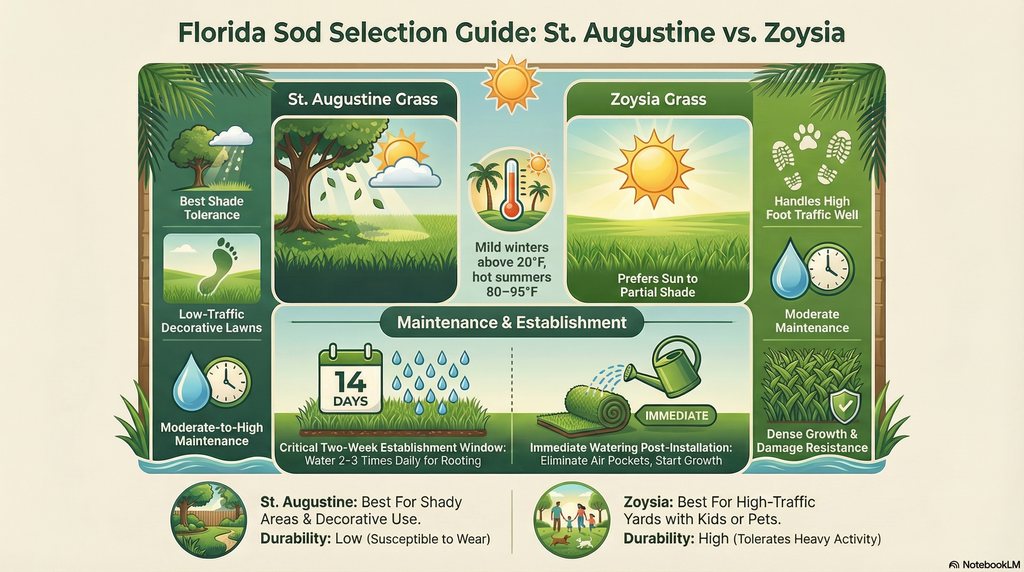
St. Augustine is the most popular lawn grass in Central Florida. It does well on sandy loam if watered consistently. It has coarse blades and a dense canopy that blocks weeds.
- Drought tolerance: Moderate
- Root depth: Moderate (6–12 inches)
- Maintenance: Moderate
- Shade tolerance: Good
- Best for: Front yards, HOA communities, irrigated lawns
Floratam is the most common St. Augustine variety for Florida. Palmetto and CitraBlue offer better shade tolerance and slightly better drought performance.
Zoysia Grass
Zoysia grows thick and handles foot traffic well. It adapts to sandy soil but needs regular water during establishment. Once mature, it has good drought tolerance.
- Drought tolerance: Good
- Root depth: Moderate to deep
- Maintenance: Low to moderate — slow growing, less mowing
- Shade tolerance: Moderate
- Best for: High-traffic areas, mixed sun and shade
Bermuda Grass
Bermuda thrives in sandy soil and full sun. It spreads fast, recovers from damage quickly, and has excellent drought tolerance once established.
- Drought tolerance: Excellent
- Root depth: Deep (up to 6 feet)
- Maintenance: High — needs frequent mowing and edging
- Shade tolerance: Poor
- Best for: Full-sun lawns, sports areas, rental properties
Bermuda goes dormant and turns brown in winter, which matters if the lawn needs year-round green.
Which One Should You Pick?
Choose based on your yard conditions:
- No irrigation and large area: Bahia
- Irrigated front lawn with shade: St. Augustine (Palmetto or CitraBlue)
- Mixed sun/shade with foot traffic: Zoysia
- Full sun, wants fast coverage: Bermuda
- HOA with strict appearance rules: St. Augustine (Floratam)
Preparing Sandy Soil for Sod
Sandy soil needs organic matter to hold moisture. Before laying sod:
- Till in 1–2 inches of compost or topsoil
- Apply a starter fertilizer high in phosphorus
- Level low spots that will dry out faster than the rest
- Run irrigation long enough to wet the top 4–6 inches
Without amendment, sandy soil dries out so fast that new sod edges curl within hours on a hot Florida afternoon.
Watering Sand Without Wasting Money
Sand forgives overwatering but punishes underwatering in streaks. Short frequent cycles beat one long soak: two dawn passes 3 hours apart wet the root zone without pushing fertilizer past it. Watch the first week — curled edges by 2pm mean the morning pass was too shallow, not that the variety is wrong. Mulch beds and tree rings cut the irrigated square footage and the water bill while making the remaining turf look sharper.
Rentals and large Poinciana sides deserve special honesty: Bahia at 3–4 inches with sharp blades looks intentional and survives a missed week. St. Augustine on the same neglect looks like failure by August. Put premium turf where eyes and sprinklers overlap, practical turf everywhere else.
Bottom Line
Bahia and Bermuda handle sandy soil best with minimal water. St. Augustine needs irrigation but gives the best appearance. Zoysia is a strong middle ground for mixed conditions. Neighboring homeowners can review Zoysia sod in Harmony for compost amendment and establishment tips on sand.
When to call
Call (407) 674-2841 when the lot is pure sugar sand, quotes disagree on variety, irrigation is unknown, or the HOA mandates St. Augustine. Say your city, sun hours, and city-versus-well water. Or start at get a sod quote.
Useful local pages
- St. Augustine sod in Kissimmee
- Sod installation in Kissimmee
- Sod installation in St. Cloud
- CitraBlue St. Augustine in Central Florida
- How many pallets of sod do I need
Use the grass selector tool to compare varieties for your specific yard. For delivery options, check sod delivery services serving Kissimmee, St. Cloud, and all of Osceola County.