faqs:
- question: “What is the best sod for most Kissimmee yards?” answer: “St. Augustine (Floratam) for sunny yards — dense, heat-tough, and proven in Osceola County sand. Call (407) 674-2841 for a sun-and-sprinkler match.”
- question: “What sod works for big lots on a budget?” answer: “Bahia — heat-tough and lower-maintenance on large sunny lots. Turn-key installs run $1.50–$3.00 per sq ft.”
- question: “What grass handles wear and stays dense?” answer: “Zoysia once established — durable and weed-resistant, but it needs consistent establishment watering in sandy soil. See current variety and watering guidance for Zoysia sod in Poinciana if you are planting for wear tolerance on a sunny lot.”
- question: “How fast can you install?” answer: “Most Osceola County installs finish in 3–7 days. Call (407) 674-2841 with your city and square footage.”
Short answer: St. Augustine (Floratam) for most sunny Osceola County yards, Zoysia when you want durability, Bahia for big lots on a budget. All three root well in our sandy soil (USDA 9b–10a) when irrigation covers evenly. Most of our installs finish in 3–7 days. Call (407) 674-2841 and we will match the grass to your sun, shade, and sprinklers.
Choosing the right sod for your yard in Osceola County can make a big difference in how fast it roots, how well it holds up to heat, and how it looks through the year. Central Florida’s sandy and sandy loam soils drain quickly, and our rainy season (May–October) can swing from heavy showers to dry spells. The best sod types are the ones that handle both extremes.
Below are the top sod options for Central Florida lawns, plus practical guidance for matching grass to your yard and irrigation setup.
Quick answer
In Kissimmee, St. Cloud, and Poinciana, plant St. Augustine (Floratam) for most sunny yards, Zoysia for durability under traffic, and Bahia for big lots on a budget. If you are outside those three cities, check install notes for Zoysia sod in Celebration for the same durability option in local soil. All three root in sandy USDA 9b–10a soil when irrigation covers head-to-head. Turn-key installs run $1.50–$3.00 per sq ft and finish in 3–7 days. Call (407) 674-2841.
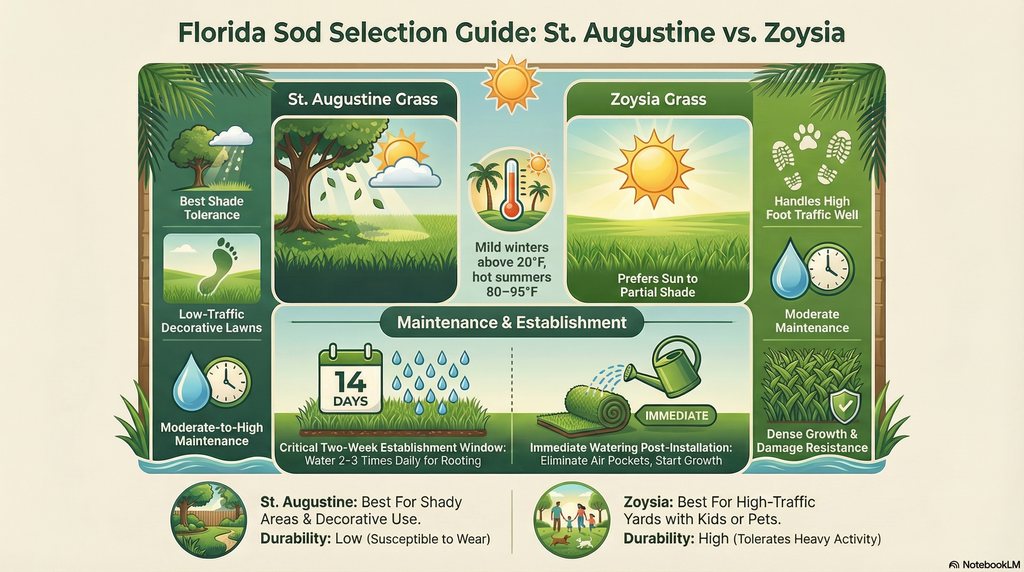
Key Factors for Sod in Osceola County
Before picking a grass type, think about how your yard behaves. Sandy soil can’t hold moisture for long, so sod needs good root-to-soil contact and a smart watering plan. If you’re under-irrigating during dry stretches, many grasses will thin out.
Heat and humidity also matter. USDA zones 9b–10a mean warm-season grasses grow best, but they still need consistent moisture while they establish. During the rainy season, you’ll still want to monitor moisture because heavy rain doesn’t always soak evenly.
Your Yard’s Sun and Traffic Levels
Start with sunlight. Most Central Florida lawns fall into full sun, partial shade, or mixed shade from trees and buildings. Also consider foot traffic. Play areas and walkways need a sod that recovers well.
A good rule: the more shade and stress your lawn gets, the more important it is to choose a sod that tolerates those conditions. That’s where some grass types outperform others.
Best Sod Types for Central Florida Lawns
St. Augustine (Floratam and Similar Varieties)
St. Augustine is one of the most popular sod choices in Osceola County. It spreads well, forms a dense mat, and handles Florida heat better than cool-season grasses. Many homeowners choose it because it looks lush and stays green through much of the year.
Why it works in Central Florida:
- Strong heat tolerance in USDA 9b–10a
- Good density for lawns that need a “filled-in” look
- Spreads to cover bare spots over time
Watch-outs:
St. Augustine can struggle in deep shade and may need extra attention for pests and disease, especially if your irrigation creates consistently wet conditions. In sandy soil, it also helps to water in a way that encourages deep rooting rather than constant surface moisture.
Best for: Most sunny to lightly shaded yards, family lawns, and properties that want a classic Central Florida look.
Zoysia (Emerald Zoysia and Other Durable Types)
Zoysia is a tough, low-maintenance option that many Osceola County homeowners like for its thick feel and ability to handle heat. It grows slower than St. Augustine at first, but once established, it can be very resilient.
Why it works in Central Florida:
- Excellent drought tolerance once rooted
- Dense growth helps reduce weeds
- Holds up well to moderate foot traffic
Watch-outs:
Zoysia can look thin during the early establishment period if watering is inconsistent. It also prefers careful irrigation timing so the roots grow down into sandy loam rather than staying shallow.
Best for: Homeowners who want a durable lawn and can commit to proper establishment watering.
Bahia (Common Bahia and Hybrid Options)
Bahia grass is known for being budget-friendly and heat-tough. It’s a common sight in Central Florida, especially for larger properties and areas where you want a grass that performs in tough conditions.
Why it works in Central Florida:
- Handles heat and sandy soils well
- Often needs less fertilizer than some turf types
- Can survive with less intensive maintenance
Watch-outs:
Bahia can be coarser in texture than St. Augustine or Zoysia. It may not look as smooth in manicured lawns. In addition, it can go dormant during cooler stretches, which may be noticeable.
Best for: Open yards, rental properties, and homeowners who prefer a hardy, practical turf.
Centipede (Often Used for Low-Input Lawns)
Centipede is another warm-season grass that many Central Florida homeowners choose for its low input needs. It’s slower-growing and typically requires less mowing than grasses that grow faster.
Why it works in Central Florida:
- Tolerates sandy soils
- Good for lawns that want a relaxed maintenance schedule
- Generally holds up well in heat
Watch-outs:
Centipede can struggle with heavy shade and may thin if the yard stays too wet or too dry. It also has specific fertilizer needs—over-fertilizing can lead to poor performance.
Best for: Partially shaded yards with good drainage and homeowners who prefer simple, steady care.
Hybrid Bermudagrass (Common Bermuda Options)
Bermudagrass is a fast-growing turf that can create a dense lawn quickly under the right conditions. Hybrid Bermuda sod is often chosen for its strong recovery and athletic-field performance.
Why it works in Central Florida:
- Fast establishment and recovery
- Excellent sun tolerance
- Strong wear resistance
Watch-outs:
Bermuda can be aggressive. If you have landscaping edges, you’ll want clear borders. It also benefits from a consistent watering plan during the establishment phase, especially in sandy soil.
Best for: Full-sun lawns, active yards, and homeowners who want quick coverage.
Matching Sod Type to Central Florida Conditions
Sandy Soil Needs “Rooting First” Watering
With Central Florida sandy/sandy loam, water can soak in fast and then disappear. That means sod establishment is less about soaking the surface all day and more about keeping the soil moist enough for roots to grow.
Most failures happen when sod dries out between watering cycles. A local sod and irrigation team serving Osceola County can help you set a schedule based on your sprinkler coverage, slope, and how your soil absorbs water.
Rainy Season (May–October) Still Requires Monitoring
The rainy season helps, but it doesn’t guarantee good rooting. You can get heavy rain in one area and little rain in another, especially if sprinkler heads overlap poorly or you have wind exposure. After storms, check the soil under the sod. If it’s still dry several inches down, you may need supplemental irrigation.
Also watch for pooling in low areas. Even sandy soil can form shallow wet spots, which can stress some turf types and increase fungal risk.
Installation Tips That Improve Success
Prep the Base Like It Matters (Because It Does)
Sod won’t perform well if it sits on uneven ground or loose fill. Your installer should grade the area, remove debris, and make sure the soil is firm enough to hold roots. In sandy soil, adding the right amendments (based on soil test results) can help retain moisture around the roots.
Stagger Seams and Press Properly
Tight seams reduce gaps where weeds can move in. After laying each piece, press it firmly so roots contact the soil. If you can lift an edge easily, the sod likely didn’t bond well.
Start with a Realistic Establishment Plan
Sod establishment is a short window where consistent moisture pays off. Most lawns need more frequent watering at the beginning, then less frequent watering as roots deepen. Your irrigation system should also be checked for coverage uniformity across the entire lawn.
For Osceola County homes, this step is especially important because sandy soils can dry quickly between cycles.
Common Questions for Osceola County Sod Buyers
Which sod looks best in full sun?
St. Augustine and Bermuda are strong choices for full sun. Zoysia also performs well when established. If your yard gets intense afternoon sun, choose a sod type known for heat tolerance and dense growth.
Which sod is best for sandy soil?
St. Augustine, Bahia, and Centipede tend to do well in sandy conditions when watered correctly. Zoysia can also work great, but it needs consistent establishment moisture to avoid thin spots.
Which sod is easiest to maintain long-term?
Zoysia and Centipede are often chosen for lower long-term maintenance. St. Augustine can be easy too, but it may require more attention for pests and disease depending on your lawn conditions and irrigation habits.
FAQ
What sod type is best for lawns in Osceola County, FL?
Most homeowners do well with St. Augustine (like Floratam), Zoysia, or Bermuda in Osceola County. The best pick depends on sun exposure, foot traffic, and how your irrigation covers the lawn.
How often should I water new sod in Central Florida?
During the first establishment period, watering is usually more frequent, then gradually reduced as roots grow deeper. Sandy soil can dry fast, so your schedule should match your actual sprinkler coverage and soil absorption.
Does rainy season affect sod installation in Central Florida?
Rainy season helps, but it doesn’t replace proper rooting moisture. Heavy rain can still leave dry pockets, so it’s smart to check soil moisture under the sod after storms.
When to call
Call (407) 674-2841 when shade kills the same spot twice, sprinklers miss corners, or you need a grass match before an HOA deadline. Say your city, sun hours, and whether water is city or well. Or start at get a sod quote.
Useful local pages
- Sod installation in Kissimmee
- St. Augustine sod in Kissimmee
- St. Augustine vs Bahia in Florida
- Best sod for sandy soil
- Shade-tolerant grass
Get sod matched to your yard
What our crew sees on Kissimmee installs: most grass failures trace back to shade or sprinkler gaps, not the variety itself. Tell us your sun hours and whether the sprinklers reach every corner, and we will quote St. Augustine, Zoysia, or Bahia accordingly — turn-key $1.50–$3.00 per sq ft, done in 3–7 days. Call (407) 674-2841.
- Service details: sod installation and sod delivery
- Local crews: sod installation in Kissimmee and St. Augustine sod in Kissimmee