Osceola County Water Restrictions: What Homeowners Need to Know
Water restrictions can feel confusing, especially during Central Florida’s hot, humid stretch. In Osceola County, irrigation rules often affect how, when, and how long you can water your lawn and landscaping. If you have sod, the stakes are even higher because young turf needs consistent moisture to root well.
This guide explains what homeowners should watch for, how restrictions typically change during the year, and what you can do to keep your yard green while staying compliant. We’ll also share practical irrigation and sod-care tips for Osceola County’s sandy and sandy-loam soils.
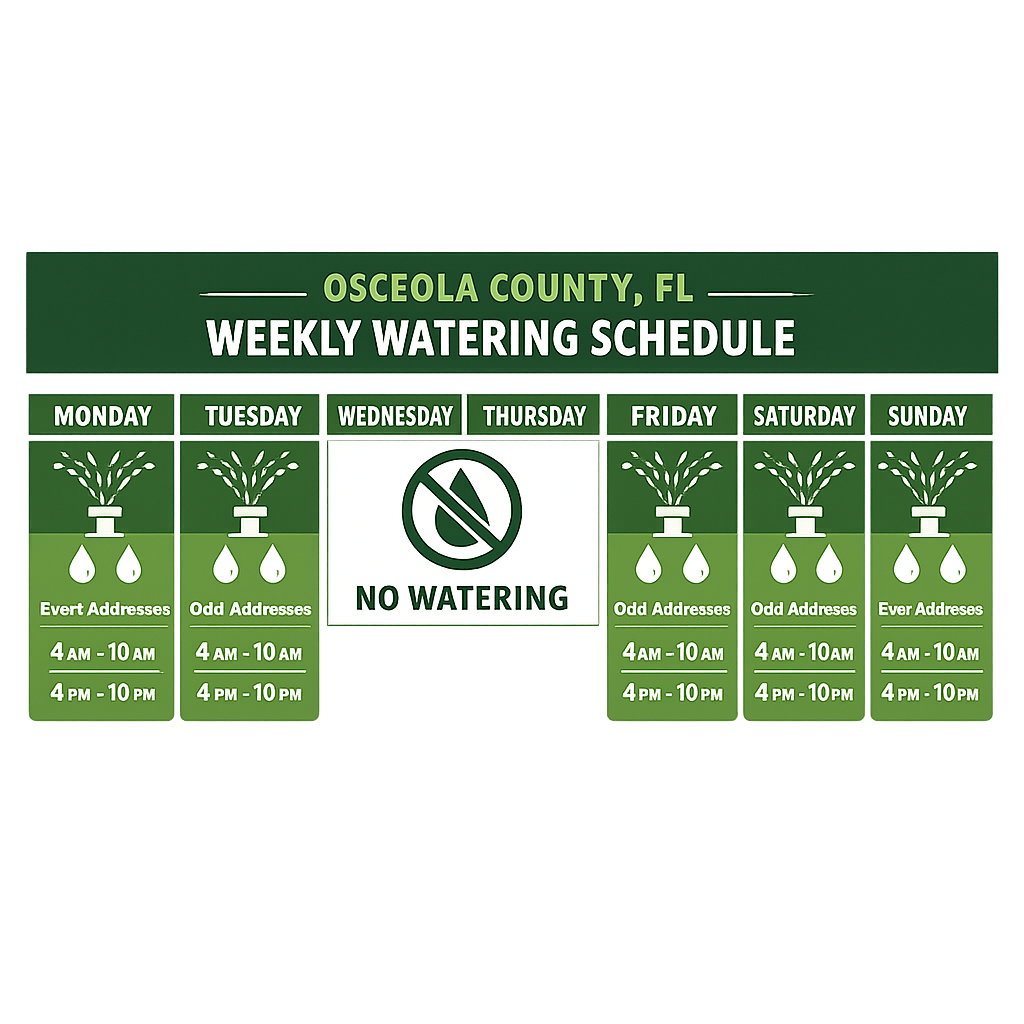
Why Water Restrictions Matter in Osceola County
Osceola County sits in a region where summer rain is helpful, but dry periods still happen. From May through October, the rainy season can reduce irrigation needs. Still, high temperatures and humid winds can dry turf quickly between storms.
When water demand rises, local utilities may tighten watering schedules to protect water supplies. Even if your lawn looks fine, noncompliance can lead to fines and—more importantly—water waste. With sandy soil, overwatering can also cause runoff, waste, and shallow roots.
Common Types of Water Restrictions (What to Look For)
Water restrictions vary by season and by local conditions. Most programs fall into a few common categories, and homeowners should check the latest updates from Osceola County and the water authority serving their address.
Seasonal Schedule Changes
During rainy months, restrictions may loosen or enforcement may focus more on “watering wisely.” During drier months, the county may limit days and times for irrigation. If you installed sod recently, you may need a plan that matches both the weather and the schedule.
Limits on Irrigation Duration
Some restrictions cap how long sprinklers can run on each allowed day. Others require shorter cycles to reduce runoff. For Central Florida lawns on sandy soil, shorter, well-timed cycles often work better than one long run.
Restrictions on Hand Watering and Outdoor Features
Rules can also cover hoses, sprinklers, and nonessential outdoor watering. Some systems may require shutoff during certain conditions, like heavy rain or during peak demand hours. If you use a hose for spot watering, you may need to follow specific guidelines.
How Restrictions Affect Sod and Irrigation Timing
Sod and young turf are not like established lawns. New sod needs moisture to prevent drying and to help roots grow into the soil beneath. In Osceola County, sandy and sandy-loam ground drains fast, so water can sink deeper quickly—but the surface can also dry out sooner.
The goal is to water less often than daily watering, but more effectively during allowed windows. That means watering in a way that encourages rooting without causing runoff.
The “Short Cycles” Approach
If your irrigation schedule allows certain days and times, try splitting watering into shorter cycles. For example, instead of running one long session, run two or three shorter ones with a pause in between. This helps water soak in rather than flow across the surface.
This method is especially useful in sandy soil, where water can move downward quickly. Short cycles can also reduce puddling and keep your yard from looking patchy.
Avoiding Midday Watering
Even if your system allows watering on your assigned days, timing matters. Watering during peak sun can increase evaporation and lead to dry patches. In Osceola County summers, early morning watering is usually the best option.
Early morning also helps reduce fungal pressure by allowing grass blades to dry faster. That’s important for Central Florida lawns where humidity can linger.
Check Your Sprinkler System Before You Adjust Schedules
A reliable irrigation system makes compliance easier and helps sod thrive. If your sprinklers are out of adjustment, you may waste water on sidewalks or miss parts of the yard.
Inspect Heads, Coverage, and Overlap
Walk your property and look for dry spots, overspray, and areas that receive too much water. Common issues include misaligned heads, clogged nozzles, and sprinkler heads that sit too high or too low.
Sandy soil can mask problems at first, but runoff and shallow rooting show up later. Correcting coverage now can save you money and protect your new sod.
Use Rain Sensors and Weather-Based Adjustments
A rain sensor can help prevent irrigation during rainy stretches. In Osceola County, where storms are common in May through October, this can reduce unnecessary watering. Weather-based controllers can also adjust schedules based on local conditions.
If your controller is old, consider upgrading. Modern systems can help you stay within restrictions while giving your lawn the right amount of water.
Best Practices for Watering Sod in Osceola County
If you just laid sod, plan for a transition from surface moisture to deeper rooting. Your watering strategy should match your restrictions and your soil type—sandy and sandy-loam in Central Florida.
First Weeks: Focus on Establishment
During the first establishment period, sod typically needs more frequent watering than an established lawn. The key is to water just enough to keep the sod from drying out. Don’t assume “more water” equals better rooting.
If restrictions limit your schedule, you may still be able to meet sod needs using short cycles during allowed times. Your irrigation run times may need to be adjusted based on how quickly water soaks in.
After Roots Set: Move Toward Deeper Watering
Once the sod starts rooting, gradually shift toward less frequent but deeper watering. This encourages roots to grow down instead of staying near the surface. In sandy soil, deeper watering helps your lawn handle heat and dry spells better.
A healthy lawn also uses water more efficiently. When you water correctly, the grass thickens and reduces weed opportunities.
How to Stay Compliant Without Losing Lawn Quality
Homeowners often worry that restrictions will force brown lawns. In most cases, the issue is not the restriction itself—it’s how the system is set up and how watering is timed.
Follow Assigned Days and Allowed Times
Start with the county’s current schedule for your area. Use your irrigation controller to match the allowed days and time windows. If you use a hose or manual sprinkling, confirm what’s permitted and when.
Measure Water Output
If you’re not sure how much water your system applies, use simple catch cups or a rain gauge to estimate output. This helps you fine-tune run times without guessing. It’s a smart step for sandy soil, where the same run time can produce different results depending on wind and pressure.
Watch for Signs of Overwatering and Underwatering
Overwatering can cause runoff, spongy soil, and shallow roots. Underwatering can show up as dull color, footprints that remain visible, or blades that wilt during the hottest part of the day.
Adjustments should be gradual. If you change everything at once, it’s harder to tell what worked.
What to Do If You’re Unsure About Current Restrictions
Water rules can change based on rainfall, reservoir levels, and demand. The safest approach is to verify the newest schedule for Osceola County and your water provider. If you share your address (or at least your general service area), a local irrigation professional can help you align your system settings with the current rules.
A sod and irrigation company serving Osceola County can also evaluate your system layout. That includes head spacing, nozzle selection, and whether your zones match the sun exposure and soil conditions in your yard.
FAQ
1) Are water restrictions stricter during Florida’s dry season?
Often, yes. Osceola County may tighten schedules during drier months, while the May–October rainy season can reduce irrigation needs. Always check the latest updates for your exact service area.
2) Can I water my new sod if restrictions limit irrigation days?
You can usually keep sod healthy by watering during allowed windows and using efficient short cycles. The goal is to prevent drying while avoiding runoff, especially in sandy Central Florida soil.
3) What’s the best time to irrigate in Osceola County?
Early morning is typically best. It reduces evaporation, helps water soak in, and allows grass to dry faster in humid conditions.
If you want, tell me your irrigation type (sprinklers vs. drip), how long you run each zone, and when your sod was installed—I can suggest a restriction-friendly watering approach for Osceola County’s sandy soil.