Last updated · St. Cloud, FL
St. Cloud is East Osceola: 34769, 34771, 34772 — Narcoossee growth and lots toward East Lake Tohopekaliga. Rip the failed turf, fix grade and water, lay street-match sod. Not a pallet on dead grass. $1.50–$3.00 per sq ft. Call (407) 674-2841.
What St. Cloud replacement actually needs
- Seville St. Augustine on typical residential streets; Bahia on bigger unirrigated stretches
- Cups pass before anyone rolls a pallet
- Water fixed first if a zone is dead — see irrigation repair in St. Cloud
- Same approach as Kissimmee sod replacement and St. Cloud sod install
Walk, rip, cup-test — then sod
- Walk the lot: sun, slope, HOA strip, water source — lake-edge or new-build fill.
- Fix the cause — rip failed turf, grade, water.
- Match the neighbors so the next letter does not come back.
- Replacement stays on this URL. New pad with no turf: sod installation in St. Cloud.
Related: St. Augustine in St. Cloud, patch and repair, storm repair.
Call (407) 674-2841.
Tear-out details
Full cut, haul-off, and base-reset process lives on sod removal.
Quick answer
In St. Cloud the replacement starts with the autopsy, not the order: shade, water, grade, or grubs killed the old lawn in 34769, and that cause gets fixed before tear-out, re-grade, and a same-day lay at $1.50–$3.00/sq ft installed — about $1,500–$3,000 per 1,000 sq ft. Fresh sod rolled onto an unfixed East Osceola yard is just a re-order scheduled in advance. Call (407) 674-2841.
Where full replacement wins in St. Cloud
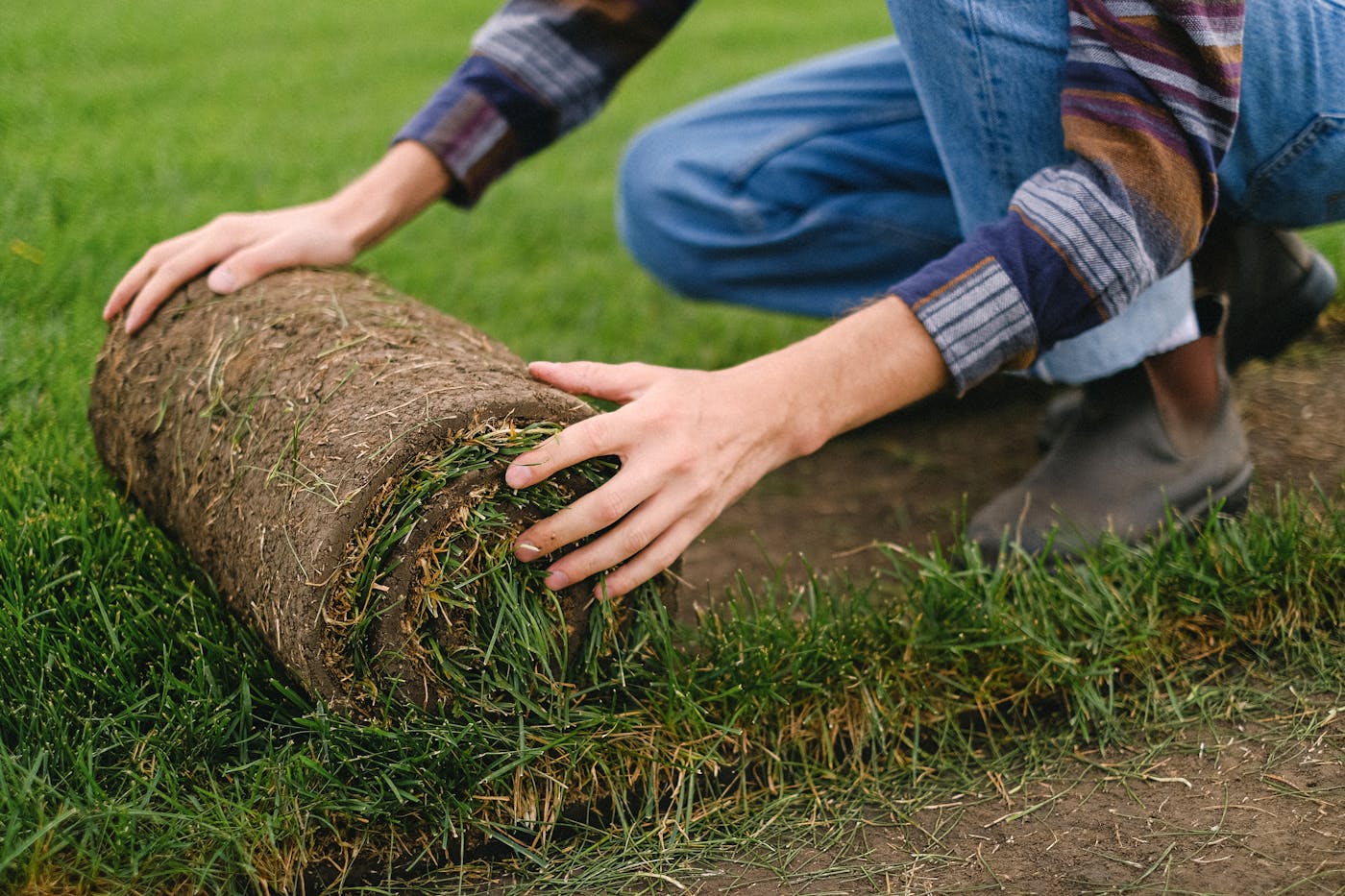
Replacement wins outright in St. Cloud when the variety, the grade, and the thatch have all failed together — the 34769 jobs where the old turf strips clean off, pitch is rebuilt, irrigation is proven zone by zone, and fresh-cut sod goes trailer-to-soil within hours and gets watered the same evening. Restarted on bare, corrected ground, a St. Cloud lawn like that roots in 10–14 days.
It loses the same way it loses everywhere, only faster: shade that was never matched with Zoysia or the right St. Augustine, downspouts still dumping into ponds, zones still dead on lay day. Re-sod the symptom on an unfixed site and the same dead lawn comes back one season later, so the order on Narcoossee and lake-edge lots alike is diagnose, fix ground and water, then cut the sod.
Reading a replacement quote in St. Cloud
A St. Cloud quote worth signing reads like a checklist: cause of death, measured footage, tear-out and haul-off, grade and pitch plan, variety matched to sun, cut date and farm, same-day lay, rolling, and the watering schedule — all at $1.50–$3.00 per sq ft installed, with the fresh-cut date in writing rather than vibes. On a lake-edge lot that grade line should show the drainage check, and on a new-build pad it should show grade set on the compacted fill, because those are different St. Cloud jobs wearing the same price band.
The red flags are the missing lines: no diagnosis, no grade plan, variety left unnamed, no cut date, sod turning up dry or hot-stacked, and anyone willing to promise rooting without watering. Hold every quote to one physical test — by day 10–14 the tug test should resist a firm pull. Call (407) 674-2841.
Heat, timing, and St. Cloud soil
East Osceola warmth is a double-edged tool in 34769: it roots fresh sod quickly, and it shows up an unfixed grade just as quickly. Morning-cut pallets laid before the afternoon heat root days ahead of sod strapped through a hot weekend, and St. Cloud’s sandy native soil works for the job once pitch is right — draining freely, rooting deep, holding a line.
The fix gets proven before a single roll lands: water running off the slab cleanly, no birdbaths holding anywhere, every zone demonstrated wet, because replacement onto fixed ground roots while replacement onto the same dead zones just fails again. From there the discipline is written, not verbal — the killer named in writing as shade, water, grade, grubs, or fungus with its fix line attached, since the St. Cloud replacements that live twice start with a diagnosis, not a pallet count, and the split itemized the same way: tear-out, grade, sod, rolling, and water each priced at $1.50–$3.00 per sq ft installed on one quote packet when you call (407) 674-2841. Footage is measured honestly, too — beds, driveway, house footprint, and pool deck subtracted before the count, with most St. Cloud lot-size guesses shrinking 10–20% once only grass area counts.
Under the sod, the strip goes to bare soil every time, because thatch left in place wicks water sideways and starves the new roots — the fastest-rooting St. Cloud replacements start bare: strip it, haul it, pitch it. Variety follows the street and the sun — Seville St. Augustine on typical residential streets, St. Augustine generally where shade tolerance is the need, Zoysia for show lawns, Bahia on the bigger unirrigated sunny stretches — and the wrong grass in the right install still dies on schedule. Water is proven before sod, not after: every zone run, dead heads flagged, head-to-head coverage confirmed, since a lay onto dead zones buys a service call. Then grade carries the warranty — pitch away from the slab, no birdbaths, edges cut to hardscape height — because sod hides color for a week and never hides standing water.
The last checks happen around the lay itself. Rainy-season timing cuts both ways in 34769 — storms water new sod for free while a flooded grade drowns it — so the St. Cloud forecast for the lay week gets watched before the date is set. Rolling is not optional: pressed seams root days ahead of bridged ones, so walk day three, press lifted corners, and keep traffic light until the tug holds. Pallets get inspected on arrival and hot-stacked loads — steaming, yellowed, or sour-smelling — get sent back, since laying dying sod wastes the labor and the reorder. The count behind it all is simple pallet math: per 1,000 sq ft, roughly two-plus pallets at 400–500 sq ft each plus 5–10% for cuts, and shorting the last strip costs a second drop fee. HOA timing closes the loop in St. Cloud — give the installer the inspection date for a 34769 front and strip, grade, and lay are scheduled backward so the lawn photographs rooted, not raw, on the day.
St. Cloud sod replacements, documented
A finished St. Cloud replacement leaves a record the homeowner can audit without trusting anyone’s memory. A good record opens with the written diagnosis naming why the old lawn died and the fix attached to it, then the measured grass-only footage, the tear-out and haul-off record, and the grade and pitch check confirming water leaves the slab with no birdbaths — on a lake-edge lot that check carries the drainage finding, and on new-build fill it carries the grade set on the compacted pad. The street-match variety record names what was laid — Seville where the residential street runs it — the pallet count follows from the measured footage, and the file closes with the first-30-days watering plan and the seam and tug check that proves rooting.
No job photos are published on this site. What to ask for is that written sequence — diagnosis, grass-only footage, haul-off record, pitch check, variety and pallet record, 30-day watering plan, tug check — applied to your own St. Cloud lot, whether it sits toward East Lake Tohopekaliga or out along Narcoossee. Call (407) 674-2841.
When to call from St. Cloud
Diagnosis done, footage measured, water plan set — call (407) 674-2841 from this page with 34769 handy. A typical job strips, grades, cuts, lays, and soaks, usually inside a week.
Related: bahia sod in St. Cloud · send a question · grass quiz