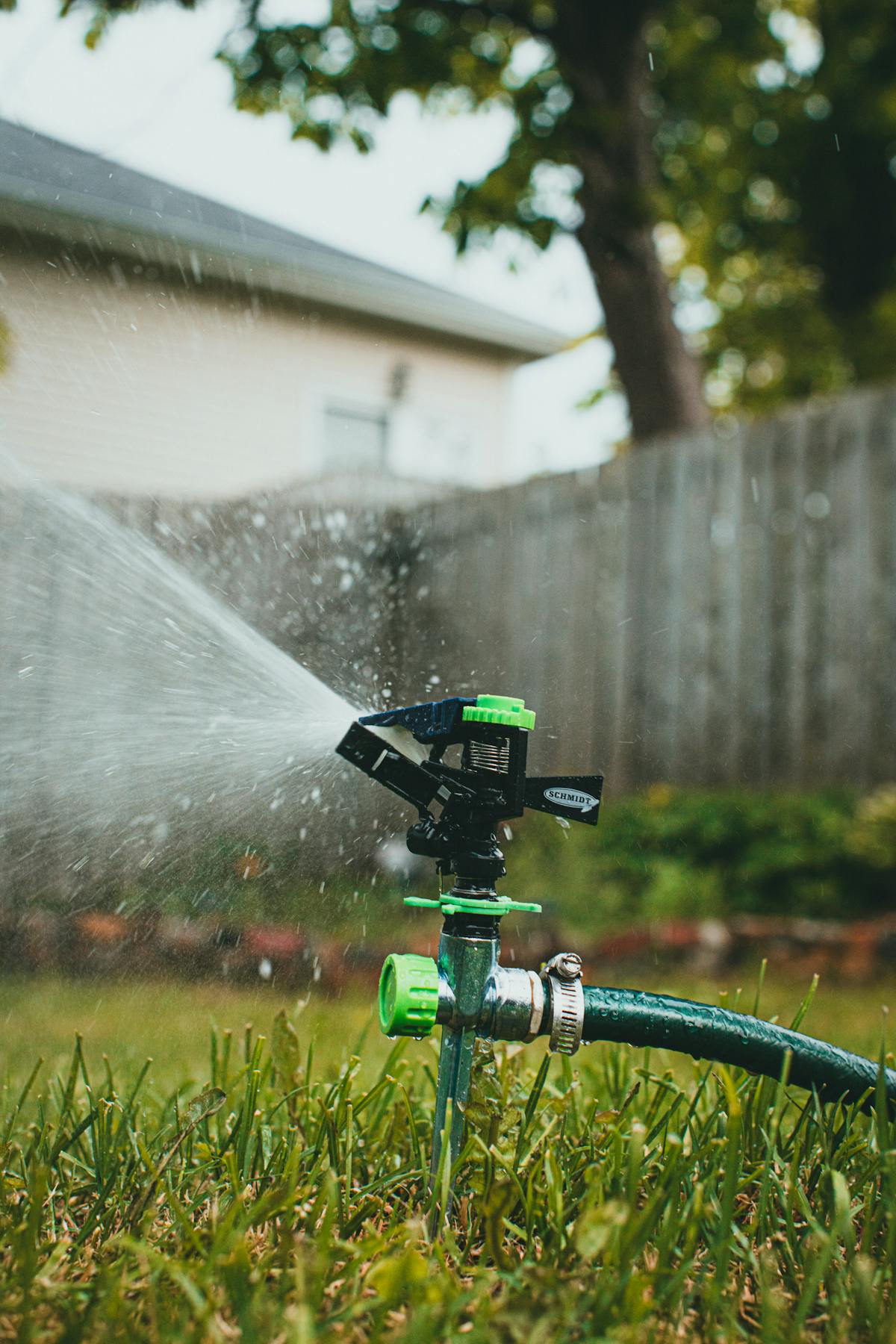
St. Cloud divides into two sprinkler worlds that should never share a design: older downtown streets in 34769, where systems age in place, and the new subdivisions spreading along Narcoossee Road toward East Lake Tohopekaliga, where thousands of fresh lawns start life on builder coverage. Add lakefront ground that needs erosion-resistant sod kept alive without washing, and every install here begins with which St. Cloud the lot actually is.
The page’s own test says it plainly — a Toho-side lot and a downtown lot are different throws. Lake-edge moisture can leave a street pad dry while the back stays damp, a new-build east-side lot may need sleeve work under fresh hardscape, and an older property may be carrying split poly and a controller from another era.
When St. Cloud Homeowners Need Sprinkler System Installation
St. Cloud calls often arrive as a comparison: one side of the yard thriving, the other thinning; the front holding after watering, a corner fading; new sod rooting in one zone and sulking in the next. Comparisons like that point past the grass to the pattern delivering its water.
So on St. Cloud properties we settle uneven coverage, dry corners, and overloaded zones before new sod is ordered, and we confirm that a lawn needing dependable water from day one will actually get it in every zone. Sod laid over an unproved pattern repeats the old lawn’s map of failures, at new-lawn money.
Common signs include:
- Brown seams or dry edges after watering
- Water standing after a normal afternoon storm
- Soft soil, sinking spots, or uneven mower lines
- Sprinkler zones that miss corners or overspray concrete
- New sod that looks good for a week and then declines
Local Conditions in St. Cloud
Proximity to East Lake Tohopekaliga shapes St. Cloud watering. Lake-side ground can keep low turf damp, while sandy soil on higher, sunnier ground near sidewalks and driveways sheds moisture fast — one lot can need restraint at the back and generosity at the street on the same morning.
Rainy-season weather from May through October sharpens that split. Storms and downspouts can saturate the lake-side low ground and compacted soil can shut roots out of oxygen, even as exposed edges dry within days of the rain stopping. A St. Cloud system therefore gets checked for water movement through the lot as carefully as for water delivered onto it.
St. Cloud addresses covered here are 34769, 34771, 34772. A lakefront parcel, a Narcoossee-corridor new build, and a house on an older downtown street each present a different mix of pressure, drainage, and access, which is why the pattern gets seen in person.
What We Check Before Recommending Work
A St. Cloud estimate earns its keep by sorting three look-alikes apart: a coverage fault that a redesign cures, a pressure fault that no nozzle swap will hide, and a site-shape fault where grade is sending water away from the roots it was meant to feed.
We look at:
- Lawn square footage and service access
- Slope toward patios, sidewalks, driveways, or neighboring lots
- Soil texture, compaction, and low areas
- Existing sprinkler head height, spacing, and pressure
- Downspout discharge and stormwater flow
- Grass type, sun exposure, and traffic patterns
This keeps the job from becoming a guess. It also helps decide whether the next step is repair, prep, replacement, or a full install.
Practical Process for Sprinkler System Installation in St. Cloud
For St. Cloud the sequence runs from the lake side of the lot to the street:
- Measure turf, beds, and lake-edge ground separately, treating any slope toward the water as its own watering problem.
- Derive the zone count from pressure and head type, allowing for sleeve work or a well hookup where an east-side lot needs it.
- Position heads for head-to-head coverage, with the sidewalk strip on heads of its own instead of a borrowed backyard throw.
- Never share a zone between spray heads and rotors; split turf, beds, and drip by how each drinks.
- Set the controller to St. Cloud restrictions with a rain sensor active, and leave the establishment program ready if sod follows.
Kept in that order, one trenching pass serves the finished yard and the program already fits county days when the crew leaves. Sod or hardscape moved after the lines are in just forces the same ground to be opened twice.
Mistakes to Avoid
Downtown and Toho-side St. Cloud fail in opposite directions, and the shared mistake is prescribing for one while standing in the other. Brown turf is the message in both cases; pressure, throw, and lake-edge moisture decide what the message means.
Shortcuts St. Cloud lots punish quickly:
- Putting sod down before the sidewalk strip has coverage of its own.
- Stacking heads onto one zone until pressure at the far heads collapses.
- Watering the pavement on a lake-side lot while the dry street pad goes short.
- Skipping the narrow side yards and driveway transitions that frame most St. Cloud fronts.
If you are not sure what is driving the issue, use the sprinkler zone planner before requesting a quote. It gives you a better way to describe the problem on the call.
How This Connects to Sod and Irrigation
On St. Cloud ground the connection is physical: grading and drainage govern the lake-edge lots where erosion is the risk, irrigation repair can rescue a sound older system, and any new sod — erosion-resistant turf included — still waits until coverage over the finished grade is demonstrated, not assumed.
The rest of that St. Cloud path is linked from this page:
- Review the main Sprinkler System Installation service page.
- Use the sprinkler zone planner to narrow the issue.
- Compare related help with irrigation installation.
The goal is simple: fix the cause first, then make the lawn look finished.
Quote Notes for St. Cloud
For a St. Cloud quote, give us 34769, 34771, or 34772, say whether the lot is Toho-side or downtown, add the nearest cross street or Narcoossee-area subdivision, rough footage, well or city or reclaim source, and whether the trouble follows rain or watering. Photos of the sidewalk strip and the lake edge sharpen the first visit.
For St. Cloud homeowners, the most useful details are:
- How long water stands after rain
- Which sprinkler zone looks weak or wet
- Whether the problem is near concrete, a fence, or a low side yard
- Whether the lawn is new sod, old turf, or a new-build handoff
- Any HOA, gate, pet, or access constraints
St. Cloud: Does an east Osceola 34769 sidewalk need its own heads, or can it share the backyard rotor
Does an east Osceola 34769 sidewalk need its own heads, or can it share the backyard rotor?
Its own heads. The photographed St. Cloud sidewalk is the job if that is the letter. (407) 674-2841.
Is a Toho-side sprinkler the same as downtown St. Cloud?
No. Toho-side 34771 lots want lake-edge moisture and a dry street pad. Downtown 34769 is a different throw. (407) 674-2841.
Do we sod before the St. Cloud sidewalk strip has coverage?
No. Sod waits until the St. Cloud strip is covered. (407) 674-2841.
County-wide guide: sprinkler system installation in Osceola County
Get It Done in St. Cloud
Related: sprinkler zone layout before sod, blocked heads under new sod, sprinkler installation in Kissimmee, get a quote.
Ready when the yard is: call (407) 674-2841.
Quick answer
New irrigation in St. Cloud (34769) lives or dies on design: matched heads, zoned by sun, programmed to county days. Rotor zones for turf, drip for beds, rain skip on every program. Call (407) 674-2841.
Where full sprinkler install wins in St. Cloud
Full install wins on new sod, re-sod, new beds, and well-to-reclaim conversions — the St. Cloud jobs (34769) where trenching happens once, wire and pipe size right, and every zone gets a precipitation rate the program can actually water inside county windows. A designed system holds 34769 compliance without babysitting.
It loses where the site is not ready: gradeless yards about to be re-pitched, paver projects about to trench through it, or pressure too low for rotors without a pump plan. Irrigation follows grade and hardscape — finalize those lines first, then trench.
Reading an irrigation quote in St. Cloud
A real St. Cloud irrigation quote lists zone map with head types, precipitation rates, valve and wire plan, backflow or pump detail, controller model with rain sensor, and the programmed schedule for 34769 days. Runtime math in writing, not vibes.
Red flags: one price with no zone map, mixed rotors and sprays on one valve, no rain sensor, no backflow line, and anyone promising green without a schedule. Uniform coverage first, minutes second. Call (407) 674-2841.
Heat, soil, and St. Cloud pressure
St. Cloud warmth (34769) grows grass fast and evaporates faster: morning watering windows beat midday burn, and matched-precipitation nozzles beat mixed heads every time. Sandy soil takes frequent deep bursts in cycle-soak; pressure under 40 PSI at the heads wants a pump or redesign conversation, not wishful rotors.
Well and reclaim water work fine with the right filtration and nozzle care — iron staining on fences is cosmetic. Pressure, filtration, and backflow go on the quote before trenching, not after.
St. Cloud sprinkler installs, documented
A St. Cloud install is documented the way this page says a quote should read. The written record is the zone map with head types marked zone by zone, precipitation rates beside each zone, the pressure and flow reading at the bib, the valve and wire plan with any backflow or pump detail, and the controller program for 34769 county days with the rain sensor listed — runtime math in writing, not trust.
Job photos are only published when homeowner permission is on file, and none are published right now. What we can show today is that written sequence applied to your own St. Cloud lot, from zone map to programmed schedule. Call (407) 674-2841.
When to call from St. Cloud
Yard measured, grade settled, hardscape final — call (407) 674-2841 from this page with 34769 handy. We design, trench, aim, and program, usually inside two weeks from approval.
Related: sod installation in St. Cloud, irrigation repair in St. Cloud, st augustine sod in St. Cloud · get a sod quote · grass quiz