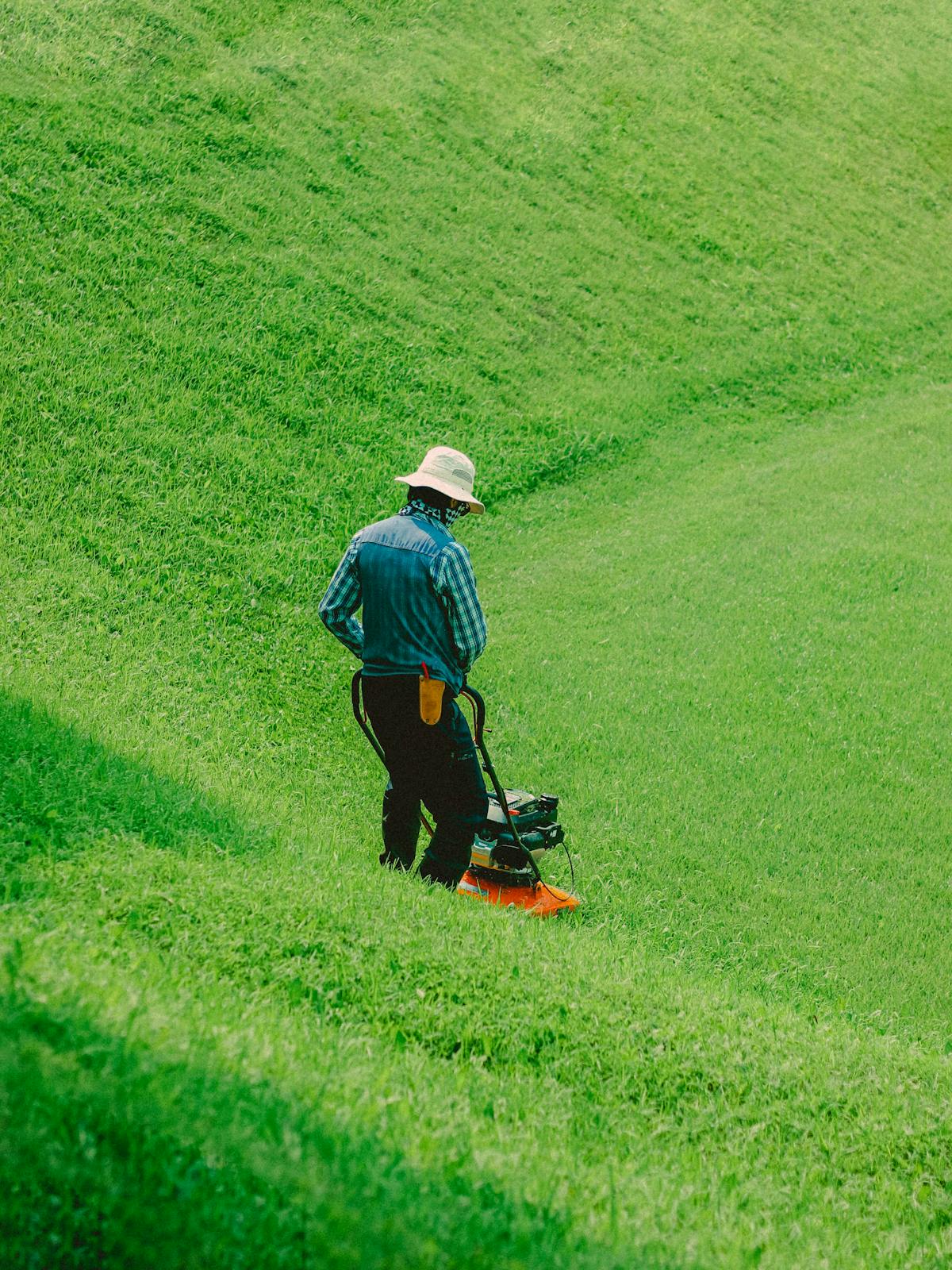
In Celebration, grading is judged from the sidewalk before it is judged from the yard. A front strip in 34747 that sits even slightly low reads in every village-walk photo, holds water after an afternoon storm, and breaks the uniform line the community was planned around.
That scrutiny changes the work. This is a master-planned, Disney-origin community where HOA landscaping standards expect premium sod to sit flush and even — so settled soil, a soft side yard, or runoff cutting across a walk is not just a drainage nuisance, it is a visible miss against the standard for the street.
When Celebration Homeowners Need Lawn Grading
Celebration calls usually start at the curb: a village-walk strip that ponds, a front lawn that looks wavy in photos, or sod that rooted in patches while the rest stayed soft. Underneath, it is almost always settled fill or a pitch that sends water toward the walk instead of away from it.
Order sod before that shape is checked and the new premium turf will copy the old failure exactly — low where the old lawn was low, thin where runoff crossed it. The grade has to pass the eye and the soak test before any pallet is cut for 34747.
Common signs include:
- Brown seams or dry edges after watering
- Water standing after a normal afternoon storm
- Soft soil, sinking spots, or uneven mower lines
- Sprinkler zones that miss corners or overspray concrete
- New sod that looks good for a week and then declines
Local Conditions in Celebration
Celebration’s lots are finished lots — walks, driveways, and planting beds are already fixed in place, so grade has very little room to be wrong. Sandy soil drains quickly on a high edge and then exposes the mistake, because the low neighbor a few feet away stays saturated.
Through the May through October rains, that contrast sharpens: downspouts dump onto small front yards, compacted areas shed water sideways, and a strip that looked level in dry weather shows its birdbath after the first real storm.
Zip codes commonly associated with Celebration include 34747. If your property is close to a lake, new subdivision, conservation edge, or older neighborhood street, the site may have its own drainage or sprinkler pattern that needs to be seen in person.
What We Check Before Recommending Work
In Celebration we start at the walk and work back: is the visible dip a surface lump, a settled trench line, or a whole front yard pitched the wrong way under an otherwise perfect-looking lawn?
We look at:
- Lawn square footage and service access
- Slope toward patios, sidewalks, driveways, or neighboring lots
- Soil texture, compaction, and low areas
- Existing sprinkler head height, spacing, and pressure
- Downspout discharge and stormwater flow
- Grass type, sun exposure, and traffic patterns
This keeps the job from becoming a guess. It also helps decide whether the next step is repair, prep, replacement, or a full install.
Practical Process for Lawn Grading in Celebration
For a Celebration front yard, sequence matters more than speed, because the finished grade has to look right from the street and drain right in a storm:
- Walk the village-walk strip and side yards first, marking every low that would show in a photo.
- Follow a hose soak and the last storm’s path to see where water crosses walks or stalls at the slab.
- Clear debris and any rough builder material hiding under the thin turf.
- Cut high edges and fill settled bands so the new sod meets concrete flush, without burying it.
- Reset sprinkler heads to the new finished height so coverage stays even across the corrected plane.
That order matters. If sod, grading, drainage, or sprinkler work is done out of sequence, the yard can look improved for a short time and then show the same failure pattern again.
Mistakes to Avoid
The Celebration mistake is grading for looks alone on the day it is dry. A lawn can pass a quick visual check, then fail the first storm — and fail the next village walk — if the water was never given a way out.
Avoid these shortcuts:
- Laying premium sod over a strip that already ponds by the walk.
- Dumping fill into a low front corner without cutting a fall for the water to leave.
- Raising grade around heads until they sit too low to clear the new turf.
- Leaving a lip at the sidewalk or driveway where the mower will scalp every pass.
Not certain whether your dip is surface or shape? Run the drainage risk checker before you call — it helps you name the strip, the storm pattern, and the photo that shows it.
How This Connects to Sod and Irrigation
In Celebration, grading touches everything the HOA sees: drainage decides whether the front strip ponds, irrigation decides whether new sod on the corrected grade roots evenly, and the sod itself is only as good as the plane underneath it.
That is why this page links into the broader service path:
- Review the main Lawn Grading service page.
- Use the drainage risk checker to narrow the issue.
- Compare related help with sod calculator.
The goal is simple: fix the cause first, then make the lawn look finished.
Quote Notes for Celebration
For a Celebration quote, send 34747, your village or nearest walk, rough front and side footage, irrigation status, and a photo taken after rain — in this community the after-storm photo shows the grade problem clearest.
For Celebration homeowners, the most useful details are:
- How long water stands after rain
- Which sprinkler zone looks weak or wet
- Whether the problem is near concrete, a fence, or a low side yard
- Whether the lawn is new sod, old turf, or a new-build handoff
- Any HOA, gate, pet, or access constraints
Celebration: Does a Celebration village walk fail the photo if the strip still sits low
Does a Celebration village walk fail the photo if the strip still sits low?
Yes. The village walk in 34747 is the letter. Grade that strip. (407) 674-2841.
Are Disney-planned streets a copied Kissimmee grade map?
No. Celebration streets have their own packet. Not a Kissimmee downtown map. (407) 674-2841.
Do we sod before the village strip dries?
No. Sod waits until the Celebration pad dries. (407) 674-2841.
Level bumps before sod
Scalps every cut or dips that hold water: lawn leveling and topdressing. Slope and water direction first: lawn grading.
Quick answer
Lawn grading in Celebration fixes the ground before the grass: birdbaths, settled fill, washouts, and pitch that sends stormwater at the slab. Most jobs grade, settle-verify with a soak, then sod — the sod side runs $1.50–$3.00 per sq ft turn-key once the base is proven. Grade first, sod second, or the new lawn fails in the same low spots. Call (407) 674-2841.
Does your Celebration lot need a regrade or just topdressing?
Think of it as triage, not upsell: most Celebration lawns (34747) need leveled topdressing and overseeded-grade touch-up — a few yards of soil, cut high spots, filled lows, sod-ready finish. Machine regrade earns its place when the shape itself is wrong: new-construction pad fill mounded and compacted, a yard pitched at the house instead of away, washouts that reopen every rainy season, or settled trench lines across the whole lot.
The sequence decides most Celebration jobs: rip or till compacted pan first, cut and fill to pitch, rough grade, one good soak or storm to reveal the liars, touch-up, then sod. Grading after sod means tearing up what you just paid for — grade, settle-verify, then lay. If the shape is right and the surface is lumpy, topdress. If water runs wrong, regrade.
Lawn grading cost in Celebration
Grading in Celebration quotes by yards moved and access: light topdress-and-level runs a few hundred; machine regrade with sod-ready finish typically lands $1,000–$3,500 depending on haul-off, fence gates, and how much compacted pan needs ripping. The sod side, when paired after the base is proven, runs $1.50–$3.00 per sq ft turn-key: tear-out, grade, sod, rolling, and a watering plan. Get the dirt line itemized apart from the sod line so you can see what the ground costs.
The spread is access and scope: open sand near the road versus fenced yards where every yard of soil comes through a 36-inch gate, tear-out of thick old turf, and haul distance for export or import. Quotes under a few hundred for a yard that holds water are guessing — the water tells the truth after the first storm. Call (407) 674-2841.
Establishment water on fresh Celebration grade
Fresh grade changes the water math: loose soil drinks faster than compacted pan, new pitch moves stormwater somewhere new, and old dry corners may suddenly stay wet. For fourteen days after sod on new grade, keep seams evenly moist with light cycles on legal watering days, walk the yard on day three to confirm no new ponding, and do not judge drainage until the grade has taken a full storm.
Sandy Celebration ground settles after the first real soak — that is the point of the settle-verify step, not a failure of it. Top up the liars, re-roll soft lines, then lay. Once rooted, stretch runtimes longer and less frequent so roots chase moisture down through the worked soil — that is what survives August. Mow high at 3–4 inches through recovery. That holds across Osceola County sand.
Celebration grading, documented
A Celebration grading job is proven on paper and after water, not in a sales photo. The quote should name the measured footage and the pitch plan for the strip and side yards, and the work should close with the soak-or-storm settle verification — one good wetting, the low liars marked, touched up, and only then sod.
That paper trail matters on streets held to a uniform standard, because it shows the grade was set deliberately, not just smoothed over. We only publish job photos when homeowner permission is on file, and none are published right now. Call (407) 674-2841.
When to call
Call (407) 674-2841 when water sits where it should not, the mower scalps the same high spots, sod failed twice in the same corner, or new construction hands you a compacted pad. Say 34747 plus the symptom, lot access, and whether sod waits on the grade — the dirt work, loads, and day count all follow from that.
Related: sod installation in Celebration, irrigation repair in Celebration, st augustine sod in Celebration · get a sod quote · watering schedule