Last updated · Harmony, FL
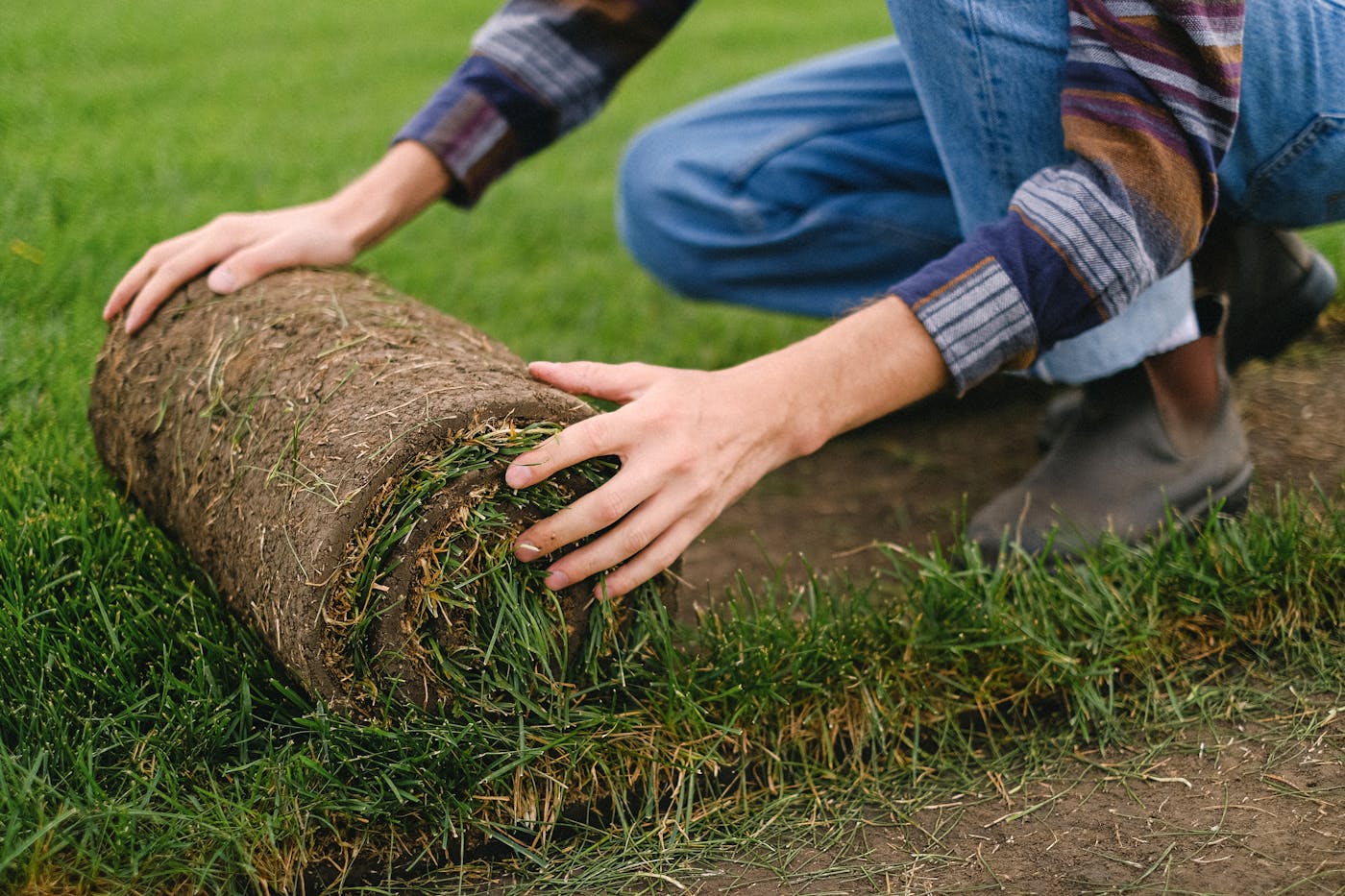
St. Augustine sod in Harmony has to work inside a community designed around wildlife and open land. Located east of St. Cloud (ZIP 34773), this Osceola County development opened for occupancy around 2003 and certified green by the Florida Green Building Coalition. Large shares of the property are set aside as conservation land and lakes, and the residential owners association’s guidelines reflect that. St. Augustine is still the common front-lawn grass, but how much of it, where, and how it is cared for deserve more thought here than in a typical subdivision. Installed St. Augustine usually costs $1.50–$3.00 per sq ft. Questions: (407) 674-2841.
Sun first, cultivar second
The most common St. Augustine failure is planting a full-sun cultivar where the sun does not reach. Before ordering:
- Watch the yard through a clear day and mark where direct light falls and for how long.
- Floratam generally wants six or more hours of direct sun. It is widely sold and holds up in heat.
- Yards on the shady side of a home, or edged by the tall pines and oaks along conservation tracts, may suit a shade-tolerant cultivar better. UF/IFAS lists several. None of them thrive in deep, all-day shade.
- If an area gets almost no direct sun, a mulched bed with native groundcover usually beats any turf.
Living next to preserves and lakes
Lots that back onto wetlands, preserve land or lakes such as Buck Lake bring specific considerations:
- Runoff. Fertilizer and pesticide carried off a lawn reaches water quickly. Keep a buffer between turf and the water’s edge and never spread granules onto pavement or banks.
- Wildlife traffic. Armadillos and other animals dig in moist, insect-rich turf. Damage often signals grubs or other larvae under the sod, which is worth confirming before replacing it.
- High water tables. Ground near wetlands can stay saturated in summer. St. Augustine sitting in water for long stretches is prone to rot and disease.
Fitting the residential owners association
Harmony’s guidelines emphasize living alongside nature. Before ripping out or expanding lawn:
- Read the current residential owners association guidelines on landscaping.
- Ask whether changing grass type, enlarging turf, or swapping lawn for native beds requires an application.
- Keep written approval with the project paperwork.
Like-for-like replacement of a failed St. Augustine front is often simpler than a redesign, but confirm rather than assume.
Chinch bugs and other St. Augustine pests
Southern chinch bugs are the classic St. Augustine pest in hot, dry months. Damage shows first along driveways, sidewalks and other sunny edges as yellowing that turns straw-brown and spreads outward. Spread the runners apart where green meets brown and check at the soil line for small black insects with white wing patches. Other problems to rule out: brown patch or large patch in cool, wet weather, and gray leaf spot in summer, often made worse by heavy nitrogen and evening watering.
Lower-input care that suits Harmony
- Mow at the higher end of the recommended height for the cultivar; taller blades shade the soil and deepen roots.
- Leave clippings on the lawn.
- Feed lightly and only during the growing season; follow any local fertilizer ordinance limits.
- Water deeply on legal days rather than briefly every chance.
- Treat pests by spot, not by blanket application, once the cause is confirmed.
Watering days
Harmony is in Osceola County, where many households are on Toho Water Authority. Its posted rules: odd-numbered addresses on Wednesday and Saturday, even-numbered addresses on Thursday and Sunday, and no watering between 10 a.m. and 4 p.m. Check the utility listed on your bill and its current rules. New sod typically needs more frequent water for its first couple of weeks; confirm any establishment allowance before increasing run times.
What the price covers
Installed St. Augustine falls in the $1.50–$3.00 per sq ft band, around $1,500–$3,000 per 1,000 sq ft. That should include stripping old grass, hauling it off, levelling the soil, the sod itself and rolling. Shade cultivars, small areas and lots with difficult access push the price upward within that range.
Related Harmony pages: sod replacement in Harmony, sod installation in Harmony, and irrigation repair in Harmony.
Questions
Have sun notes for each part of the yard, photos, and any ROA correspondence ready. Call (407) 674-2841.