Last updated · Harmony, FL
Sod replacement in Harmony starts with one question: why did the old lawn fail? Harmony is an unincorporated master-planned community near St. Cloud in Osceola County, ZIP 34773. Development plans began by 1996, the community opened for occupancy around 2003, and it is certified green by the Florida Green Building Coalition. Its residential owners association was set up in 2002 with founding guidelines on living alongside wildlife. That conservation focus shapes lawn decisions here. Replacement sod typically costs $1.50–$3.00 per sq ft installed. Questions: (407) 674-2841.
Find the cause before ordering grass
New sod laid over an unsolved problem dies the same way. The usual causes in Osceola County yards:
- Chinch bugs. They hit sunny St. Augustine in hot, dry weather, often starting along driveways and sidewalks. Look for yellowing patches that spread outward and do not green up after watering.
- Irrigation gaps. A clogged nozzle, a tilted head or a dead zone leaves a dry arc that browns first in spring.
- Too much water. Constant wet soil invites fungus such as large patch, which shows as rings in cooler months.
- Shade. Trees planted when the house was new have grown. St. Augustine thins under heavy shade, and no grass does well in deep shade.
- Low spots. Water that sits after summer storms drowns roots.
- Compacted builder fill. On newer lots, roots never got deep into packed ground.
Pull up a corner of dead turf. Healthy roots and white runners point away from disease. Brown, mushy roots point to water or fungus. Bugs near the soil line point to insects. A UF/IFAS extension office can identify samples.
Patch or full replacement?
Patch when the damage is in a few defined areas, the rest of the lawn is healthy, and the existing grass is a variety you can still match.
Replace the whole lawn when:
- More than about half the turf is thin or dead.
- The lawn is a mix of varieties and patches will show.
- Grading or irrigation needs to be redone anyway.
- The grass type no longer fits the yard, such as sun-loving turf now under shade.
A patchwork of new and old sod often looks worse than either. If the patches would cover most of the front, a full replacement usually reads better.
Matching the grass
Most Harmony lawns are St. Augustine. Match the cultivar where possible, since different types differ in color, blade width and shade tolerance. Bring a sample to compare. Where a yard sits next to conservation land or open space, think about how far the lawn needs to reach. Beds of native plants along the edge use less water and fit the community’s approach.
Bahia is cheaper and drought tolerant, but it looks and grows very differently from St. Augustine. It does not blend into a St. Augustine front lawn.
Check the ROA rules
Harmony’s owners association has its own guidelines. Before changing the grass type, shrinking the lawn or adding beds, read the current rules or ask the association. Keep any approval in writing.
What replacement includes
A proper replacement job covers:
- Removing the dead turf and roots, not laying over them.
- Fixing the cause: irrigation repair, grading for drainage, or pest treatment.
- Loosening compacted soil and leveling the surface.
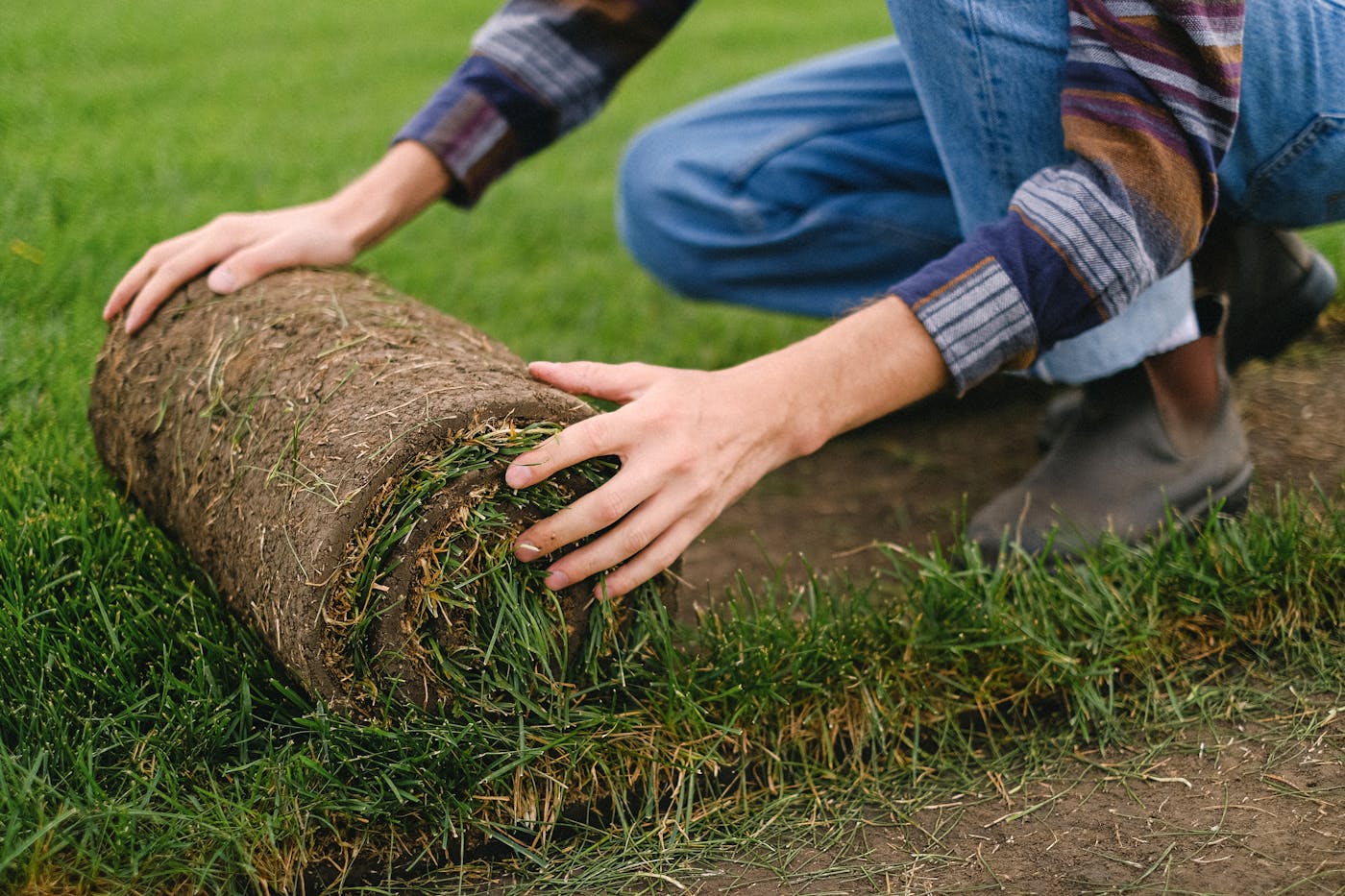
- Laying fresh sod with tight, staggered seams.
- Rolling for soil contact.
- Watering right away and leaving a written watering plan.
The $1.50–$3.00 per sq ft range covers these steps. Small jobs cost more per foot because setup is the same. Extra grading, tight access and heavy tear-out push toward the top.
Watering new sod in Harmony
Newly laid sod needs water every day at first, regardless of normal watering days. Most local utilities allow a new-landscape establishment period, so check your provider’s current rule. For homes on Toho Water Authority, the regular posted days are odd house numbers Wednesday and Saturday and even house numbers Thursday and Sunday, with no watering between 10 a.m. and 4 p.m.
- Week 1: Keep the sod and the soil under it moist. Short runs, more than once a day in heat.
- Week 2: Cut back to once a day.
- Weeks 3–4: Water less often, for longer, to drive roots deeper.
- After that: Normal watering days.
Do not mow until the sod resists a gentle tug, usually around two weeks. Mow high. Keep heavy traffic off it for the first month.
Timing the replacement
Warm months are the easiest time to establish St. Augustine, since it roots fastest when the soil is warm. The catch is heat stress in the first week, so daily water matters most then. The summer rainy season helps with water but can leave soft ground that ruts under wheelbarrows. Cooler months slow rooting, so new sod needs longer before it can handle traffic. Whatever the month, line up irrigation fixes and grading before the sod is cut.
Keeping the new lawn alive
- Check sprinkler coverage before the sod arrives.
- Watch the hot edges next to concrete, which dry fastest.
- Scout for chinch bugs in summer.
- Fertilize lightly and only after the sod is rooted.
- Cut water back in cooler months to avoid fungus.
Related Harmony pages
- Sprinkler issues: irrigation repair in Harmony.
- A full new lawn: sod installation in Harmony.
- Standing water: drainage in Harmony.
Questions
Have the approximate size of the damaged area, photos, and a note on when it started. Call (407) 674-2841.