Last updated · Kissimmee, FL
In Kissimmee, a sprinkler install succeeds or fails at the corners first — the narrow sidewalk strip in 34741 that a backyard rotor was never meant to reach, the hot edge along the driveway, the side yard a mixed zone keeps missing. Between historic downtown along Lake Tohopekaliga and the fast-building subdivisions pushing out from the Gateway to Walt Disney World, lots here ask for coverage drawn lot by lot, not a package pulled off a shelf.
That spread is the work: a Remington HOA front lawn, a Tapestry builder pad, and a Kindred handoff can sit in the same zip and still want different head layouts, different zone counts, and a different walk before anyone quotes. An older system downtown, a strict HOA walk, and a brand-new build with no dependable water yet are three separate problems wearing the same brown corners.
When Kissimmee Homeowners Need Sprinkler System Installation
Kissimmee enquiries usually name a place before they name a symptom — the strip by the sidewalk, one dry corner, the seam that browns after every watering while the middle stays green. Look underneath that spot and the fault is rarely the turf itself; it sits in how the zones were drawn, loaded, or aimed.
Before any new sod is ordered on a Kissimmee property, get uneven coverage, dry corners, and overloaded zones settled, and any lawn that will need dependable water from day one proved zone by zone. Skip that proof and the replacement grass tends to thin in exactly the footprint the old lawn did, at full pallet cost.
Common signs include:
- The 34741 sidewalk strip browns in a clean line while the lawn behind it stays green
- Puddles linger in Lake Tohopekaliga-side low spots long after an afternoon storm passes
- Sandy seams sink along the driveway edge and the mower starts scalping the high side
- A Remington or Tapestry corner gets skipped while the rotor throws past it onto concrete
- Kindred new-build sod looks settled for a week, then thins in the same footprint as the old turf
Local Conditions in Kissimmee
Kissimmee ground punishes lazy watering in both directions. Sand lets water drop through quickly, full sun pulls it back out along sidewalks and driveways, and a lawn that looked settled after morning rain can show dry edges again by late afternoon — which is why head-to-head coverage and matched precipitation matter more here than raw run time.
Then May through October turns the same yard around: afternoon storms load the low spots, downspouts dump onto turf that was dry at noon, and compacted patches keep roots short of oxygen. A Kissimmee design has to be read for storm behaviour as well as for watering behaviour, or one season will undo the other.
The Kissimmee addresses on this page run across 34741, 34742, 34743, 34744, 34745, 34746, 34747, 34758. A lake-edge lot near Tohopekaliga, a house on an older downtown street, and a home at a conservation edge in a new subdivision can each carry a pressure and drainage pattern that only shows itself on site.
What to Check Before Recommending Work
A good Kissimmee estimate starts at the water, not at the head count: what is the source — city, well, or reclaim — what pressure actually reaches the bib, and only then how the lot’s shape, sun, and traffic divide into hydrozones that can be watered inside county windows.
Look at:
- Total turf footage in 34741, split out so the narrow sidewalk strip is measured on its own
- Which way the lot falls toward the sidewalk, driveway, or a Lake Tohopekaliga low edge
- Kissimmee sand texture, compacted builder fill, and the low spots that hold stormwater
- Head height and spacing as left by the builder, plus the pressure actually reaching the far corner
- Where downspouts dump after a summer storm and how that water crosses the turf
- Grass type in full sun versus shade, and the wear paths Remington, Tapestry, and Kindred lots actually get
In Kissimmee that walk is what separates a quick repair from a prep job, a partial replacement, or a full install drawn for this lot — not a guess carried over from the next subdivision.
Practical Process for Sprinkler System Installation in Kissimmee
On a Kissimmee lot the build order follows that map:
- Walk and measure turf apart from beds, strips, and side yards, so no narrow piece gets borrowed coverage from a wide one.
- Set the zone count from measured pressure and flow and from head type, keeping the total inside what the source can run without sagging.
- Lay out heads head-to-head, giving the 34741 sidewalk strip its own heads rather than asking a backyard rotor to stretch.
- Keep sprays and rotors on separate valves, and give drip its own low-volume zone where beds need it.
- Load the controller with an establishment program for new sod first, then the permanent county-day program with rain skip, taped as one plan inside the box.
Done in that order, trenching happens once and the first watering already matches the finished lawn. Reverse it — sod down before coverage is proved — and the dry corner that prompted the call is the first place the new turf cooks.
Mistakes to Avoid
The most common Kissimmee mistake is calling brown grass a grass problem. On these lots the grass is usually reporting a design problem: a strip with no heads of its own, a zone carrying more heads than the pressure can feed, or builder coverage that was never re-walked after handover.
Shortcuts that keep showing up on Kissimmee calls:
- Sodding a 34741 corner before its own coverage is live.
- Loading one valve with sprays and rotors together and expecting even output.
- Aiming throw across the sidewalk and driveway instead of onto the turf that needs it.
- Leaving narrow side yards and driveway edges to whatever overspray remains.
If the dry strip could be pressure, coverage, or both, run the sprinkler zone planner before you call — it helps you name whether it’s the 34741 sidewalk strip, a lake-side low spot, or an overloaded zone doing the damage.
How This Connects to Sod and Irrigation
In Kissimmee those choices travel together: grading decides where stormwater finishes, drainage handles what the grade cannot move, and the sprinkler design has to cover the finished surface — especially on new sod, where heads blocked by fresh turf or a strip left outside the map will show within the first week.
The wider Kissimmee service path sits behind this page:
- Start with the main Sprinkler System Installation service page for how a full Kissimmee install is scoped.
- Run the sprinkler zone planner to pin down whether the 34741 strip, a corner, or a whole zone is short.
- Check irrigation installation when the fix is new lines rather than new heads alone.
For Kissimmee, the order matters: prove coverage on the finished grade first, then let the new lawn show it.
Quote Notes for Kissimmee
To quote a Kissimmee job well, send the zip — 34741 work reads differently from the outer zips — plus the nearest cross street or community such as Tapestry, Remington, or Kindred, rough footage split between turf and beds, your water source, and whether the weak area fails after rain, after watering, or both. A photo of the dry strip saves a second visit.
For Kissimmee homeowners, the most useful details are:
- How long water stands in the low spot after a Lake Tohopekaliga afternoon storm
- Which zone looks weak — the sidewalk strip, a corner, or the side yard
- Whether the dry patch sits by concrete, a fence line, or a shaded side yard in Remington, Tapestry, or Kindred
- Whether it’s new sod, tired old turf, or a builder handoff that was never re-walked
- Any HOA walk, gate, pet, or access detail that changes the visit
Kissimmee: Does a 34741 sidewalk strip need its own heads, or can it share the backyard rotor?
Does a 34741 sidewalk strip need its own heads, or can it share the backyard rotor?
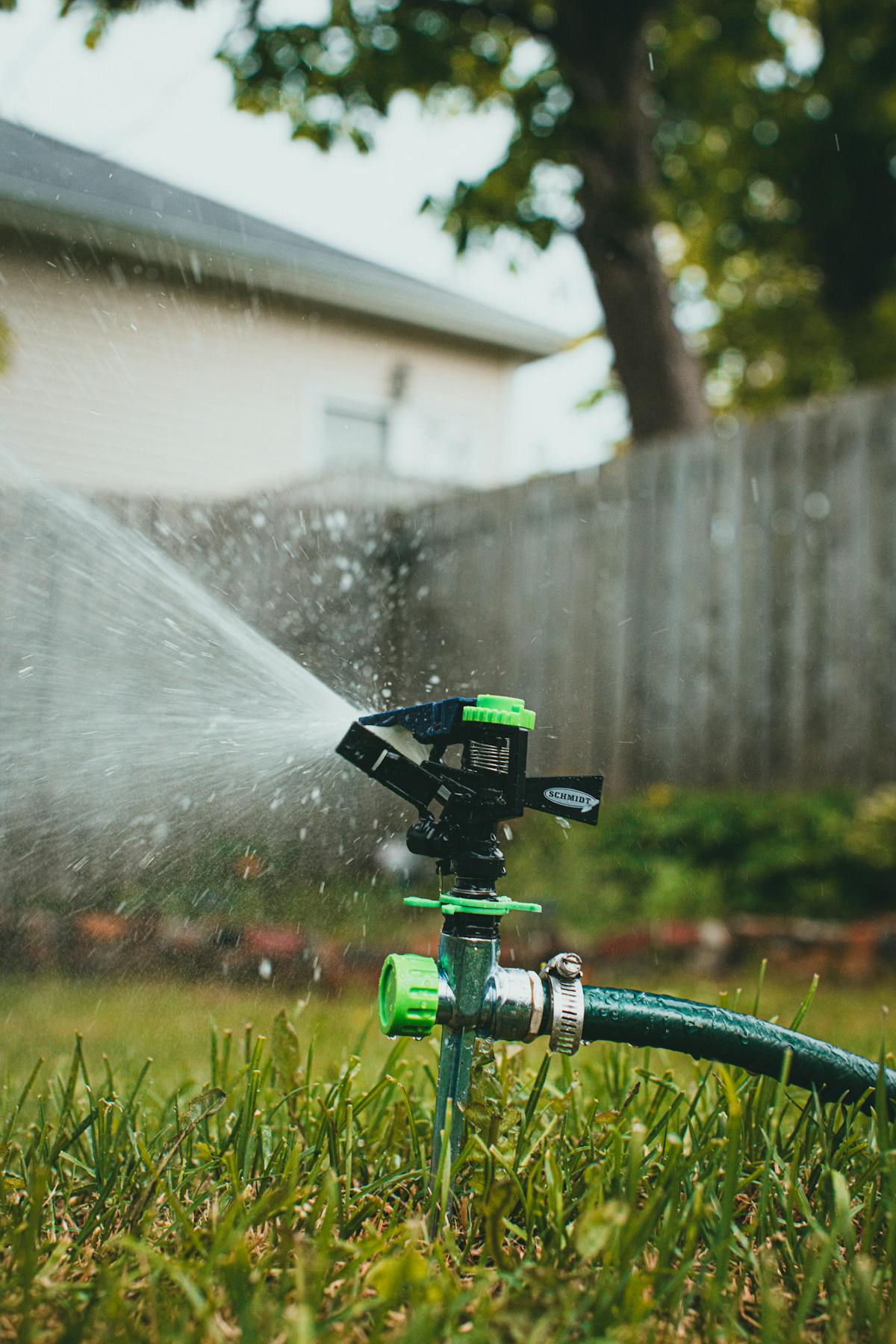
Its own heads. The photographed Kissimmee sidewalk is the job if that is the letter. (407) 674-2841.
Is a Tapestry three-zone builder clock the same as a Remington HOA walk?
No. Tapestry fill, Remington walks, and Kindred builder pads each need their own coverage. Map the lot in the photos. (407) 674-2841.
Should you sod before the Kissimmee sidewalk strip has coverage?
No. Coverage first. New sod on a dead 34741 corner cooks the first week. (407) 674-2841.
County-wide guide: sprinkler system installation in Osceola County
Get It Done in Kissimmee
Related: sprinkler zone layout before sod, blocked heads under new sod, sprinkler installation in St. Cloud, send a question.
Ready when the yard is: call (407) 674-2841.
Quick answer
Sprinkler installation in Kissimmee runs $2,500–$5,500 for 4–8 zones: smart controller, valves, heads, rain sensor, trenching, and county-day programming — designed for 34741 sand, not a box-store kit. That works out to roughly $310–$1,375 per zone, which is exactly why the whole job should be quoted instead of a per-zone price. Rock, roots, or long sleeve runs under the driveway push the number higher; permit fees are quoted separately. Prove water pressure first, then trench once. Call (407) 674-2841.
Where full sprinkler install wins in Kissimmee
Full install wins on new sod, re-sod, new beds, and well-to-reclaim conversions — the Kissimmee jobs (34741) where trenching happens once, wire and pipe size right, and every zone gets a precipitation rate the program can actually water inside county windows. A designed system holds 34741 compliance without babysitting.
It loses where the site is not ready: gradeless yards about to be re-pitched, paver projects about to trench through it, or pressure too low for rotors without a pump plan. Irrigation follows grade and hardscape — finalize those lines first, then trench.
Sprinkler installation cost in Kissimmee
Sprinkler install in Kissimmee prices per job at $2,500–$5,500 for 4–8 zones — not per zone. The band includes heads, valves, wire, smart controller, rain sensor, trenching, and county-day programming. Most homes land 4–8 zones; drip beds add low-volume zones, and pump or reclaim tie-ins go on the quote as their own line.
The spread is access and water: open turf versus cut-through pavers, rock or root trenching, long pushes to the back forty, pump or backflow work. Permit fees are quoted separately — outside the install band. Quotes far under $2,500 almost always skip matched nozzles, a rain sensor, or real programming — the three lines that decide the water bill. Call (407) 674-2841.
Install timeline
| Job size | What is typical |
|---|---|
| Small 1-3 zones | Often a single day |
| Standard 4-6 zones | 1-2 days |
| Large 7-9 zones, plus beds or pump | Several days |
In Kissimmee, timing often shifts with rock or root trenching, long sleeve runs under driveways, and backflow work, so these are usual ranges, not a set schedule.
Spray vs rotor vs drip: pick by zone
Spray heads suit small turf and strips under 15 ft. They apply water fast, which fits Central Florida sandy soil around Kissimmee that drains quickly, but run them in short cycles to limit runoff.
Rotors suit large open turf. They throw farther at a slower rate, so zones water evenly without misting. Never mix spray and rotor heads on the same zone — rates differ and turf gets uneven coverage.
Drip suits beds and narrow strips. It places water at roots with less overspray onto walks. Use matched-precipitation nozzles on each zone for even output.
Permits, backflow, and 811 before trenching
Kissimmee and Osceola County may require an irrigation permit plus an approved backflow device. Permit fees are quoted separately, outside the install band.
A backflow assembly on the mainline keeps irrigation water out of the potable water line. Before trenching, call 811 to mark utilities and dig around marked lines.
With steady pressure and clean filtration, sprinkler heads last about 10-14 years. A seasonal diagnostics plan helps keep the system tuned: spring startup with pressure and coverage check, mid-summer head-trim and rain-sensor test, and fall filter and nozzle clean.
Call (407) 674-2841 to schedule. A diagnostics visit checks pressure at heads, leaks, coverage gaps, and controller programming.
Heat, soil, and Kissimmee pressure
Kissimmee warmth (34741) grows grass fast and evaporates faster: morning watering windows beat midday burn, and matched-precipitation nozzles beat mixed heads every time. Sandy soil takes frequent deep bursts in cycle-soak; pressure under 40 PSI at the heads wants a pump or redesign conversation, not wishful rotors.
Well and reclaim water work fine with the right filtration and nozzle care — iron staining on fences is cosmetic. Pressure, filtration, and backflow go on the quote before trenching, not after.
Kissimmee sprinkler installs, documented
A finished Kissimmee install leaves a paper trail a homeowner can check without digging anything up. The record to ask for is the zone map naming each valve’s head types — sprays on the strips, rotors on open turf, drip in beds — with the precipitation rate for every zone, the pressure and flow reading taken at the bib before trenching, the controller program set to Osceola county days with its establishment plan alongside, and the rain sensor on the same sheet. If a corner later dries, that record says whether design, pressure, or program changed.
No job photos are published on this site. What to ask for is that written sequence — map, rates, bib reading, county-day program, rain sensor — applied to your own Kissimmee lot. Call (407) 674-2841.
When to call
Call (407) 674-2841 once you know your 34741 footage and whether you’re on city, well, or reclaim — then say which piece is failing, the sidewalk strip, a dry Remington corner, or a Tapestry side yard, and whether it’s turf, beds, or both in sun or shade. That’s enough to draw the zone map for county days.
Related: sod installation in Kissimmee, irrigation repair in Kissimmee, st augustine sod in Kissimmee · send a question · watering schedule