Last updated · Hunter's Creek, FL
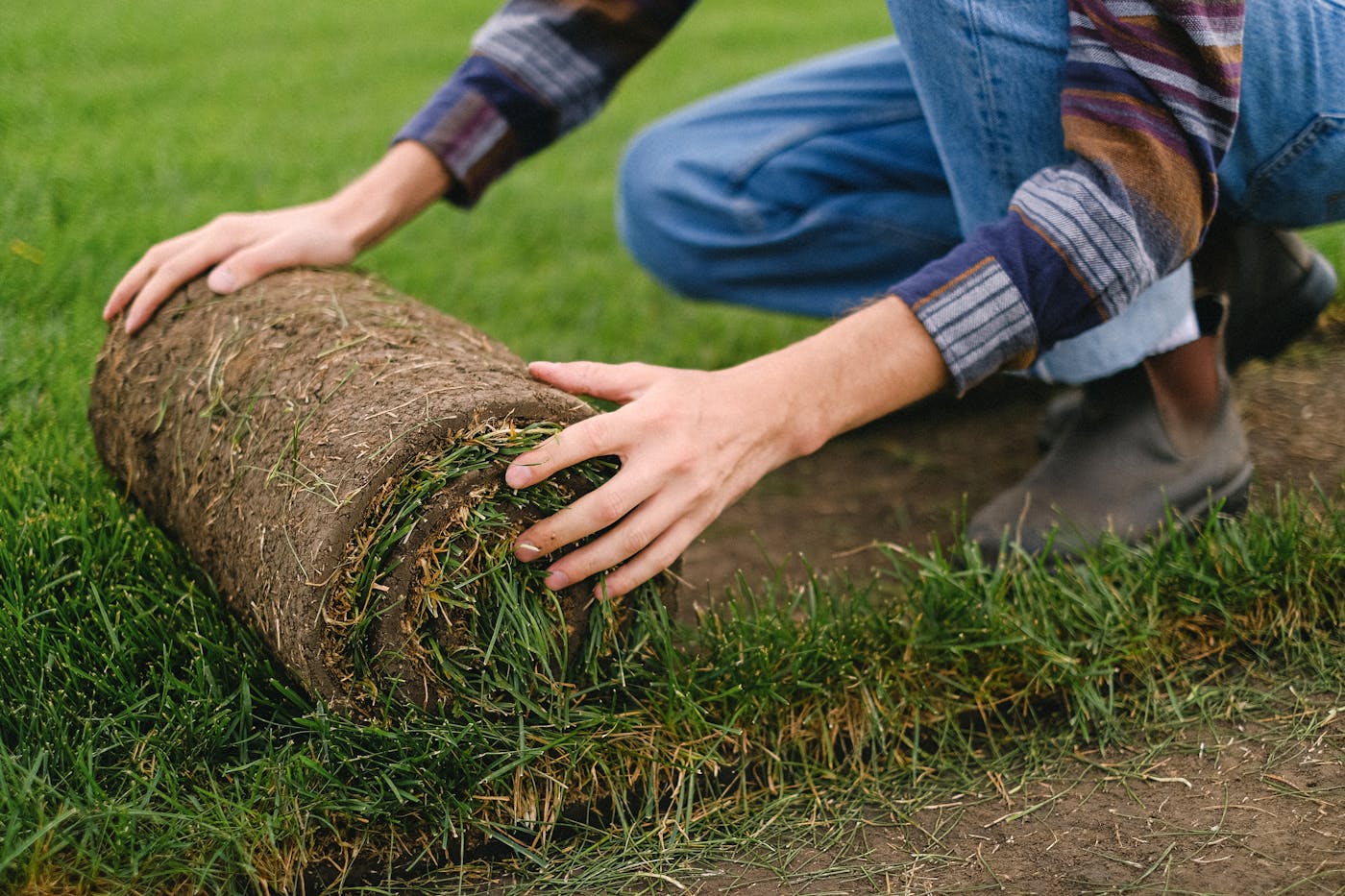
Sod replacement in Hunter’s Creek usually follows years of slow decline rather than one bad summer. Hunter’s Creek is an unincorporated, master-planned community in south Orange County, ZIP 32837, with roughly 24,000 residents at the 2020 census. Most of its neighborhoods were built in the late 1980s and 1990s around Lake Calabay. Many front lawns are on their first or second generation of St. Augustine, under trees that were small when the turf went in. Replacement sod is typically $1.50–$3.00 per sq ft installed. Questions: (407) 674-2841.
Why an established lawn gives out
Decades-old yards fail for reasons a new subdivision does not have yet:
- Shade creep. Oaks, magnolias and neighboring two-story homes now block sun that a full-sun grass such as Floratam needs. The lawn thins from the trunk outward.
- Root competition. Tree roots pull water and nutrients from the same shallow layer the grass uses.
- Thatch and compaction. Years of mowing and foot traffic build a spongy layer on top and a hard layer below.
- Aging irrigation. Original heads sink, tilt or clog, leaving dry crescents that brown first in spring.
- Chinch bugs on hot strips beside driveways and sidewalks, a classic St. Augustine problem in July and August.
- Disease in wet corners, especially large patch when nights cool in fall and the grass stays wet.
Diagnose before spending
- Pull at the edge of a dead area. Turf that lifts like a rug with no roots suggests grubs; a dry, straw-colored patch next to green grass at a hot edge suggests chinch bugs.
- Run the sprinklers and watch whether water reaches the failing area.
- Note how many hours of direct sun the patch gets on a clear day.
- Press a steel probe or long nail into the soil. If it resists when the soil is damp, compaction is part of the story.
If the answer is shade, replacing with the same sun-loving grass simply repeats the failure. A shade-tolerant St. Augustine cultivar, thinning the canopy, or a mulched bed under the heaviest shade may be the better fix.
Matching the village look
Hunter’s Creek is divided into villages, and the association pays attention to how fronts look from the street. A replacement front that differs sharply in blade width or color from the houses on either side stands out. Ask a neighbor or the management office what cultivar the street uses, and compare a piece from the supplier against the lawn next door before committing to a full order.
Changing grass type, removing turf for beds, or reshaping the lawn may need written approval from the Architectural Committee. Get that in hand first; correcting unapproved work costs more than waiting a couple of weeks.
Patch, partial or whole yard
- Patch when a few areas died from a single, fixed cause and the rest of the lawn is healthy.
- Partial when the front is failing and the back is fine, or the reverse.
- Whole yard when weeds, thatch and thinning are spread throughout and patching would leave a quilt of mismatched turf.
Patches never quite blend with an older lawn for the first season. Plan for that if the area is in the most visible spot.
Orange County watering days for new turf
Hunter’s Creek is in Orange County, inside the St. Johns River Water Management District. During daylight saving time, residential addresses ending in an odd number water Wednesday and Saturday and even numbers Thursday and Sunday; in standard time it drops to one day a week. No irrigation between 10 a.m. and 4 p.m. Newly laid sod is usually allowed extra establishment watering for a limited period; confirm the current terms with Orange County Utilities or the district before relying on it. The page on sod replacement in Orlando walks through registering that exception and the utility’s billing adjustment for a replaced lawn.
The cost picture
Replacement typically lands at $1.50–$3.00 per sq ft installed, about $1,500–$3,000 per 1,000 sq ft. The band should cover removing the old turf, hauling it off, levelling and loosening the soil, the new sod, and rolling it in. Heavy root zones, tight side yards and small patch work push toward the top.
After the new sod is down
- Keep the soil under the sod moist, not flooded, until a gentle tug meets resistance.
- Hold off mowing until it has rooted, then mow high.
- Skip fertilizer for the first several weeks.
- Fix any sprinkler head that misses the new turf right away.
Related Hunter’s Creek pages: sod installation in Hunter’s Creek, irrigation repair in Hunter’s Creek, and irrigation installation in Hunter’s Creek.
Next step
Have photos of the failing areas, rough measurements, and any association notice on hand. Call (407) 674-2841.