Last updated · College Park, FL
Sod installation in College Park is a project on old ground. College Park is a neighborhood inside the City of Orlando, just northwest of downtown, named for its streets: Princeton, Harvard, Yale, and other universities. The first known home went up in a citrus grove at 19 West Princeton, and much of the neighborhood was platted during the 1920s boom, when Orlando pushed its boundary north to Par Street. That age shows in the yards. Lawns sit under tall trees, beside brick or concrete walks laid generations ago, and on soil that has been dug, filled, and replanted many times. Installed sod commonly runs $1.50–$3.00 per sq ft. Questions: (407) 674-2841.
How the neighborhood shapes the lawn
- Bungalow lots from the 1920s with narrow side yards and detached garages off the back.
- Big shade trees along streets such as Edgewater Drive and the side blocks, many older than the houses beside them.
- Lake edges near Lake Silver, a 60-acre lake bordered by Ardsley Manor, a 1950s section with larger lots.
- Golf-course neighbors around Dubsdread, the course on West Par Street that dates to 1924.
- Infill rebuilds where an old house was replaced and the yard is raw construction fill.
Each of these calls for a slightly different plan, so start by naming which one your yard is.
Light first, grass second
In College Park the deciding question is sunlight. Spend one day noting where the sun actually hits:
- Six or more hours of direct sun: Floratam St. Augustine, or zoysia if you want a finer look.
- Three to five hours: a shade-tolerant St. Augustine cultivar.
- Under two hours, or dappled all day: skip turf. Mulch, shade groundcovers, or pavers survive where grass will keep thinning.
Raising the canopy by removing lower limbs, done by a certified arborist, can turn a marginal spot into one that holds grass.
Old ground needs extra prep
- Remove everything that’s there now: old St. Augustine runners, Bahia patches, weeds, and buried edging.
- Look for debris from earlier projects, such as old concrete, brick, or roots from removed trees, and pull it out.
- Level gently with sandy topsoil, keeping fill thin over tree roots.
- Set the finished grade a little below walks and driveways so water drains away from foundations and toward the street.
Sprinklers in an old neighborhood
Many College Park homes have systems added decades after the house was built, or none at all. Test what’s there before the sod arrives:
- Turn on each zone and watch for heads blocked by shrubs or tilted by roots.
- Look for pipe broken by tree roots, often signaled by a soggy spot or very low pressure.
- Separate shaded and sunny areas onto different zones if you can.
A single repair typically costs in the low hundreds. A new system usually runs $2,500–$5,500, about $500–$900 per zone.
Price expectations
Expect $1.50–$3.00 per square foot installed, roughly $1,500–$3,000 for a thousand-square-foot lawn. College Park jobs often trend upward because of tree roots, hand work near walks, and haul-off of a mixed old lawn. Small front yards may also carry a minimum charge. Get the price broken out: removal, disposal, grading, the grass cultivar, and rolling.
The day the sod arrives
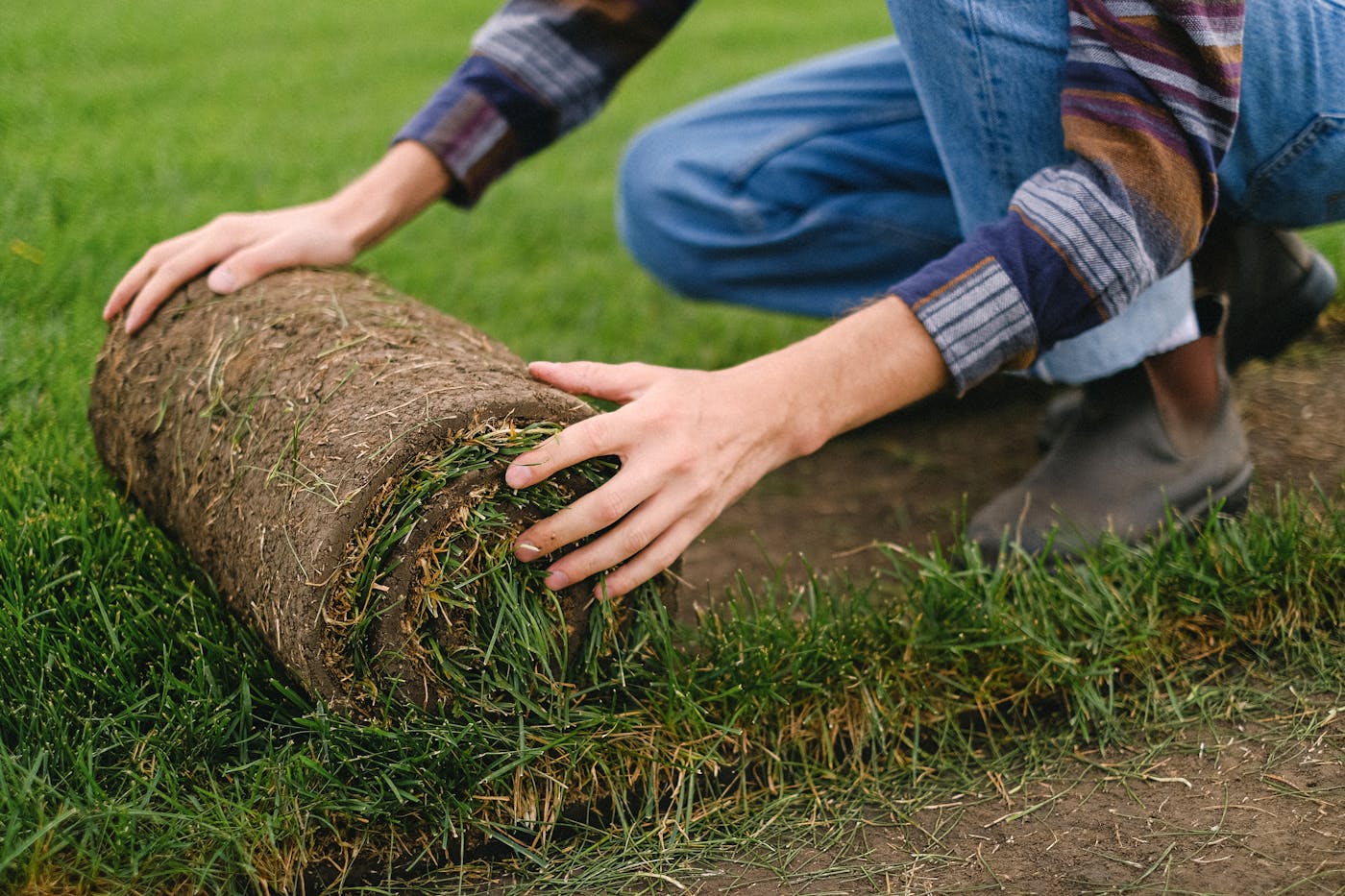
Sod should be laid the day it’s delivered. University of Florida guidance warns that pallets can overheat and spoil in under two days in summer. Lay pieces tight, stagger the joints, and cut neatly around tree trunks rather than piling sod against them. Roll the lawn, then soak it until the soil underneath is wet.
Watering on the city calendar
College Park follows the St. Johns River Water Management District rules used in Orlando: two assigned days a week by odd or even house number during daylight saving time, one day in winter, and no irrigation 10 a.m.–4 p.m. New sod has a short establishment allowance. Under trees, shallow roots compete for the same water, so check the soil by hand.
Brick streets and old walks
Some College Park blocks still have brick paving and older concrete walks that have heaved over the years from tree roots. Grade new sod to meet the existing edges rather than trying to level the walk, and leave a small gap where roots lift slabs so the turf isn’t scalped by the mower.
Common College Park mistakes
- Sodding under dense shade and replacing it every two years.
- Piling soil over oak roots to level the yard, which can harm the tree.
- Leaving buried debris that creates dry patches above it.
- Ignoring a broken lateral line under the lawn until the new sod dies in a stripe.
- Fertilizing too early, before roots have taken hold.
Keeping it healthy
Mow St. Augustine high, especially in shade. Rake leaves off the lawn quickly in fall and spring. Watch sunny strips near the street for chinch bugs in hot weather, and cut back watering in shaded areas if fungus appears.
Nearby pages
- Winter Park: another older neighborhood with big trees.
- Orlando sod installation: the citywide overview.
- Baldwin Park: a newer neighborhood across town.
What it comes down to
Sod installation in College Park means matching grass to the light, preparing old ground carefully around trees, testing sprinklers that may be decades old, and laying sod the day it’s delivered. Expect $1.50–$3.00 per square foot, often toward the top on older lots. Call (407) 674-2841.
Ask about your yard
Phone (407) 674-2841 with the size of the area, how much sun it gets, and whether the sprinklers work. Send a question · grass quiz