Last updated · Baldwin Park, FL
Sod installation in Baldwin Park is small-yard work with big expectations. Baldwin Park is a walkable neighborhood in northeast Orlando, built from 2003 onward on the former main base of the Orlando Naval Training Center, which closed in the 1990s. The plan centers on Lake Baldwin and Lake Susannah, a village center, parks, and streets of porches close to the sidewalk, many with rear alleys and garages. Front lawns are often modest strips of turf framed by walks, beds, and hedges, so every bare patch shows. Installed sod usually lands between $1.50 and $3.00 per sq ft. Questions go to (407) 674-2841.
The new-urbanist yard
Baldwin Park homes were built close to the street on purpose. That design shapes the lawn:
- Small, visible fronts. Often only a few hundred square feet of grass, seen up close by everyone walking past.
- Hardscape on every side. Sidewalks, porch steps, and driveways or alley aprons heat up and dry the turf edges.
- Parkway strips between the sidewalk and the curb that take foot traffic, car doors, and pets.
- Courtyard and side yards that may get only a few hours of direct sun.
- Trees planted along streets that now shade more of the lawn every year.
Check the guidelines first
Baldwin Park has a property owners’ association and design guidelines. Before you order:
- Look up what’s allowed for front and parkway landscaping.
- Ask whether grass type changes or turf-to-bed conversions need a request.
- Confirm who maintains the parkway strip in front of your home.
- Keep the approval in writing, especially if you plan to sell.
Choosing grass for a small front
- St. Augustine is the common choice. Floratam takes full sun; shade-tolerant cultivars suit fronts under street trees or on the north side of the house.
- Zoysia gives a fine, dense look in sun and some shade, but it fills in slowly and costs more.
- Bahia rarely fits: it’s coarse and seeds up, which stands out on a tight, manicured street.
Look at the block. Matching the neighbors’ grass keeps the street looking uniform, which is the point of a planned neighborhood.
Irrigation in tight spaces
Small yards are where poor sprinkler design shows fastest. Before new sod goes down:
- Run every zone and look for spray hitting walls, windows, and sidewalks.
- Swap to low-angle or strip nozzles along narrow beds and parkways.
- Keep beds and turf on separate zones.
- Check the rain sensor, required on automatic systems in Florida.
A 400-square-foot front with one dry corner turns brown in a week, and there’s nowhere for it to hide.
Prep
- Strip the old turf to soil, including runners under the edges of walks.
- Set the grade slightly below sidewalk and curb so water drains and the mower doesn’t scalp edges.
- Protect street-tree roots; dig by hand near them.
- Moisten the soil right before laying.
Cost on a small lot
The band is $1.50–$3.00 per sq ft, roughly $1,500–$3,000 for each thousand square feet, covering removal, disposal, grading, new sod, rolling, and a watering plan. On a very small front, fixed costs (delivery, setup, haul-off) push the per-foot figure toward the top, and a minimum charge may apply. Doing the front and parkway in the same visit is usually more economical than two separate small jobs.
Laying and rooting
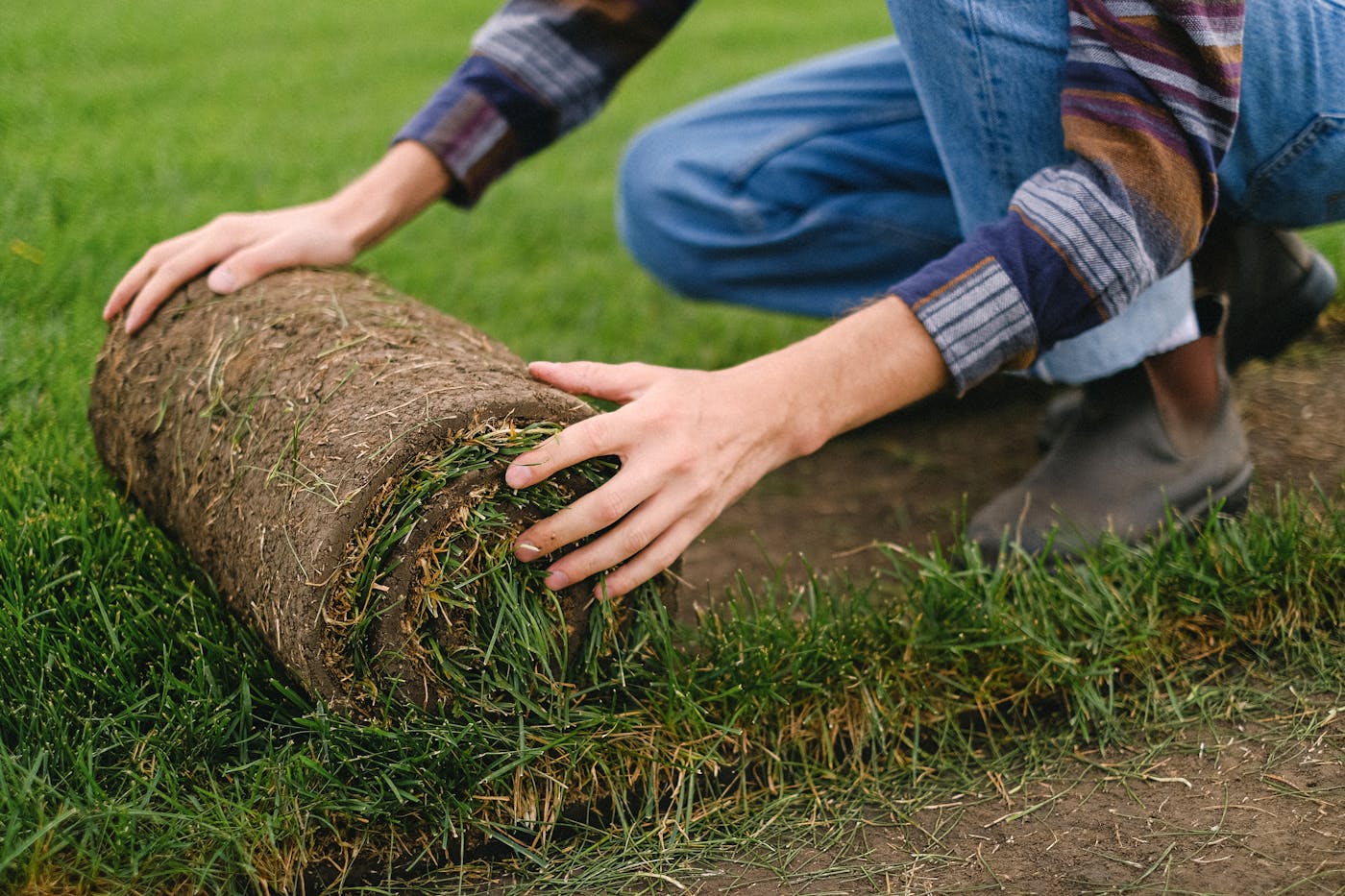
Lay the sod the day it arrives, roll it, and soak it that evening. Hand-water the edges along concrete during the first week; they dry first. Keep foot traffic and dogs off the parkway strip for about two weeks, a small temporary fence or stakes and string help on busy blocks.
Watering in the City of Orlando
Baldwin Park follows the St. Johns River Water Management District rules that apply in Orlando: odd addresses on Wednesday and Saturday, even addresses on Thursday and Sunday during daylight saving time, one day a week in winter, and no watering 10 a.m.–4 p.m. New sod gets a short establishment allowance.
Keeping a small lawn healthy
- Mow high with a sharp blade; scalped edges along walks are the first to fail.
- Watch for chinch bugs in sunny St. Augustine near hot pavement in summer.
- Re-check sprinkler heads after any work on beds or walks; they’re easy to knock out of line.
- Hold fertilizer until the new sod has rooted and been mowed a few times.
When to replace and when to repair
Not every thin patch needs a full tear-out. If less than about a third of the front is bare or weedy and the cause is clear (a broken head, a chinch bug spot, a dog path), plugs or a few pieces of sod laid into the gap may be enough. Replace the whole front when the grass is mostly weeds, when there are several grass types mixed together, or when the grade is wrong and water sits against the porch. In a neighborhood where yards are judged from the sidewalk, a patchwork of old and new turf can look worse than the original problem for the first few months, because fresh sod is a different shade of green until it settles in.
Questions to ask before you pay
- Which cultivar is coming, and from which farm?
- Is haul-off of the old turf included?
- Who adjusts the sprinkler heads after laying?
- What happens if a section fails in the first month because it wasn’t laid tight?
Nearby pages
- Winter Park: older lots and brick streets just north.
- Conway: lake-heavy neighborhoods to the south.
- Orlando: the citywide overview.
Short answer
Sod installation in Baldwin Park means checking the association guidelines, matching the street, fixing spray patterns in a tight yard, and laying sod the day it arrives. Expect $1.50–$3.00 per square foot, higher per foot on very small fronts. Phone (407) 674-2841.
Ask a question
Call (407) 674-2841 with the size of the front and parkway, how much shade the street trees cast, and what the guidelines allow. Send a question · grass quiz