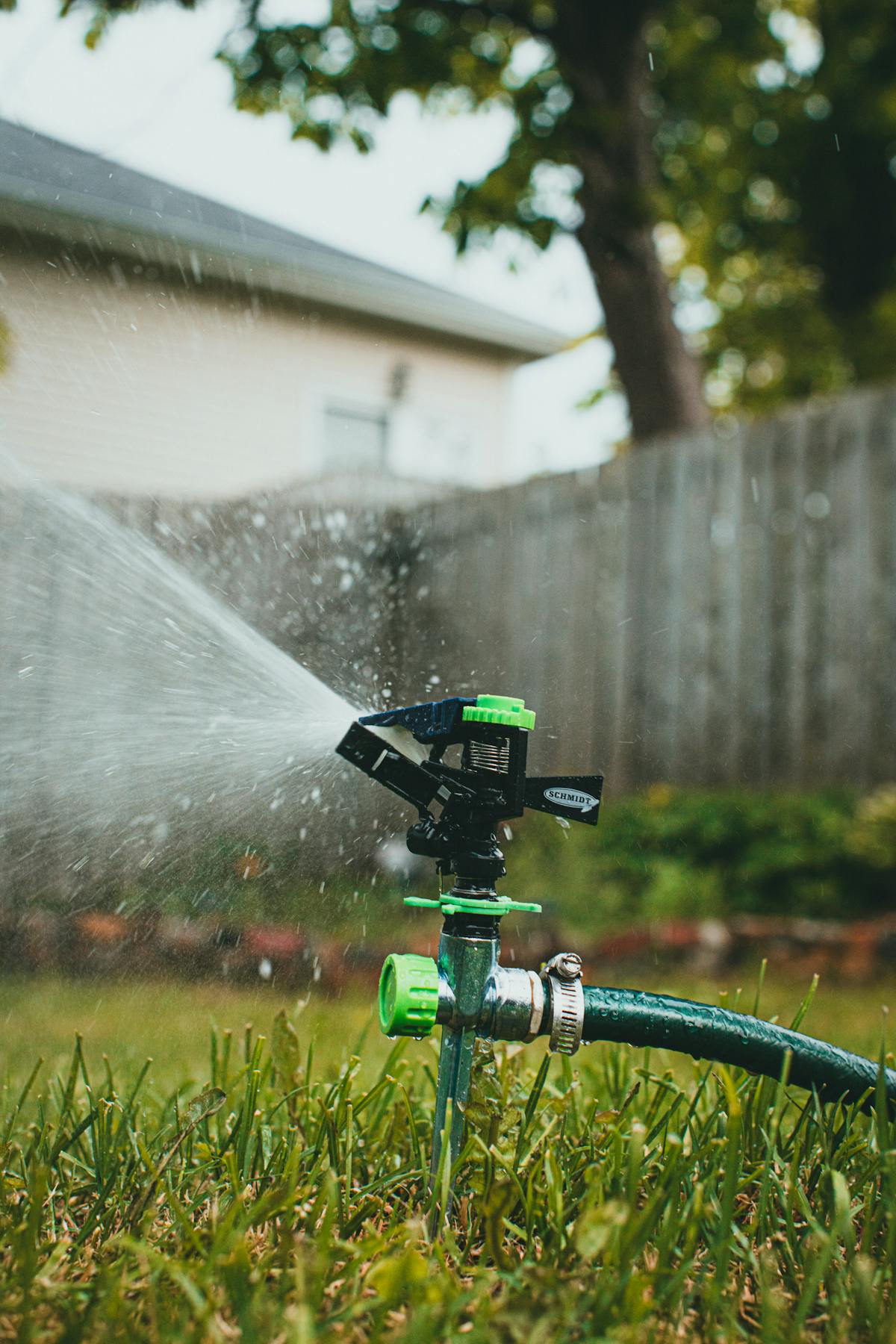
Head type sets the clock
Sprays apply roughly 1.5 in/hr, rotors about 0.5 in/hr. Same 15 minutes gives triple the water on sprays — which is why spray zones flood while rotor corners stay brown.
Calibrate with a catch-can test
Head-type rates are estimates. Measure your actual output instead: place identical straight-sided cans on an even grid across the zone, run it for a timed period (15+ minutes), and measure the water depth in each can. Measured application rate = average catch depth (inches) ÷ run time (minutes) × 60, in inches per hour. Tick the catch-can box above and the calculator uses your measured rate instead of the estimate.
Optional: enter the average depth of the lowest quarter of your cans to score distribution uniformity (low-quarter avg ÷ overall avg). At or above 75% is excellent, 65–75% good, 55–65% fair. Below 55% the zone waters unevenly — extra minutes just soak the wet spots, so a repair check (head adjustment, spacing, clogged nozzles) is the fix, not a longer schedule.
Assumptions behind the math
All inputs are in inches and minutes; outputs are inches per hour and minutes per zone. The target is 1.25 in/week for full sun, 1.0 in/week part shade, 0.6 in/week heavy shade. We assume identical cans on an even grid, a long enough run that start-up transients don't matter, and negligible evaporation — test in calm morning air for the truest numbers.
Split clay, cycle sandy
Compacted soil needs split cycles to stop runoff; sandy soil wants steady soaks. Total inches per week stays near 1-1.5 in for established turf either way.