Last updated · Holopaw, FL
Sod installation in Holopaw is a rural-property question, not a subdivision one. Holopaw is an unincorporated community in east Osceola County where US 192 and US 441 split, about 20 miles past downtown St. Cloud, with a 34773 St. Cloud mailing ZIP. It grew up around a lumber mill and the railroad in the 1920s, and the land around it is still mostly cattle ranches, pine timber, and citrus, with the Triple N Ranch and Bull Creek wildlife areas nearby. Lawns here are usually a few thousand square feet around a house set back on acreage. Pricing follows the same $1.50–$3.00 per sq ft range used across the county; a cleared, watered site usually goes from bare to sodded. Questions: (407) 674-2841.
Decide how much lawn you actually want
On a five- or ten-acre parcel, nobody sods the whole thing. The useful question is where turf earns its keep:
- Around the house and septic area, where you want a mowable, clean edge and fewer snakes and fire ants near the door.
- Along the drive near the house, where dust and washouts are a nuisance.
- Not the back pasture. Open ground beyond the yard is usually better left in existing Bahia or seeded, because sod there costs the same per foot and gets no irrigation.
Measure only the area you’ll actually water. Rural owners often overestimate by thousands of square feet when they count from the fence line.
Grass choice for east Osceola sun and sand
Bahia is the default for open, full-sun ground in Holopaw. It roots deep in sandy soil, rides out dry spells, and matches the pasture grass around it. Expect it to go off-color and send up seed heads in summer; that’s normal.
St. Augustine (Floratam and similar) makes sense for a smaller, irrigated yard close to the house, particularly if there’s shade from live oaks or pines. It needs reliable water and watching for chinch bugs in hot sun.
Zoysia is an option for a small, well-kept yard, but on most Holopaw properties it adds cost without solving a real problem.
Soil and ground prep
Most of the area is pine flatwoods: fine sand over a layer that can hold water after heavy summer rain. That produces two opposite problems on the same lot:
- Dry, hot sand on the high spots, which bakes new sod edges in a few days without water.
- Wet low ground that stays soggy for days after a tropical downpour.
Before sod, the area should be cleared of palmetto, pasture tufts, and roots, then graded so water moves away from the house and septic drainfield. Ask the installer how they’ll handle any low spot, because sod laid into a hole stays a hole.
Water: well, pump, and rules
Most Holopaw homes are on private wells and septic, not city water. That changes the plan:
- Test the pump. Run the zones (or a sprinkler) and see how long pressure holds. A small well that can’t water the whole new area daily for two weeks means sodding in phases or shrinking the area.
- Check coverage. Rural systems are often patched together. Walk every zone before the sod arrives.
- Know the rules. The South Florida Water Management District’s landscape rules cover wells too: odd addresses Wednesday and Saturday, even Thursday and Sunday, never 10 a.m. to 4 p.m. New sod gets a limited establishment allowance; confirm the current terms before the lay.
Cost and distance
Figure $1.50–$3.00 per sq ft for the whole job, or roughly $1,500–$3,000 for every 1,000 sq ft: clearing, shaping, the turf itself, rolling it, and a plan for keeping it wet. In Holopaw the things that push a quote up are:
- Delivery distance from the farm and the installer’s base, since Holopaw is well east of the usual Kissimmee–St. Cloud routes.
- Clearing work: palmetto, stumps, and pasture grass take longer to strip than an old suburban lawn.
- Small areas: a trip this far for a few hundred square feet carries a higher per-foot price.
Ask for those items as separate lines so you can see what you’re paying for.
The first two weeks
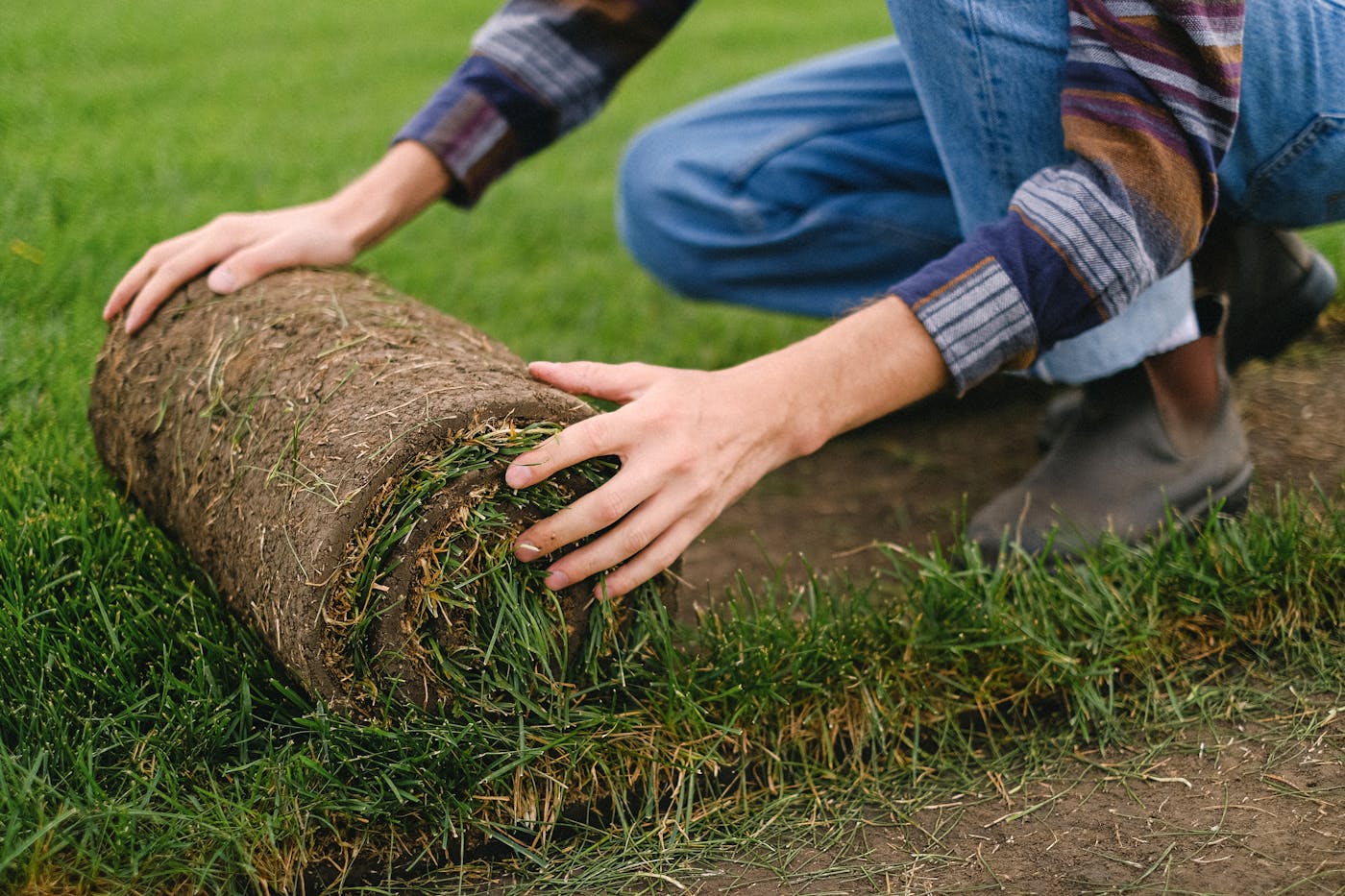
Turf cut that morning should be on the ground by afternoon, pressed with a roller, and drenched before dark. On sand, edges and the south side dry first, so hand-water them in the first week even with the irrigation running. Keep vehicles, livestock, and dogs off the new turf until a firm tug on a corner shows it has rooted, usually 10–14 days in warm weather.
Related pages
For in-town lots, see sod installation in St. Cloud. Neighboring rural areas: Narcoossee and Kenansville. For Bahia specifics, see Bahia sod in St. Cloud.
Fire ants, armadillos, and open-country pests
Rural ground brings pests that suburban yards see less of. Fire ant mounds are common on cleared pasture; treat them a week or two before the lay so nobody is kneeling in an active colony while placing sod. Armadillos and wild hogs root through freshly watered turf looking for grubs, and a single night can roll back a whole strip. A simple perimeter fence or field fencing around a small new lawn is cheaper than relaying it. Mole crickets also favor sandy Osceola soil and show up as tunnels and thinning in late summer. None of these are reasons to skip sod, but they are reasons to check the ground before the pallets come and to walk the new lawn each morning for the first couple of weeks.
Quick answer
Sod installation in Holopaw usually means Bahia on open, sunny ground or St. Augustine on a smaller watered yard by the house, laid on cleared, graded sand with a well that can keep up. Budget $1.50–$3.00 a square foot; the work itself spans. Phone (407) 674-2841.
When to call
Ring (407) 674-2841 and have ready the measured area you want sodded, whether you’re on a well, and how far the house sits off US 192 or US 441. Photos of the ground help. Send a question · grass quiz