Quick answer
A swampy smell means soil biology gone airless: water sits, oxygen leaves, anaerobic bacteria take over. In Osceola County the usual culprits are compacted new-build pads, low spots with nowhere to drain, irrigation stacked on top of daily rain, or buried construction debris sealing the subsoil. Diagnose with the drainage risk checker, fix water movement first, and never lay sod over a yard that still smells sour. Call (407) 674-2841.
What the smell is telling you
Healthy soil smells earthy. A rotten-egg or boggy smell is hydrogen sulfide from microbes working without oxygen — proof that the root zone stays saturated long after rain stops. Grass roots need air as much as water; in saturated soil they suffocate, turn black, and let go of the soil. That is why smelly yards and failing sod travel together: the odor is the early warning, the dead grass is the late one.
Duration matters. A faint smell for a day after a frog-strangler storm is normal Florida. A smell that persists three-plus days into dry weather, or appears without any rain at all, points to a structural problem — grade, compaction, irrigation, or debris.
The four causes in order of likelihood
1. Water with nowhere to go
Low spots, flat new-build pads, and yards graded toward the house instead of the street hold water until it evaporates. Walk the yard during the next hard rain and watch where it sheets and ponds — that map is the diagnosis. Fixes run from simple (extending downspouts past the problem area) through regrading to French drains or swales for chronic ponds. See lawn drainage test before sod and lawn grading before sod.
2. Irrigation plus rain
The most fixable cause. Controllers set for dry-season schedules keep firing through rainy weeks, and the soil never gets an air day. Symptoms: smell strongest near sprinkler heads, squishy turf, mushrooms. Remedy costs nothing — cut the schedule, add a rain sensor or smart controller adjustment, and let the soil breathe. Compare with overwatered sod signs.
3. Compaction
Construction traffic, parked cars, and equipment paths press sandy soil into a layer water cannot pass. The tell: footprints that fill with water, a screwdriver that will not push in more than an inch, runoff starting within minutes of irrigation. Core aeration opens mild compaction; severe pans need deeper remediation or regrading with organic matter worked in.
4. Buried debris
New subdivisions from Kissimmee to St. Cloud sometimes hide drywall, lumber, or sod scraps under a thin soil cap. These layers perch water and rot anaerobically — the smell is intense and localized to one patch that never behaves like the rest of the yard. Diagnosis is a soil probe or test hole; the fix is removal and backfill, not chemicals.
The pre-sod rule
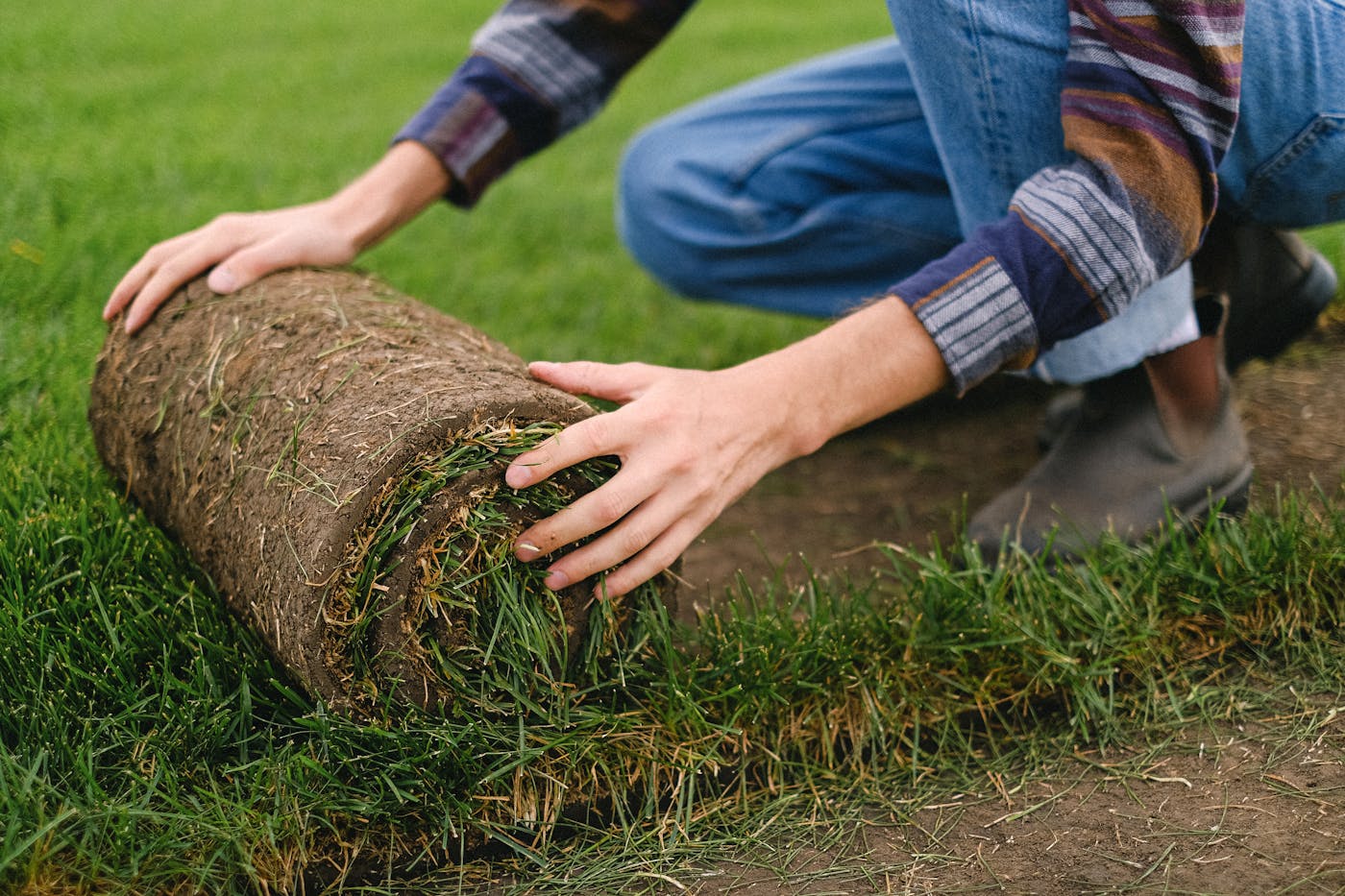
Sod over sour soil is a scheduled failure. New grass cannot root into airless muck — it yellows along the seams, fungus colonizes the joints, and within a month the install looks worse than the dirt it covered. The sequence is non-negotiable: drain → aerate → verify the smell is gone through one full rain cycle → sod. A yard that still smells after drainage work is a yard telling you the job is not finished. Budget drainage as part of the sod project (typical sod bands), not as an afterthought.
Aerating sour soil without making it worse
Aeration only helps once the water has somewhere to go — run it after drainage work, never instead of it. Timing matters more than equipment: wait until no water stands and the ground feels firm underfoot but still gives under a screwdriver. Aerating mud smears the holes shut and compacts the layer below, which deepens the bowl you are trying to fix. Use a core aerator, not a spike: hollow tines pull plugs and open real channels, while spikes just push soil aside. Make two passes in different directions over the worst area, leave the cores to crumble back in, and follow with a light sand topdress that filters into the holes rather than capping the surface. If the smell returns within a week of aeration, the soil is still waterlogged underneath — the exit is undersized, not the aeration. Fix the water first, then aerate again.
Common mistakes
- Masking with topdressing. A thin sand cap over a ponding low spot buys two weeks of looks and a worse problem underneath.
- More irrigation on a drainage problem. Extra water on saturated soil accelerates the anaerobic cycle. Stop watering first, diagnose second.
- French drain as a first resort. Drains solve conveyance problems, not schedule problems. Rule out overwatering (free) before trenching (expensive).
- Laying sod “to soak it up.” Grass transpires trivial amounts next to Florida rainfall volumes. Sod is not a drainage strategy.
When to call
Call (407) 674-2841 when the smell persists days past rain, footprints fill with water, sod has already failed once on the same spot, or grading and drains are beyond DIY scope. Say where the smell concentrates and whether irrigation has been off — that tells us whether to bring drainage or controller expertise first. Or start at get a sod quote.
Bottom line
Swampy smell is saturated soil asking for air. Give water a path out, give the soil a way to breathe, prove it through one rain cycle — then lay grass that will actually live.