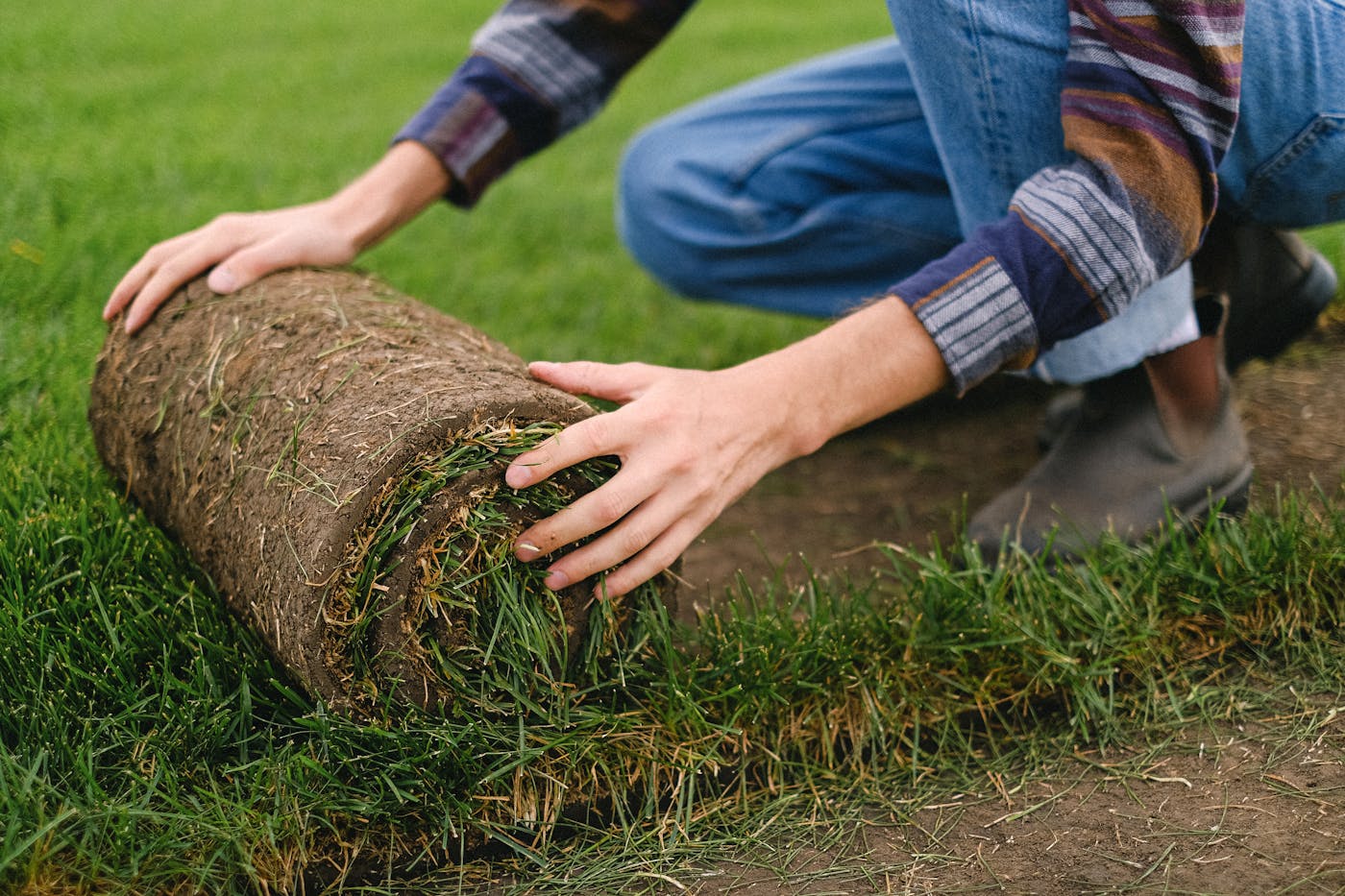
White grubs chew St. Augustine roots off below the soil while the top still looks almost alive — then the turf turns spongy, browns in patches, and lifts like loose carpet with no roots holding it. The square-foot flap test takes five minutes and tells you exactly whether to treat. Call (407) 674-2841.
Grubs are the last diagnosis most homeowners check, which is why grub lawns get a month of extra water, a round of fungicide, and a chinch treatment before anyone looks underground. This guide puts the underground check where it belongs: before you buy anything.
Written September 2026 for the Orlando–Kissimmee corridor. Masked chafers and May/June beetles are the usual grub species here; treatment windows target their single summer generation.
Bare craters with zero roots already? Confirm grubs, treat, then re-sod the dead zones — see sod installation or price it with the sod calculator. Still unsure what’s killing the lawn? Run lawn problem diagnosis. Call (407) 674-2841.
Quick answer
Suspect grubs when turf feels spongy underfoot and brown patches lift easily with no roots. Confirm with the flap test (below): 6–10+ grubs per square foot on St. Augustine means treat. Prevent in May–July; cure small grubs in late summer. Dead-to-soil zones get re-sodded after treatment — see sod installation.
The signs (before you dig)
- Spongy footing: the lawn feels soft and bouncy where roots should anchor it. Walk the brown edges — grub zones give underfoot while healthy turf feels firm.
- Carpet-lift: brown patches peel back with almost no resistance, revealing stubby chewed roots or bare soil. This is the signature — chinch and fungus damage stays anchored because their roots are intact.
- Bird and armadillo attention: sudden flocks of birds pecking one zone, or armadillo digging concentrated in patches, means something edible is underground. Wildlife is a decent grub detector.
- Patch shape and season: irregular brown patches that expand in late summer and fall despite correct watering, often starting in full-sun areas where beetles laid eggs in June–July.
None of these alone is proof — drought plus thin turf can mimic the sponginess. Dig before you treat.
The square-foot flap test
- Pick a spot at the edge of a brown patch where grass is thinning but not fully dead — grubs feed outward into live roots, so the dead center is empty and the green middle reads clean.
- With a flat spade, cut three sides of a 1-foot square flap through the turf and fold it back like a hinge, exposing the top 2 inches of soil and the root zone.
- Count white, C-shaped grubs with brown heads. Sift the folded soil and the exposed bed — they curl into a C when disturbed.
- Repeat in two or three spots around the damage. Grubs cluster; one clean square doesn’t clear the lawn.
- Fold the flap back and water it in — a clean test barely stresses the turf.
Thresholds: on St. Augustine, 6–10 grubs per square foot justifies treatment (the low end if the lawn is already stressed, the high end if it’s vigorous). If your lawn keeps hitting that range and you are weighing a more tolerant variety, compare specs for Zoysia sod in St. Cloud. Zoysia tolerates a few more; Bahia outgrows light pressure. If feeding was heavy enough to require re-sodding, compare turf specs and pricing for Zoysia sod in Kissimmee before patching. Under threshold with real damage? Look at chinch and fungus instead — our summer chinch-bug watch and the lawn problem diagnosis tool sort the lookalikes.
Treatment windows that matter
Grubs have one generation a year here, and product only works when grubs are small, feeding, and near the surface:
- May–July (preventive window): apply preventive chemistry (chlorantraniliprole / Acelepryn-class, or imidacloprid-class per label) before eggs hatch. Water in. This is the high-percentage play — one correct preventive app beats every cure.
- August–September (curative window): young grubs feeding aggressively near the surface. Curative products (carbaryl, trichlorfon/Dylox-class per label) work now. Water before application to bring grubs up, then water in.
- October–November (declining returns): grubs are big, feeding slows, and they move deeper as nights cool. Treatment efficacy drops hard. If you find big grubs now, spot-treat the worst zones and plan the full preventive program for spring — don’t blanket-spray a lawn going dormant.
- Winter–spring: grubs overwinter deep and barely feed. No treatment — schedule prevention for May.
Always follow label rates and watering-in instructions. Over-applying doesn’t kill big grubs; correct timing kills small ones.
After treatment: recovery or re-sod
Kill first, judge second. Once a re-test shows no live grubs: water the damaged zones correctly (deep, early, with dry-down between cycles — use the watering schedule tool), hold fertilizer until runners are visibly spreading, and give it 3–4 weeks in warm weather.
- Recover: crowns and stolons alive, flap test shows chewed but present roots. St. Augustine knits back surprisingly fast in September heat.
- Re-sod: turf lifts with zero roots over bare or crusted soil, or zones that sit unchanged after a month of correct care. Match the existing variety so patches disappear. See sod installation and call (407) 674-2841 with photos and square footage.
And fix whatever invited the beetles: chronic overwatering and excessive thatch make egg-laying paradise. Shorten puddling zones, dethatch where the layer exceeds half an inch, and keep the fall schedule sane — soggy lawns grow grubs the way they grow fungus.
Grubs vs the lookalikes
- Grubs: spongy footing, carpet-lift with chewed roots, birds/armadillos interested, confirms by digging up actual grubs.
- Chinch bugs: damage anchored (roots intact), starts at pavement edges in heat, confirms with the floating tin-can test — see our summer chinch-bug watch.
- Brown patch fungus: circular lesions with smoky rings in humid overwatered zones, turf stays rooted, no insects found — see our fungus-vs-chinch differential (companion post) and lawn problem diagnosis.
- Drought: firm soil, footprints stay flat, greens up days after real irrigation.
Two problems at once is normal in September — grub-thinned turf invites fungus, and chinch-stressed lawns draw beetles. Diagnose each suspect on its own evidence; stacked guesses waste months.
FAQ: lawn grubs in Central Florida
How do I test my Florida lawn for grubs?
Cut a 1-square-foot turf flap at a brown patch edge, fold it back, and count white C-shaped grubs in the top 2 inches. Repeat in 2–3 spots. Six to ten-plus per square foot on St. Augustine means treat.
What do grubs look like?
White, C-shaped, 1/2 to 1 inch long, brown heads, six small legs near the head, curled in the root zone just under the thatch.
When do I treat grubs in Central Florida?
Prevent in May–July before hatch; cure young feeding grubs August–September. Late-fall treatments on big deep grubs mostly waste product — plan spring prevention instead.
Will grub-damaged grass grow back?
If crowns and stolons live — usually yes within weeks of treatment plus correct water. Zero-root carpet-lift zones over bare soil need re-sodding: sod installation, (407) 674-2841.